Succulent Leaf Propagation Knowledge You Absolutely Must Learn Well
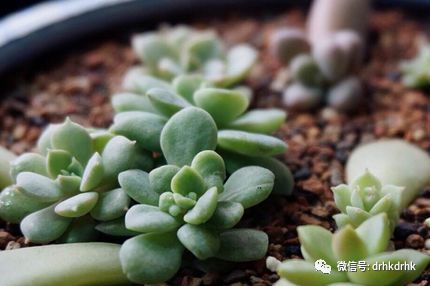
Leaf propagation is a milestone commemorative activity for every succulent lover, and it is a necessary path that proves whether a flower enthusiast is truly knowledgeable in the succulent world, so leaf propagation, no matter when or where, always seems to be in full swing, especially in front of beginners.
Many beginners envy the succulents that non-beginners propagate from leaves, which look especially beautiful and appear very neat and shapely. So there are always many beginners asking the friends who propagate beautiful leaves, "How did you propagate such beautiful little seedlings from leaves? Why do the ones I propagate always seem not quite beautiful enough?" Then your friend will tell you that things like moisture, light, ventilation, potting medium and so on are very important, and to pay attention to how to do this and that, and then like me you will be able to propagate beautiful little succulent seedlings.
It seems there is nothing left out, and the answer seems flawless, but in reality there are still gaps. Even someone skilled at leaf propagation has had times when their leaf propagation did not look good; who did not start from somewhere? So it is very normal for everyone's leaf-propagated seedlings to look less than beautiful at first, let alone normal phenomena like seedlings dying after leaf propagation sprouts. Beginners will always encounter them. I must encourage everyone: almost no one can do it well from the very beginning; everyone needs to explore before making progress, so those who have failed at leaf propagation or done it poorly should not lose heart.
Many beginners may come into contact with leaf propagation as soon as they start. So many beginners, when it comes to leaf propagation, first look for various experience posts about leaf propagation, then start reading and then practicing. But after successful leaf propagation they discover: why are my leaf-propagated seedlings not neat enough or not beautiful enough? I also took comprehensive account of other people's experience, so why are the seedlings that grow not as good-looking as others'? Sometimes leaf propagation even fails, or the seedlings easily die after sprouting.
Doing only the normal care of moisture, light, ventilation, potting medium and so on is not enough, because these are only supporting environmental factors; the most important thing is still the issue of one's own construction source. It is just like the akadama we use: good-quality akadama can be used for a long time, while poor-quality akadama easily breaks down into powder in the environment. It can be seen that the quality of a thing affects its future development. So the quality of the leaves we use for leaf propagation is also the fundamental determining factor that can affect the quality of the leaf-propagated seedlings. Therefore, I want to discuss the selection of leaves used for leaf propagation.
So what kind of leaves are suitable for us to use for leaf propagation?
1. Leaves of common varieties are better for leaf propagation than leaves of expensive varieties.
The reason common varieties are common is that they are easy to propagate and have strong vitality, so they reproduce quickly and are therefore widely spread across the land. Using common varieties for leaf propagation gives a better success rate and speed than expensive varieties. Expensive varieties, because they are delicate and not easy to grow, are propagated less; things are precious when rare, so they are expensive and delicate. The leaf propagation success rate and speed of expensive varieties are worse than those of common varieties. Some expensive varieties are not just a little slower; some people wait more than half a year and are frantic with worry, yet they still will not sprout or root. So common varieties win.
2. Thick leaves are better for leaf propagation than thin leaves.
Thick leaves accumulate more nutrients, allowing them to better withstand external interference and so on. Moreover, thick leaves are full of nutrients and can provide themselves with a longer survival time to sprout and root. Of course, thick leaves can also deliver nutrients to new sprouts and provide nutrients for longer. Thin leaves, on the other hand, are much worse than thick leaves in every respect. Thin leaves are not easy to resist external harm, and insufficient nutrients may make it difficult to supply themselves for rooting and sprouting; even if they sprout, the leaves may very likely dry up because of insufficient nutrients, causing the young sprouts to wither and die, and so on. Succulents with thin leaves are more easily propagated by extreme methods such as beheading. So thick leaves win.
3. Leaves from plants that have not been given hormone flower fertilizers are better for leaf propagation than leaves from plants that have been given hormone flower fertilizers.
The ability of plants that have used hormone flower fertilizers to resist adverse environments will decline greatly overall. When the lips are gone, the teeth are cold, so the leaves will not be much better either; they are also frail and weak, and once the support of hormone flower fertilizers is gone they are prone to infection by pathogens and pests, and will die on you at the slightest provocation. But the leaves of succulent plants that have not used hormone flower fertilizers will have better survival ability; having gone through the baptism of nature, the leaves also know to rely on their own efforts to survive. So leaves that have not used hormone flower fertilizers win.
4. Hairless leaves are better for leaf propagation than hairy leaves.
Many people probably mention this, for example hairy leaves like those of bear's paw (Cotyledon tomentosa). If you do not use the stem-cutting method, it is basically very difficult for the leaf itself to propagate; of course, a few individual ones may propagate, but only a small portion. And leaves without fuzz are often better for leaf propagation.
5. Leaves from the middle of the plant are better for leaf propagation.
A metaphor here makes it easy to understand: the elderly, children, and young and middle-aged adults, among these three groups, which has the best immunity? Anyone with intelligence and common sense must know it is the young and middle-aged adults. So the leaves at the bottom of the plant, to put it simply, are old, and in every respect are not as healthy and strong as the leaves in the middle. And the leaves at the upper part of the plant's top have not yet grown up, and compared with the middle leaves they are too tender, so they are also not suitable for good leaf propagation. Therefore only the sturdy leaves in the middle of the plant are most suitable for leaf propagation to produce better-quality seedlings.
6. Leaves from plants that have not recently suffered pests, diseases, or physical damage are better for leaf propagation than leaves from plants that have recently suffered pests, diseases, or physical damage.
Another metaphor: if a young person who has just recovered from a cold and fever, or who is disabled, runs a marathon together with a young person who has always been very healthy, who do you think will run farther? Likewise, your intelligence and common-sense reasoning can tell you that of course it is the person who has always been very healthy, since their physical constitution is good. So the leaves used for leaf propagation follow the same principle. Leaves that have recently had pests, diseases, or physical damage, such as leaves that dropped due to black rot or leaves that were accidentally torn, are certainly not as good as healthy, sturdy leaves.
7. Other leaves that are not good for leaf propagation, such as sunburned ones, variegated ones, and abnormally shaped ones (the crooked and twisted kind after etiolation), and so on, are all leaves that may fail to propagate or may produce something not very good-looking when propagated.
When we choose good leaves and add good care methods, we can naturally propagate healthier and better-looking seedlings. And ordinary leaves, when propagated, will certainly also be more ordinary and not very good-looking, but they will not be very ugly either. But the premise of all this is that you must give the leaves a normal environment for rooting and sprouting. As for sick or disabled leaves, it depends on the situation: the propagated result may not look good, the propagated plant may die, or it may fail to propagate at all, and so on.
The purpose of writing this article is to emphasize that when it comes to leaf propagation, you should not, because of many people's experience posts, focus only on the auxiliary environmental factors; you should also pay attention to the factors of the leaf itself. Only by integrating multiple aspects can you have an almost perfect harvest. Here I still want to encourage everyone: do not lose heart or feel depressed about failed leaf propagation. You may already have done very well, but because of changes in the weather, you may still propagate seedlings that are not very beautiful. So do your best and leave the rest to fate; heaven will look after those who put their hearts into it.