Succulent plants grow in Namibia, with bizarre shapes that overturn everything you know
Discovering the genetic code of our coexistence with nature, returning to the forest
A succulent plant is a plant in which at least one of the three vegetative organs - root, stem and leaf - is thick and juicy and capable of storing large amounts of water.
In recent years they have become very popular and a great companion for many people at home and at work. Some people may ask Xiaosen:
Why are succulents so popular?
Actually, answering this question is easy. Just look at more succulents, or pictures of them, and I believe you will find the answer yourself~
In this world that judges by looks, isn't being good-looking everything?
Small, adorable, so cute it melts your heart!
Everyone wants to be associated with good-looking things,
and so succulents became popular.
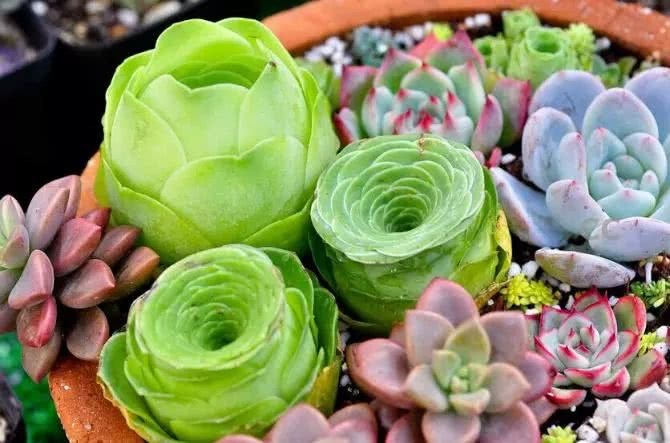
The succulents we usually see look like this
Or like this
But today's article is not about how good-looking succulents are,
but instead points the camera at Namibia in southwestern Africa,
to see how different the succulents there are from the ones we have seen?
It will absolutely overturn everything you know!
Namibia borders South Africa to the south and is dry with little rain,
with a subtropical, semi-desert climate.
The coastal area bordering the Atlantic Ocean
is affected by the powerful Benguela Current,
with little rain and much fog and a special climate,
forming a large cold coastal desert - the Namib Desert.
A great variety of succulents of different shapes are distributed there.
Today Xiaosen will take everyone to dig into
those bizarre wild succulentsof Namibia!
1
Hoodia gordonii, a succulent of the Apocynaceae family, grows naturally in South Africa and Namibia; its flowers smell like rotting meat and are mainly pollinated by flies.
Long ago, the local indigenous Bushmen relied on eating it to ward off hunger and thirst during consecutive days of hunting, and it could also be used to treat indigestion and some minor infections.
2
Pachypodium namaquanum, the halfmens tree, is native to Namibia and mostly grows in dry, rocky deserts and among stone-covered hillsides; in other regions it is a rare and endangered species that is very difficult to cultivate and propagate.
The halfmens tree can reach a height of 2.5 m to 5 m. Locals call them Halfmens, which translated from Afrikaans means "half person" or "human-like."
Up close it is still cute; from farther away it is just...
Overturns everything you know! This is also called a succulent?
What is with this pose, as if trying to outgrow the sky?!
It makes you doubt life itself!
Any taller and the camera would not even be able to capture it!
According to local legend, these trees are half human and half plant. This makes sense, because when seen against the distant skyline they can easily be mistaken for humans. One unusual feature of this plant is that the tip of the stem always leans toward the north, probably because it follows the direction of the light.
Let us steady our startled feelings and keep looking!
3
Near the coastline of Luderitz in Namibia, there is a group of strange succulents bearing fuzzy white flowers, with flat, neat leaves, as pure as plastic, especially when they turn red and spread loosely along the coastline, making a magnificent sight.
It is actually a little frightening
Not only is it frightening, it also blooms... it looks like red blood cells everywhere...
4
In the desert of southern Namibia, near a small mining town called Rosh Pinah, there is a magical garden where many succulents of different shapes grow in cracks of white quartz, looking as if they are growing on stone.
Take a closer look
5
Some curious succulents distributed in Richtersveld, probably of the genus Crassula. Richtersveld borders Namibia and is a mountainous desert made up of high mountains and canyons, located in South Africa's Northern Cape Province. It is completely different from the flat, sandy plains landscape; its main scenery is cliffy mountains made of volcanic rock.
I can still understand it growing like this,
after all, it is the gobi...
Succulent? Hedgehog? I am not very educated, so do not fool me!
??? What kind of shape is this???
Are you sure you are a succulent and not ginger?
Did the succulents above shock you?
Although Namibia's succulents are bizarre, every one of them is indispensable; they grow silently and maintain the diversity of the environment. With severe water shortages and blazing sun, one cannot help but marvel at how tenacious their vitality is.
Growing is not easy, so give them a thumbs up! For more interesting plant stories, welcome to follow us!