This globally recognized superfruit can be eaten with its skin, is extremely difficult to cultivate, and very few people have ever tasted it
With the development of modern society, people's living standards have improved a great deal compared with the past. As a result, when it comes to "eating," modern people not only seek to eat their fill, but also to eat healthily. Take eating fruit, for example. In the past, people often said, "An apple a day keeps the doctor away," and highly praised the health-preserving benefits of apples, but today, as an everyday fruit, apples can no longer satisfy people's needs. This is not to say that apples are not nutritious, but their nutrition seems not to be quite comprehensive enough, so in recent years people have been hoping to eat fruits with more complete nutrition, the kind of fruit that can supply a lot of nutrients in just a few bites. Such a fruit does exist. It enjoys an excellent reputation worldwide and is also recognized as a "superfruit."
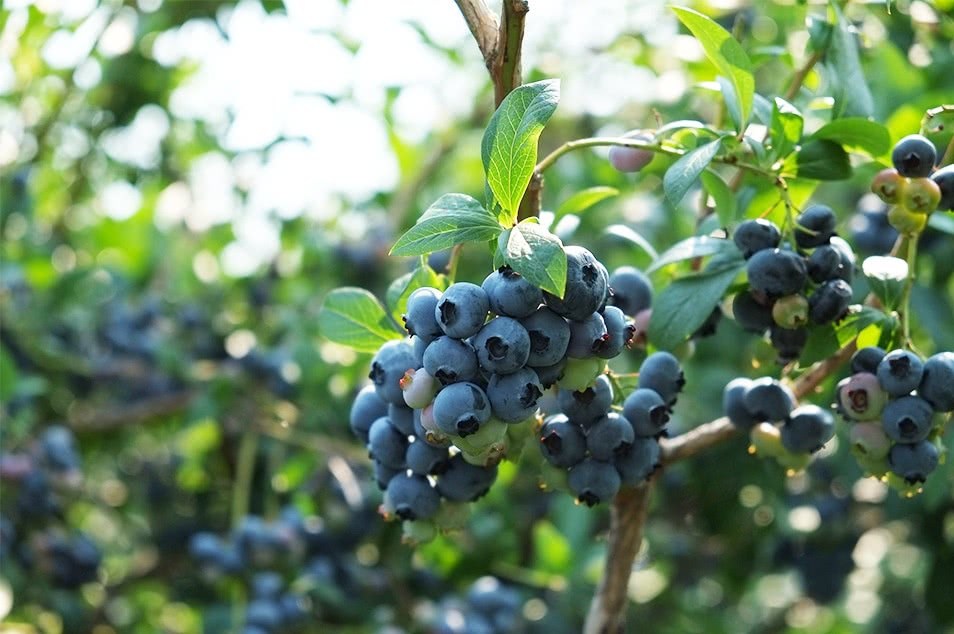
This fruit is a blue berry called the "blueberry." It originated in North America and is the fruit that grows on a low-growing shrub. Originally it was a very sour berry, but after artificial cultivation its flavor became very sweet, and it became a fruit that sells well on the market. Blueberry, as the name suggests, is blue on the outside, which is quite different from the colors of the fruits we usually eat. Although it is small, it is very rich in nutrients. Its skin is covered with a layer of white bloom; do not wash it off when eating, and it is best to eat it together with the skin.
The reason blueberries are widely recognized as a "superfruit" is inseparable from their high nutrient content and low calorie count. Protein, vitamins, and so on aside, what is most worth mentioning is several of its special active components: anthocyanins, polyphenols, and pterostilbene. The anthocyanin content in blueberries is extremely high, and the varieties are abundant. Anthocyanins are a purely natural active substance that is excellent for eyesight, can promote the regeneration of "rhodopsin" in the retina, prevent nearsightedness, and are very beneficial for relieving eye fatigue. In addition, the polyphenols and pterostilbene contained in blueberries have powerful antioxidant effects and can inhibit certain diseases, so it can be said that blueberries are a very comprehensive health fruit.
It is precisely because of these effects that blueberries were designated by the Food and Agriculture Organization of the United Nations as "one of humanity's five major healthy foods," and are highly praised. However, although blueberries are delicious, they are extremely difficult to cultivate. First, they are rather particular about their environment. Blueberries must be planted in acidic soil with a pH of 4.5-5.5, and the soil must also be very moist, because they are not drought-tolerant. Then there is the fact that they are suited to growing in places with low temperatures, and the tropics are not suitable. Finally, their yield is relatively low; in the first three years of planting the yield is very low, and only after entering the 5th year does the per-mu yield become relatively stable, with each plant producing about 3-6 kg.
The blueberry is a berry, which dooms it to be at a disadvantage in transportation. Its shelf life is relatively short, and it does not withstand being squeezed, so the cost of transporting blueberries to the market is very high. This also keeps its price high: a small 200-gram box can sell for 30 yuan, taking the high-end route. This is also why few people have ever tasted it. Friends, have you ever tasted it?