A childhood fruit that looks like a millstone, once planted in large quantities 20 years ago, now rarely seen
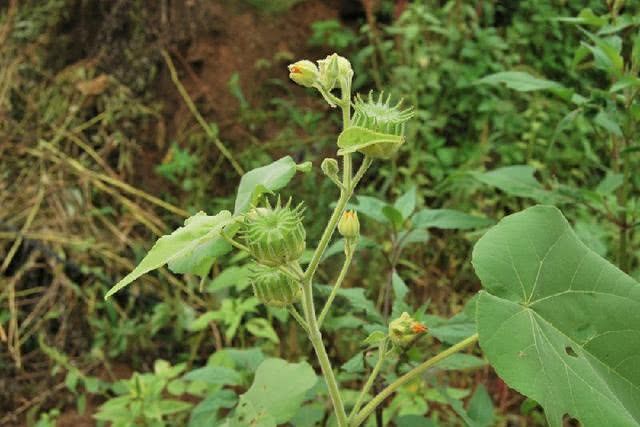
The most abundant thing in rural areas is all kinds of wild plants, which are found everywhere around houses, on small riverbanks and hillsides, and on roadsides and wasteland. Some weeds are so tenacious that they cannot be eradicated no matter what. And some weeds were very common before, but now they are increasingly rare. The weed to be discussed today was planted by many farmers twenty or thirty years ago, because every part of it was useful and its uses were very wide. In the past, farmers relied on planting it to sell for money and increase their family income. Now, with the improvement of living standards, this weed is used relatively less, so hardly anyone plants it, which has led to it becoming increasingly rare now.
The name of this weed is "qingma" (Abutilon theophrasti, velvetleaf). Its fruit looks like a millstone. When young, it can be eaten as a fruit, and it tastes sweet. I often ate it as a child. After its fruit becomes old, the "millstone" turns black, and the seeds inside also mature. Its seeds are even smaller than sesame seeds and can also be used to press oil, but its oil cannot be used for eating. It is mainly used as industrial oil, lubricating oil, soap, and paint, etc. Besides pressing oil, qingma seeds have another important use, which is as medicine. This is also the main use of qingma today.
In traditional Chinese medicine, qingma seeds are believed to have the effects of clearing heat and promoting diuresis, and detoxifying and opening the orifices. They are often used to treat otitis media and tonsillitis. In the "Fujian Materia Medica", the folk method in Fujian for using it to treat otitis media is recorded: use fresh whole qingma plants, including the qingma seeds, and stew them in soup with pig ears, or use qingma seeds together with glutinous rice and blood clams to make porridge. Both have certain dietary therapeutic effects. However, not many people know about its uses. Now, when qingma is occasionally seen by the roadside, it is cut down by farmer friends as a weed, and no one cares about its medicinal value.
In fact, 20 years ago, qingma was still a very popular cash crop and was once planted in large quantities in rural areas. Besides collecting qingma seeds to sell for money, farmer friends would also peel off its stem bark to make gunny bags, twist hemp rope, and weave hemp shoes, which were very strong and wear-resistant. I remember that when I was a child, almost every household in the village wore hemp shoes when working in the fields, especially in summer, when they were most practical, both breathable and convenient. At that time, many people knew how to make hemp shoes themselves, but now hemp shoes are almost nowhere to be seen.
The stem bark of qingma is relatively rough. Although it is good for making gunny bags and hemp shoes, better substitutes are available now, so it has gradually been eliminated. Farmer friends, have you ever planted qingma before?