Potted kalanchoe leaves wilt in summer, why can't you spray water directly?
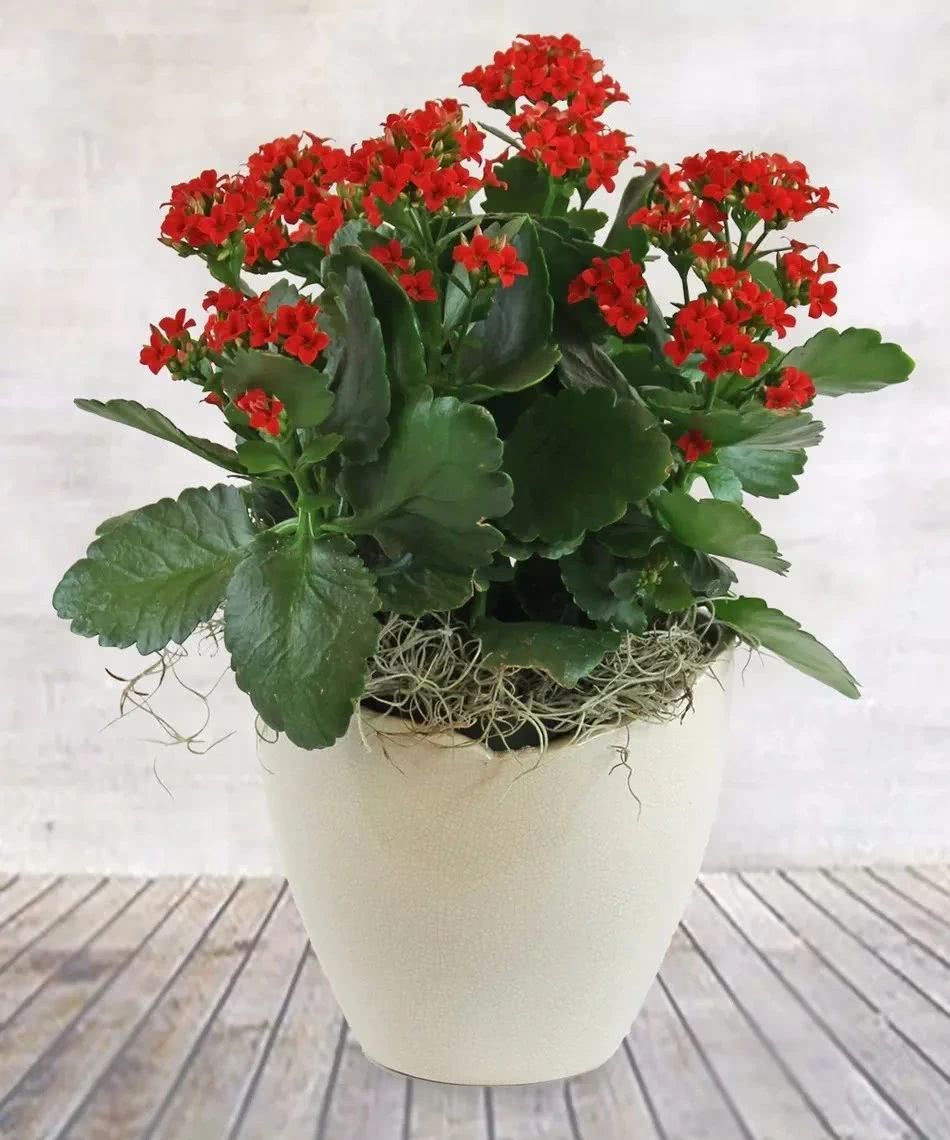
Kalanchoe is actually a very common succulent plant. It likes a warm and dry environment year-round, and the spot where it is kept should be well ventilated and have good light. It is suitable for growing on a bedroom windowsill, and it can grow well with proper light every day. It also releases oxygen at night, which helps improve air quality. Of course, it is kept at home as an ornamental potted plant.
Potted kalanchoe plants all need to be grown in loose, well-draining sandy soil. Avoid using heavy clay soil, and do not directly dig up some garden soil to grow it. You can use peat soil mixed with perlite at a 2:1 ratio for growing. A suitable amount of compost soil or leaf mold can be added to the soil. When planting, you can add some slow-release organic granular fertilizer to the bottom of the pot.
Kalanchoe actually has many varieties, and the flower shapes are all different. There are also different flower colors, including the common orange, red, white, pink, purple and yellow, etc.
During the growing season of kalanchoe, give it plenty of light. It likes a cool and slightly dry environment. In summer, avoid exposure to strong sun, otherwise the leaves are prone to wilting.
The leaves of kalanchoe become soft because the summer temperature is too high and the environment is unsuitable. At this point you definitely must not water frequently, and you should also pay attention to the way you water. You cannot spray water directly onto the leaf surface, as it easily causes black rot, and the leaves rot very easily.
Kalanchoe is a very common succulent plant. Spring and autumn are its peak growing seasons. In winter and spring, it can produce brilliant flowers. When the temperature is too high at the summer solstice, it is instead its dormant season. In summer, you must control watering, keep it in a cool and ventilated place, and avoid excessive exposure to strong sun. In summer, you can give it more light in the morning, and in the afternoon provide appropriate shade.
In summer, if the leaves and branches of kalanchoe become wilted, promptly improve the environment rather than watering frequently. Too much water easily causes root rot or root rot disease. If the temperature is above 5°C, you can spray water on the ground to lower the temperature, but do not spray water directly onto the leaves. Water accumulating on the leaves easily causes rot and infection by fungal diseases.
When caring for kalanchoe in summer, be sure to avoid fertilizing. When the temperature is high in summer, kalanchoe will enter dormancy. This is also the main symptom of most succulent plants in summer: growth becomes very slow, and may even stop. If you fertilize at this time, it easily causes fertilizer burn.
When caring for kalanchoe, be sure to avoid frequent watering. It is quite sensitive to moisture. Even during the growing season, you must wait until the potting soil is completely dry before watering. In both summer and winter, watering must be controlled. Winter and spring are the flowering season, and too much water easily causes bud drop. Normally, when watering, you also cannot pour water directly onto the leaves or flowers, and at night there should be no residual water droplets in the center of the leaves.
Kalanchoe is afraid of cold. The minimum care temperature in winter should be kept above 5°C. Friends in the north can move it indoors when the outdoor temperature is around 10°C. After spring warms up, be sure to wait until the temperature stabilizes at around 15°C before moving it outdoors. In spring and autumn, give it plenty of light. In autumn, give it some potassium dihydrogen phosphate appropriately, which helps promote flowering.