11 Flowers Called "Orchids" That Aren't Orchids Are Stunningly Beautiful - Have You Grown Any?
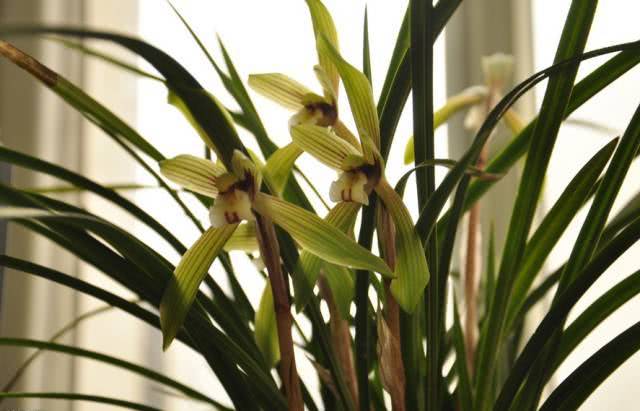
Many plants in our daily lives have "lan" (orchid) in their names, but they aren't true orchid family plants, such as spider plant, clivia, and bird of paradise, among others. Orchids have a long history in our country, and Chinese people's love for orchids runs deep. Perhaps for this reason, many plants have been named with "lan" to express people's affection for them. Let's take a look at those flowers and plants with "lan" in their names~
“
Called "Orchid" But Not an Orchid
”
Orchids
Let's start with orchids. Orchids have a long history in China. According to records, as early as the late Spring and Autumn period, King Goujian of Yue had already planted orchids on the hills of Shaoxing, Zhejiang. After the Wei and Jin dynasties, orchids were used to decorate courtyards.
In ancient times, most people collected wild orchids. After the Wei and Jin dynasties, people began cultivating them in palaces, and then it gradually expanded to the private gardens of the scholar-official class. It was during the Tang dynasty that the cultivation of orchids and huilan (Hui orchids) developed to the point of ordinary gardens and flower growers cultivating them, as seen in the poetry of the great Tang poet Li Bai, who wrote lines such as "The fragrance of hidden orchids drifts far on the wind, the roots of hui grass flow with fragrance."
The orchids among China's traditional famous flowers refer only to several species of terrestrial orchids distributed among China's orchid family plants, such as Chunlan (Spring Orchid), Huilan (Hui Orchid), Jianlan (Jian Orchid), Molan (Ink Orchid), and Hanlan (Cold Orchid), which are what is commonly referred to as "Chinese orchids." These orchids differ greatly from tropical orchids with their large, brightly colored flowers. They do not have very showy, gaudy appearances, nor do they have huge flowers or leaves, yet they are simple, quiet, elegant, and noble, which very much conforms to the aesthetic standards of Eastern people.
China has always regarded orchids as a symbol of nobility and elegance, and places them alongside "plum, bamboo, and chrysanthemum," collectively known as the "Four Gentlemen." The term "lan zhang" (orchid chapter) is commonly used to describe the beauty of poetry and prose, and "lan jiao" (orchid friendship) to describe the sincerity of friendship. There are also those who use orchids to express pure love, as in "Her spirit is like an orchid, unchanging forever; her heart is like an orchid, never wavering" and "Having found a hidden orchid to give to a true friend, one branch is enough to gift to a dream of Xiaoxiang." In May 1985, orchids were rated fourth among China's top ten famous flowers.
Clivia
Clivia, also known as the large-flowered clivia, is a perennial evergreen herbaceous flowering plant of the genus Clivia in the Amaryllidaceae family, native to South Africa. The large-flowered clivia has thick, dark green, glossy leaves, large and colorful flowers, and a dignified and elegant appearance. It is an excellent potted plant for both flower and foliage appreciation, and can also be used as a cut flower.
The thick, smooth leaves of clivia stand upright like swords, symbolizing a noble character of strength, firmness, and unyielding dignity; its full flower form and brilliant colors symbolize wealth, good fortune, prosperity, and happiness, so it is not an exaggeration to call it the flower of gentlemen.
It fears heat and cannot tolerate cold, prefers a semi-shaded and humid environment, and fears strong direct sunlight. The optimal temperature for growth is between 18-28°C. Below 10°C or above 30°C, growth is inhibited. Clivia likes a well-ventilated environment and prefers deep, fertile, loose soil. It is suitable for growing in loose, fertile, slightly acidic organic soil.
Spider Plant
Spider plant is a perennial evergreen herbaceous plant of the genus Chlorophytum in the Liliaceae family. Flower stems emerge from the leaf cluster, growing into stolons with clusters of leaves at the tips. The flowers are white, usually clustered in groups of 2-4.
Spider plant roots and leaves resemble orchids, remaining green year-round and very beautiful. When spider plant blooms, the flower stems extend from the leaf cluster with an elegant form and unique shape, deeply loved by flower growers. Spider plant also has strong air purification ability, making it a great green plant choice for many newly renovated homes. Spider plant has strong adaptability, is easy to keep alive, has low soil requirements, and is relatively shade-tolerant, and is cultivated in many households.
It prefers warm, humid, semi-shaded environments. It has strong adaptability, is relatively drought-tolerant, and not very cold-tolerant. It is not choosy about soil and grows best in well-drained, loose, fertile sandy soil. It is not strict about light requirements, generally suitable for growing under medium light conditions, and also tolerates weak light. The optimal growth temperature is 15-25°C, and the overwintering temperature is 5°C.
Snake Plant
Snake plant, also known as tiger skin plant or thousand-year plant, is a perennial herbaceous foliage plant of the genus Sansevieria in the Liliaceae family. The leaves are upright, thick and fleshy, with horizontal white stripes resembling a tiger's tail, hence the name.
Snake plant varieties include golden-edged snake plant and short-leaf snake plant, among others. Snake plant is very shade-tolerant and can also absorb harmful gases. It is suitable for decorating studies, living rooms, and office spaces, and can be enjoyed for a long time.
Snake plant has strong adaptability, prefers warm and humid conditions, tolerates drought, and likes light but also tolerates shade. It is not strict about soil requirements, with well-drained sandy loam being better. Its optimal growth temperature is 20-30°C, and the overwintering temperature is 10°C.
Rain Lily
Autumn zephyr lily and rosy rain lily are collectively called rain lily, because they often suddenly bloom after heavy rain in spring and summer. Rain lilies are perennial herbaceous plants of the genus Zephyranthes in the Amaryllidaceae family. Rain lily flowers are very beautiful, with petals slightly drooping in the sunlight, pink and peach-red, dazzlingly brilliant.
For rain lily cultivation, fertile sandy loam is best as the growing medium, and the planting site should have sufficient sunlight. In shaded areas, they are not easy to produce offset bulbs and not easy to bloom. For fertilizer, organic fertilizers such as oil cake, compost, or nitrogen, phosphorus, and potassium fertilizers can be used, applied once every 2-3 months. Increasing phosphorus and potassium fertilizer proportionally can promote bulb enlargement and good flowering. When the plants become crowded and overgrown, they must be forcibly divided. They are robust by nature, drought-tolerant and heat-resistant, and easy to cultivate. The optimal growth temperature is 22-30°C.
Christmas Cactus
Christmas cactus is an epiphytic succulent plant of the genus Schlumbergera in the Cactaceae family. Christmas cactus is named for the shape of its segment joints, which resemble a crab's claws. Because it blooms at Christmas, it is also called "Christmas cactus" abroad. Christmas cactus flowers come in diverse and brilliant colors, deeply loved by flower enthusiasts both domestically and internationally.
Christmas cactus prefers cool and warm environments, is relatively drought-tolerant, fears high summer heat, and is relatively shade-tolerant. The optimal growth temperature is 20-25°C, and the dormancy temperature is around 15°C. It prefers loose, organic-rich, well-drained and breathable growing media. Christmas cactus is a short-day plant. Under conditions of 8-10 hours of sunlight per day, it can bloom in 2-3 months. The flowering period can be regulated by controlling light.
Bird of Paradise
Bird of paradise is also called the paradise bird flower. Its flower shape is unique and its posture is elegant, resembling a crane holding its head high and gazing into the distance, hence the name. Its superior linear quality and fresh, elegant form complement each other, and it is known as the "king of cut flowers."
Bird of paradise is a perennial herbaceous plant of the Strelitziaceae family, without a stem. The flowering period is in winter. Bird of paradise is evergreen year-round, with large beautiful leaves and unique flower shapes. It can be planted in clusters at courtyard corners, used for courtyard landscaping and as accents in flower beds and flower borders.
Bird of paradise is a subtropical long-day plant. It prefers warm, humid, and sunny environments, fears severe cold, and avoids extreme heat, drought, and waterlogging. It requires well-drained, loose, fertile sandy loam with a pH of 6-7. The optimal growth temperature is 20-28°C.
Agave
Agave, also known as dragon tongue palm or sisal hemp, is a perennial evergreen large herbaceous plant of the genus Agave in the Asparagaceae family. Because its leaves are firm and upright, evergreen year-round, with yellow-green flowers, and after blooming, a large number of bulbils can grow on the inflorescence. In its place of origin, it generally takes several decades to bloom, and after blooming, the mother plant dies. Cross-pollination is required for it to set seed.
Agave prefers ample sunlight, is slightly cold-tolerant, and does not tolerate shade. It prefers cool, dry environments. The optimal growth temperature is 15-25°C. It can be cultivated outdoors at temperatures above 5°C. Mature agave plants suffer only mild frost damage to their leaves at temperatures as low as minus 5°C. At minus 13°C, the above-ground parts freeze and rot, but the underground stem does not die and can sprout and grow leaves normally the following year. Cool, dry winter conditions are most favorable for its growth. It has strong drought tolerance. It is not strict about soil requirements, with loose, fertile, and well-drained moist sandy soil being suitable.
Wax Flower
Wax flower is a plant of the genus Hoya in the Apocynaceae family. It is a climbing shrub, originally growing on trees or rocks, with aerial roots growing from the stem nodes, and prefers semi-shade. The entire plant can also be used medicinally. It is a flower that is both beautiful and useful.
Wax flower mostly grows epiphytically on tree trunks and rock walls. It prefers warmth, tolerates dryness, and likes high temperature, high humidity, and semi-shaded environments. In summer and autumn, relatively high air humidity needs to be maintained. It should avoid direct sun exposure; if sunlight is too strong, the leaf color will turn yellow, and the color will become rough and dull without luster. Its suitable growth temperature is 20-25°C. Except for the warm regions of South China, potted plants need to overwinter in a greenhouse. The winter temperature should not be lower than 1°C. It can only bloom with 3-4 hours of sufficient sunlight daily. In areas with insufficient light, it is often grown as a potted foliage plant. It grows vigorously in humus-rich and well-drained soil, and is more suitable for plenty of light and slightly dry soil.
Cast Iron Plant
Cast iron plant is a plant of the genus Aspidistra in the Liliaceae family. You read that right, it's Aspidistra... Because the green berries on both sides resemble spider eggs, and the underground rhizomes exposed above the soil resemble spiders, it is named "spider holding eggs."
Cast iron plant has strong adaptability and is extremely shade-tolerant, making it an excellent shade-loving foliage plant for indoor greenery decoration. Cast iron plant has a certain air-purifying effect, can absorb formaldehyde, also has a certain absorption effect on carbon dioxide and hydrogen fluoride, and can also absorb a certain amount of dust.
Cast iron plant prefers warm, humid, semi-shaded environments, is relatively cold-tolerant, and extremely shade-tolerant. The optimal growth temperature is 10-25°C, and the temperature range in which it can grow is 7-30°C. The overwintering temperature is 0-3°C.
Gladiolus
Gladiolus, also known as sword lily, is a perennial herbaceous plant of the genus Gladiolus in the Iridaceae family. Its original species came from the Cape of Good Hope in South Africa and was developed through multiple interspecific hybridizations. Cultivated varieties are widely distributed around the world. The flower stem rises above the leaves, and the flower tube is an enlarged funnel shape. Flower colors include red, yellow, purple, white, blue, and other single or bicolor varieties, very beautiful.
It is widely cultivated around the world. The main producing countries are the United States, the Netherlands, Israel, and Japan, among others. Gladiolus is an important cut flower and can be used in flower baskets, bouquets, and vase arrangements. It can be used to arrange flower borders and specialized flower beds. Dwarf varieties can be grown as potted ornamentals. Along with cut roses, carnations, and gerbera daisies, it is known as one of the "world's four major cut flowers."
Gladiolus is a warmth-loving plant, but excessively high temperatures are unfavorable for growth. It is not cold-tolerant. The optimal growth temperature is 20°C-25°C. The corms can sprout at soil temperatures above 5°C. It is a typical long-day plant. Long daylight promotes flower bud differentiation. Insufficient light will reduce the number of flowers, but after flower bud differentiation, short daylight promotes bud formation and earlier flowering.
Corms of summer-flowering varieties must be stored indoors to overwinter, and the room temperature must not be lower than 0°C. Fertile sandy loam is suitable as the growing soil, with a pH not exceeding 7. It is especially fond of fertilizer. Phosphorus fertilizer can improve flower quality, and potassium fertilizer promotes improving corm quality and increasing the number of offset corms.
Freesia
Freesia belongs to the Iridaceae family and is a perennial bulbous herbaceous flowering plant of the genus Freesia. Also called freesia, the corm is narrowly ovate or ovate, the leaves are sword-shaped or linear, the flower stem is upright, the flowers are upright and stemless, pale yellow or yellow-green, fragrant, blooming in April-May and fruiting in June-September.
Main varieties include the light purple "Blue Lady," the bright yellow "Cream Cup," the red "Rapid Red," the white "Elegance," and the orange "Spring Day," among others.
Native to southern Africa, it is cultivated in both northern and southern China. Because its flower color is pure white as snow and its floral fragrance is as delicate as an orchid, it is named freesia (fragrant snow orchid).
Freesia prefers cool, humid environments with ample sunlight. Its cold tolerance is relatively poor. The suitable growth temperature is 15°C-20°C, and the minimum overwintering temperature is 3°C-5°C. A large temperature difference between day and night is favorable for growth and development. The nighttime temperature should preferably be 10°C-15°C, and the daytime temperature should not exceed 20°C, otherwise growth will be poor. It prefers loose, well-drained, humus-rich soil.
During the growth process of freesia, corms at 13.5°C-15°C can promote rooting and sprouting. Flower bud differentiation requires a low temperature of 8°C-13°C. Under short-day conditions, freesia is favorably promoted for flower bud differentiation. After flower bud differentiation, long daylight can advance flowering. Usually, corms are planted in September, flower bud differentiation begins in early November, and differentiation is completed in late November. After May of the following year, the leaves gradually wither, and the corms enter a natural dormancy period.
How many pots have you grown?
Share with everyone in the comment section below
Friends who like this article can show it to flower lovers who need it~