How to get rid of aphids? I've tried a dozen or so methods at home, but these two are still the most reliable
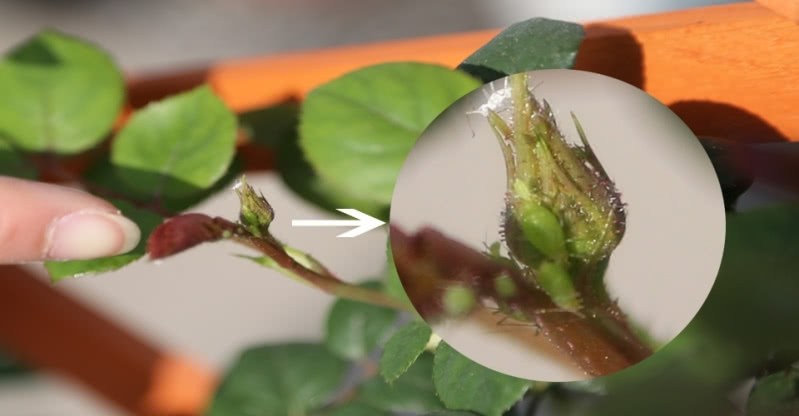
After talking about spider mites, I noticed everyone's comments were complaining about aphids. That's right, how could a balcony be without these little annoyances! An enclosed balcony, poor ventilation, plus growing juicy tender-leaf plants from the Rosaceae or Asteraceae families - such tempting conditions, and aphids are sure to show up uninvited.
Aphids are more straightforward than spider mites - they won't hide on the underside of leaves devouring plants unnoticed. Tender shoots are where aphids gather. Touch them with your finger and you'll feel a damp, sticky substance - that's aphid secretions. Don't underestimate these secretions: they're deadly to plants, but fine nectar to ants.
The "rain" under the trees is their doing
Aphids are commonly known as "ni chong" (sticky bugs) in older parlance, belonging to the order Homoptera. They have piercing-sucking mouthparts, and both adults and nymphs often cluster on leaves, tender stems, flower buds and terminal buds, greedily sucking sap, causing leaves to shrivel, curl and become deformed. Aphid secretions left on branches and leaves can trigger sooty mold in plants, so they truly bring fatal harm to plants.
Ants love sweets, and aphid secretions contain glucose, sucrose and other sweet substances - an irresistible temptation for ants. Ants will even deliberately herd aphids, providing them with food and protecting their safety, even carrying them into their nests for the winter. Biologists vividly call these herded aphids "cows."
Walking under the shade of trees, do you ever feel there are always "little raindrops"? Especially with poplar, locust, willow, goldenrain tree, pomegranate and Sichuan pepper trees - the sunnier the day, the more "little raindrops" there are, dripping on your face and clothes. The ground always feels damp, and some spots are covered with a black, oily-looking grime. Walking on it feels like stepping on glue, and lifting your foot produces a squelching sound. These are also aphids' "handiwork." If you have this experience walking under a tree, it means there must be quite a few aphids wreaking havoc on that tree's tender shoots.
Don't judge them by their looks - these tiny bodies pack a big punch!
Aphids come in two types: winged and wingless. Body color varies at different stages - green in the early stage, black in the later stage, and the molted skins are white. The aphid army reproduces all year round, speeding up at 29°C, at a rate comparable to spider mites. They also reproduce through parthenogenesis - females can reproduce without mating with males. In spring and summer, aphids play "heroic mothers" and reproduce via parthenogenesis, while in winter they mate and lay eggs. It's said that in the warm climate of the south, they are even more rampant, reproducing by parthenogenesis all year round.
Imagine a single female aphid over nearly 150 days from June to November - assuming all offspring survive, and with each generation taking about 10 days to complete, generations would overlap and produce 15 generations. The number of descendants would be staggering! And as temperatures rise, the reproduction cycle of aphids shortens accordingly. Suddenly it feels like the aphid army is going to take over the Earth - thankfully, natural environmental factors and predators keep them in check, so they never reach the numbers described above.
Take advantage of aphids' color preference - the perfect time to repel, trap and kill aphids!
Hang yellow sticky traps. Make sure to choose yellow sticky boards - aphids have a particular attraction to yellow. Coat the yellow board with a layer of high-viscosity insect glue, and when aphids fly onto it, they're doomed once stuck. Meanwhile, yellow sticky traps do no harm to aphids' natural enemies, so they're also beneficial for biological control.
Key points for using yellow sticky traps:
1. Placement time: Continuous use gives the best results. Start using from early May to early November. Best to start from the seedling stage. Using them throughout the entire growing period gives the optimal effect.
2. Quantity: Yellow sticky traps are usually A3 paper size. One or two per balcony is enough, or you can cut them up and distribute them separately.
3. How to use: Use a wooden stick or bamboo pole and insert the lower part into the flower pot. Or use wire or plastic string through the holes to hang the yellow sticky trap. Traps placed in an east-west orientation attract more insects than those placed north-south.
4. Placement method: The yellow sticky trap should be kept slightly higher than the plant's growing point. When aphids cover more than 60% of the area, the trapping effect declines and it should be replaced promptly.
Additionally, aphids have an aversion to silver-gray. In agriculture and forestry, silver-gray plastic film is used to repel aphids. At home, we can collect some silver-gray food bags or milk powder bags - puffed food and cookie bags are silver-gray inside. Cut them open, wash them clean, turn the silver-gray side outward, and stick them on small wooden sticks in flower pots. This can help repel aphid damage.
A pesticide praised by 90% of plant lovers - use it well and kill, kill, kill those aphids!
Imidacloprid - on Taobao you'll usually find the following types: 10% wettable powder, 25% wettable powder, 50% wettable powder, 70% wettable powder. Its mechanism is to interfere with the aphid's motor nervous system. After contact with the pesticide, normal conduction in the aphid's central nervous system is blocked, causing paralysis and death.
Imidacloprid has good insecticidal effect because it is systemic in plants - meaning the active ingredient, after being sprayed, enters the plant and is transported through the plant's fluids to every tiny branch and leaf. Unlike abamectin, which requires covering every corner of the plant to kill spider mites, imidacloprid only needs to be sprayed on the front of leaves, and aphids on the back will also be affected. Of course, don't take chances - you should still spray evenly and thoroughly to nip problems in the bud.
Key points for using imidacloprid:
1. Efficacy period: High control effect within 1 day after application, lasting up to 25 days.
2. How to use: We generally dilute imidacloprid about a thousand times, and the effect is quite good. That means 10% wettable powder should be 1 gram per 1 liter of water, 25% wettable powder should be 1 gram per 2.5 liters of water, and so on.
3. When to use: To fully unleash the pesticide's efficacy, choose a clear, windless morning for spraying - efficacy is fully realized at higher temperatures. Also, efficacy is positively correlated with temperature, so the higher the temperature, the better the insecticidal effect.
4. Precautions: Continuous use of imidacloprid easily breeds resistance, so long-term use is not recommended. Consider alternating or mixing with pesticides that have different mechanisms of action.
Welcome to follow Plant Fanatic - care to join Squirrel Jun in obsessing over plants and flowers?