Hard to judge watering for succulents in summer heat? Two methods to grow them plump easily
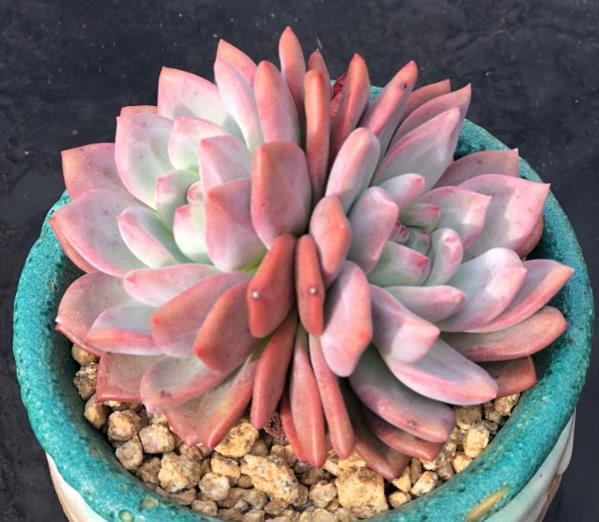
For succulents that are usually watered very rarely, you can catch some rainwater when it rains and use it to water them. When watering, pour along the wall of the pot, so that the succulent's roots will extend toward the places with moisture and thus grow stronger and stronger. You may worry that watering succulents on a rainy day will make the humidity too high and cause problems for the succulents, but succulents are not that delicate. A succulent that has already been dry for a long time will simply drink its fill after contact with rainwater, just like being rained on outdoors, and basically no problems will occur, since it is not being watered frequently. Watering on a rainy day has another advantage: rain usually does not fall for just one day, and when there is no sun the next day, the stuffy, muggy problem after watering succulents can be avoided.
The timing of watering succulents in summer is also very important. For the watering time, it is recommended to choose the evening or night, which is the best choice. The temperature at that time is not too high, and after a night of ventilation, not only can some water droplets accidentally left on the leaf surface be blown dry, but the moisture in the potting soil can also spread more evenly and partly evaporate, making the succulents relatively safer. The plant is more active at night and can cope with the sudden increase in moisture. The disadvantage of watering during the day is that the sunlight is already strong by eight or nine o'clock, and under direct sunlight, some flower pots with thinner walls can easily cause the potting soil to overheat.
Try to avoid water accumulating in the leaf center and leaf axils. Although after a night of wind, most of it will be blown dry, if any remains and then happens to be exposed to the scorching sun, the remaining moisture becomes the chief culprit for the succulent dropping leaves. If you find that the middle-layer leaves of your succulent turn to mush and drop, or that half of the leaves turn to mush and drop, it is very likely related to water accumulation. Sometimes, watering less is for the sake of health, and extending the watering interval can also indirectly force the succulent to strengthen the water-retention capacity of its leaves. Some succulents with thick, fleshy leaves, such as Echeveria 'Furong Snow Lotus', if they have already been grown plump and solid in the earlier stage, will maintain a very good condition even if not watered for one or two months, but this will inevitably also cause the roots to dry up and affect later growth.
Now let's talk about the second watering method for succulents, which is to choose bottom soaking. Let the moisture slowly seep upward from the bottom of the pot, so that the first thing to contact the water is the succulent's roots. This method is actually both convenient and safe. We do not need to worry about the problem of water accumulation caused by watering too much; with bottom soaking, water accumulation does not exist. No matter which method you use to water indoor succulents, the most important thing after watering is to maintain ventilation and air convection. Open the windows as much as possible or use a small fan to strengthen air circulation. As long as ventilation is good, succulents after watering will recover their condition in the shortest time.
As for the bottom-soaking method for succulents, you can place the potted plant into a tray or a shallow basin without holes filled with water, letting moisture seep into the pot from the drainage holes at the bottom from below upward until the surface soil on top of the pot is moist. Under normal care conditions in general, for a sowing pot, soak it to half its depth, and 10-15 seconds is enough. Do not wait until moisture appears on the surface soil before taking it out. The looser and more breathable the soil, the less time can be used, because the siphon effect is strong. The advantage of this watering method is that it can ensure the upper part of the soil is relatively drier than the lower part, making root rot less likely. It can also prevent the surface from becoming too wet and the occurrence of the "crusting" phenomenon after drying. During the sowing stage, you can soak until the soil surface is wet before taking it out.
Bottom soaking for succulents achieves very good results, and one very important reason for this is the soil. Succulent soil mixes are mainly based on good water permeability. With such soil, during bottom soaking, water is easily drawn upward, and of course excess water also flows out easily. This is what it means to water thoroughly. With soil that is breathable and permeable, during bottom soaking, whether it is absorbing water or excess water flowing out, it can all happen quickly. But if you make your own mix of garden soil plus some coal cinder and the like, this kind of soil retains water very well, so bottom soaking will very likely cause water accumulation because it absorbs a lot and cannot drain it out.
This is a gathering place for succulent lovers, sharing succulent care tips. You are welcome to follow and exchange ideas.