A lot of pups have grown beside the potted aloe - why does everyone want to pull them out?
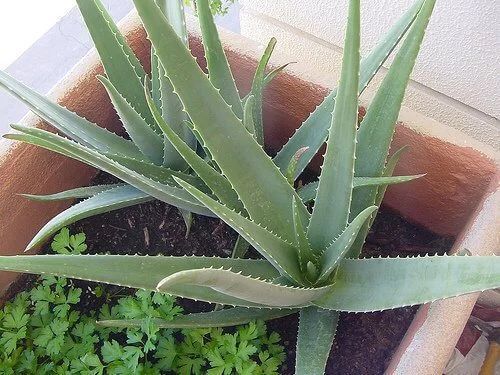
Aloe is quite adaptable to its environment. As long as you avoid watering too frequently, let the potting soil dry out completely before watering during care, and keep the environment warm and dry year-round, aloe will grow well. In winter, care should also pay attention to keeping the minimum care temperature above 5°C.
For planting potted aloe, it is best to use loose, fertile and well-drained soil. You can mix river sand and peat soil, and appropriately add some compost soil. You can use a 3:2:1 mix of compost soil, peat soil and river sand, so that the soil stays airy and loose.
Before caring for aloe, you should know that it is actually a succulent, and caring for it is no different from caring for a cactus. Be sure to avoid frequent watering. Before each watering, you can wait until the soil is completely dry. There are many ways to test this. You can directly insert your finger or a dry wooden stick into the soil, and water only after the soil 3~5 cm below the surface has dried out. Insert the wooden stick into the soil for 5 minutes and then pull it out to know whether the soil is completely dry. If the wooden stick is still wet, then wait a while before watering.
The most important thing in caring for aloe is to control watering. When watering, do not pour water on the leaves or the leaf center. Water accumulating in the leaf center can easily cause the center to rot.
Do not let the soil stay wet for a long time, and even more so do not let the soil become waterlogged. Choose a container with relatively large drainage holes. At the bottom drainage holes, you can place some granular stones or broken tiles to prevent the soil from blocking the drainage holes.
When planting aloe, be sure to avoid frequent fertilizing. It has very little demand for fertilizer. Generally, you only need to give a little diluted organic liquid fertilizer in spring and autumn, and the concentration must not be too high. When fertilizing, do not let the fertilizer touch the leaves, otherwise it can easily cause fertilizer burn.
Aloe is actually a plant that fairly likes light. With proper care, it can even produce brilliant yellow or red flowers. Aloe can also keep producing pups, but if you want to use aloe leaves for beauty care, then you must not let it grow too many pups. You can pull them out and replant them.
Aloe is generally propagated by division. As long as you keep a warm and slightly dry environment, it will keep producing pups. When the pups grow to 5 cm tall, you can pull them out. You can wait for the wounds on the seedling roots to dry before replanting. Just after planting, place them in a bright, ventilated spot for care. Do not rush to water at first. Give water after 3~5 days, and gradually expose them to light after 1~2 weeks.
The place where aloe is cared for needs about 4~8 hours of direct light each day. When the summer temperature is too high, you can shade it appropriately. If you find that the aloe leaves turn red, it proves that the light is too abundant. Move it to a bright spot, and the leaves will gradually return to green.
Although aloe likes light, it is also fine to keep it in a bright indoor spot, but then you should appropriately control watering.
Aloe is not only easy to care for, but can also be used to treat minor burns or scalds. If you are not sensitive to aloe, you can also use it to treat rashes and for beauty care. It is a very amazing succulent.
Aloe contains more than two hundred kinds of natural compounds with biological activity. The vitamins, amino acids and various minerals in it can stimulate nutrient absorption. The salicylic acid in aloe also helps resist inflammation. The gel in the leaves can be used to moisturize the skin, reduce rashes and help wounds heal.
Before using aloe to treat wounds, first test whether you are sensitive to aloe gel. You can directly cut a piece of aloe leaf, remove its outer skin, and apply it to the back of your hand. If there is no adverse reaction, then you can use aloe leaves to treat the skin. Some varieties can even be eaten.