Keep one of these flowers at home for wealth, good fortune and prosperity
When growing flowers, sometimes it is not just for the looks; many flower lovers also go for the good luck. Especially flower lovers in business, who usually keep some plants with auspicious meanings in the office and shop, hoping everything goes smoothly and wealth pours in! Today Huahua introduces several wealth-bringing plants with auspicious meanings; if you like one, just grow a pot of it!
“
Wealth-bringing plants
”
Lucky bamboo
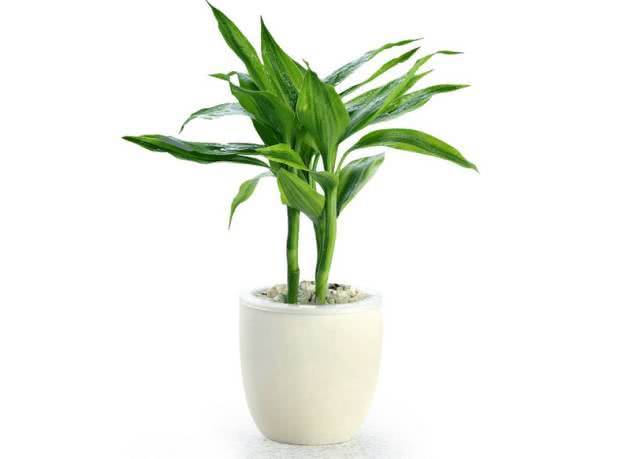
The first choice among wealth-bringing plants is lucky bamboo. It looks good and is easy to grow, and it survives well indoors too. Lucky bamboo has emerald green leaves that shine brightly, and upright, graceful stems with an elegant appearance. Its stem nodes look like bamboo nodes but it is not bamboo, hence the name, carrying the meaning of wealth and longevity. In China there is the blessing "flowers bloom for wealth, bamboo reports peace", which is why people love it. It signifies great fortune and prosperity, and when planted together as a "lucky bamboo" arrangement, it is the first choice for many merchants opening a shop.
Lucky bamboo likes shady, humid and warm conditions, tolerates waterlogging, is highly tolerant of fertilizer and strong in cold resistance. It prefers a semi-shaded environment and grows best in well-drained sandy soil or semi-sandy and alluvial clay soil. Lucky bamboo likes a warm environment; the suitable temperature is 18°C~24°C, and it can grow all year round. Below 13°C the plant goes dormant and stops growing. When the temperature is too low, because the roots cannot absorb enough water, yellow-brown patches appear on the leaf tips and leaf edges. The minimum wintering temperature must be above 10°C. Lucky bamboo is not strict about light; it grows well in bright scattered light. Too much light or exposure to the sun can cause the leaves to turn yellow, fade in color and grow slowly.
Pennywort
Pennywort has fresh green leaves, a clean and elegant look, and a beautiful plant shape that is very pleasing to the eye. In our culture, great attention is paid to meanings and homophones. Pennywort has round leaves, like mini lotus leaves, quite cute, and also like ancient copper coins, symbolizing reunion and continuous good luck. Moreover, the name contains the characters "copper" and "coin", so its meaning is naturally different: with copper coins at home, wealth rolls in, so it is regarded as a symbol of wealth.
Pennywort likes warm and humid conditions. It is best grown in partial sun or shade, and direct sunlight should be avoided. It is not fussy about soil, but loose, well-drained soil is best, or it can be grown directly in water, with the optimal water temperature being 22-28°C. It tolerates shade and moisture, is slightly drought-tolerant and highly adaptable. Pennywort is robust, easy to plant and fast to propagate, and can grow both in water and on land.
Money tree
Now many companies that newly open bring in a pot of money tree. It symbolizes bringing in wealth and prosperity. The money tree is also very good at purifying the air, effectively removing carbon monoxide, carbon dioxide, as well as harmful gases such as sulfur, benzene and secondhand smoke. With fresh air, work naturally goes smoothly too~
It likes a hot and humid climate and has poor cold resistance. Seedlings cannot tolerate frost; adult trees can withstand light frost and long-term low temperatures of 5-6°C. In South China it can overwinter outdoors, while in regions further north it must be moved into a greenhouse in winter to protect it from the cold. It likes fertile, loose, breathable and water-retentive sandy loam, and prefers acidic soil; alkaline or heavy clay soil should be avoided. It is slightly drought-tolerant. When watering, be sure to wait until the soil is completely dry before watering, otherwise the roots rot easily. Generally, it is also best not to water until it runs through.
ZZ plant
The ZZ plant has a clean and beautiful appearance, and its color and shape are very appealing. It has no thick trunk, no sprawling side branches, and no dense, impenetrable leaves. It is simply an ornamental plant; although it never blooms, it just shows you its green. The green leaves of the ZZ plant make people feel its vigorous vitality and draw them close. Look at its name: money, gold coins, with the flower meaning of honor and wealth, bringing you continuous good luck.
It likes a warm, hot, slightly dry, semi-shaded environment with small annual temperature fluctuations, and grows well at 20°C to 32°C. During the growing season, water by the rule "do not water until dry, and water thoroughly when you do". It is fairly drought-tolerant, but afraid of cold, and avoids strong direct sunlight. It dislikes heavy clay soil and water accumulation in the pot; if the pot soil has poor drainage and aeration, its tubers rot easily.
It requires loose, fertile, well-drained soil rich in organic matter, acidic to slightly acidic. It has strong sprouting ability; after cutting off the large pinnate compound leaves, new leaves quickly emerge from the top of the tuber.
Ardisia
Ardisia is an evergreen small shrub of the family Primulaceae. Its drupe is round and spherical, about the size of a pea, initially pale green and bright red when ripe, staying on the plant for a long time and looking very beautiful. There are also white or yellow varieties, and they are generally all usable medicinally. Among the people, it is also affectionately called "ten thousand taels of gold" and "gold and jade filling the hall". It means festive good fortune, wealth and prosperity, and also many sons and blessings.
Ardisia likes a shady and humid environment. In spring it should be placed on a windowsill with morning and evening light, keeping the pot soil moist. It should often be sprayed with water several times around it and on the leaves to increase air humidity, and indoor ventilation should be noted. Start fertilizing after new leaves emerge. When the outdoor temperature stays above 15°C, it can be moved to a semi-shaded balcony or courtyard. After the temperature rises in late spring, growth speeds up, so pay attention to supplementing water and fertilizer.
Kumquat
"Ju" sounds like good fortune, and "jin" means wealth, so the kumquat carries the meaning of good luck and bringing in wealth. A kumquat tree can be placed at home or given as a congratulatory gift. Putting some kumquats in a fruit basket for New Year visits is a very good way to give blessings. Note that when choosing a potted kumquat, be sure to pick one full of fruit, because sparse fruit implies "much bad luck and little good"; the fruit color should be red and glossy, and the branches and leaves should be deep green with no yellow leaves.
Kumquat is slightly shade-tolerant and likes a warm, humid climate. It is not cold-resistant; when the temperature drops below -7°C, frost damage occurs. It grows best in deep, fertile, neutral to slightly acidic sandy loam. Potted kumquats like a bright, ventilated environment and a place with plenty of sunlight; such conditions favor healthy growth, a high flowering rate, and plump, glossy fruit.
Green ingot
Green ingot is the leguminous plant Castanospermum australe. Because its seed resembles the shape of a sycee ingot, it was given this name. The cotyledons of Castanospermum australe, the two "ingots", that is, the two seed lobes, unlike other legumes that shrink and disappear after the seedling emerges and consumes the nutrients, turn green and continue photosynthesis, remaining on the soil surface for as long as a year during the seedling stage. Castanospermum australe has long been called the plant cornucopia; placing a pot of it can attract and keep wealth.
Green ingot likes a semi-shaded environment and cannot tolerate sun exposure or deep shade. In winter it can be kept in full sun, which helps it overwinter. It likes high temperatures and is suitable for loose, fertile loam or sandy loam; in winter, long-term dampness should be avoided. The best growing temperature is between 20-30°C, and in winter it must not drop below 10°C, preferably staying above 15°C. During the hot summer period, avoid strong light. In winter avoid heating, and in summer avoid cold air from air conditioners, to prevent the leaves from yellowing or browning.
Guzmania
Guzmania flowers open at the top or middle of the plant. The flowers and leaves are lush, and the flower color is bright red, giving a very festive feeling. The leaves are broad and sword-shaped, appearing dark green. The spike-like inflorescence resembles a cone, with densely packed bracts and yellow tips. Precisely because this bromeliad has red flowers all over its top, it was named after the idiom "hong yun dang tou", meaning good luck. Its flower meaning is perfection; in people's eyes, Guzmania is an auspicious and noble flower.
Guzmania likes a warm and humid environment. The suitable growing temperature is 21-28°C, and the maximum temperature must not exceed 35°C. Below 10°C, the plant's growth is easily stunted, and the leaves or bracts may lose color by turning red or white. Air humidity should be high, generally 75-85% is best; below 50%, the plant's leaves shrink and curl. It should be well ventilated. When watering, use clean water that has been left to stand for 2-3 days, and pour it into the plant's "cup" shape rather than directly into the pot's growing medium. Even if the medium in the pot is on the dry side, the plant will still grow well if there is water in the leaf cup; but if only the pot soil is moist and there is no water in the leaf cup, the plant will look lifeless, with adverse reactions such as leaves easily turning yellow.
No fertilizer is needed during the flowering period. After flowering, promptly cut off the flowers and supplement fertilizer; fully water-soluble fertilizer can also be poured into the leaf cup along with watering, but others such as cake fertilizer and granular chemical fertilizers should not be applied in the leaf cup. After small plants grow, you can use a sharp knife to cut them off from the mother plant and plant them separately. Generally, the old plant will not bloom again and can later be used as a mother plant to propagate new plants.
String of buttons
String of buttons, also known as "chuan qian jing tian", is a perennial succulent plant of the genus Crassula in the family Crassulaceae.
The succulent string of buttons is not only good-looking, but its name is also really likable. Everyone wants their money to be so plentiful that it comes in strings and clusters! Then you can buy lots and lots of succulents; wouldn't you laugh awake even in your dreams!
Like other succulents, string of buttons likes a dry, ventilated environment and dislikes stuffy, hot and humid conditions.
In summer, string of buttons goes into a semi-dormant state, while in winter it grows very well. It likes sunlight and can tolerate low temperatures to a certain extent.
Fabian aralia
In fact, most flower lovers call it "fu lu tong". The stems of the fabian aralia are upright, and the leaves are bright and variable, making it a fairly popular foliage plant. The leaf edges have irregular creamy-white markings, which flower lovers greatly appreciate. Plants of different sizes can be used to decorate the living room, bedroom, study, balcony and other places; they are both stylish and elegant, and natural and fresh. There are also variegated and silver-edged varieties.
The name "fu lu tong" itself means blessings arrive and prosperity arrives; its feng shui role is to bring wealth and good fortune. Specifically in terms of feng shui: with a fabian aralia at home, wealth flows more smoothly, bringing good luck and peace.
Fabian aralia likes a warm, humid environment with plenty of sunlight. It tolerates semi-shade, is not cold-resistant, and is afraid of drought. At home it can be kept for a long time indoors in a bright spot; if it can get several hours of sunlight indoors every day, it grows even more vigorously. In summer, avoid direct strong outdoor sunlight. During the growing season, keep the pot soil moist but not waterlogged, and often spray the plant with water close to room temperature to increase air humidity and keep the leaf color fresh. Apply a special fertilizer for foliage plants or a well-rotted, diluted liquid fertilizer about once every 2 weeks. If it is a variegated variety, note that the nitrogen content in the fertilizer should not be too high, lest the markings on the leaves fade or even disappear.
You must have a wealth-bringing plant too, right?
What is it?
Tell everyone in the comments below!
Show it to flower lovers who need it!