After the corn subsidy policy was introduced, the rise in corn prices is still not obvious
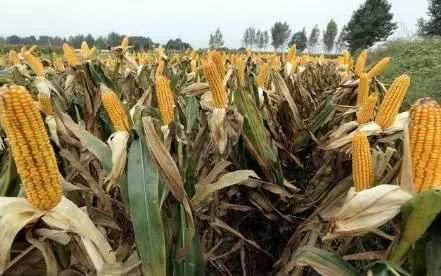
The corn subsidy policy is here. Will corn prices launch a second upward attack?
Seeing this question actually made me reflect on another issue: recently there has been a steady stream of positive news for the corn market, but corn prices still have not risen! Although here I am not answering the subsidy policy, it is very similar to the question, so can this round of positive news drive corn prices up?
Friends who follow the corn market should be fairly clear that since corn prices fell in mid-March, there has hardly been any notable market movement. Now, a series of positive factors - the 25% tariff imposed on U.S. corn, rising logistics costs, uneven arrivals in Northeast China, and high temperatures pushing corn starch demand into its peak season - still has not been able to support current prices in forming a reversal and counterattack!
Looking at the reasons, this is mainly because current domestic corn market demand is relatively weak, and another major factor is the large-scale release of temporary storage corn. These two factors have constrained any further rise in corn prices.
Recently, corn prices in many regions have been affected by higher freight rates, and corn prices in many regions have also risen to a certain extent, while the U.S. corn tariff issue has also made everyone optimistic about corn this year. But we must also recognize one point: there has been no fundamental change in demand across the entire downstream terminal segment of corn.
For example, for feed corn, the current hog farming market still has not undergone a fundamental turnaround. Most farmers dare not easily expand production capacity, and their feed consumption is limited. As for corn deep-processing enterprises, although production capacity has expanded somewhat, temporary storage is still maintaining an auction quota of about 8 million tons per week. This has greatly eased the current supply situation in the corn market, and the corn recently auctioned is basically corn from 2015 and 2016 with relatively good quality, which can even reach feed-grade levels. This is fundamentally different from the auction situation in April and May, since at that time the corn still could not fill the feed gap.
For the corn market, the greatest pressure is probably still temporary storage, due to the excessive domestic inventory pressure. This year, temporary storage auctions have never paused. Now they are still maintaining high-volume, high-frequency auctions, which has dashed the hopes of many who previously wanted corn auctions to stall in July.
Now, with the tariff imposed on U.S. corn, the volume expected from U.S. corn is likely to decrease. However, China implements a quota for corn, so in fact the impact of imported corn on domestic corn is also limited. But after all, it is still positive news, and it also helps corn prices rebound somewhat!
Now it is the thirteenth consecutive week of temporary storage auctions, trading volume is also gradually declining, and the premium rate has also increased somewhat. Based on this trend, temporary storage auctions are expected to pause. And a series of positive factors in the market also support corn prices moving upward. However, against the backdrop of large temporary storage sales, market grain supply is somewhat guaranteed. In the short term, corn prices probably cannot form a counterattack, and prices may still maintain a volatile pattern!
This is Science Agriculture, welcome to follow, and let us grow our knowledge together.