What are the sowing methods for orchid bonsai? Hurry up and learn them.
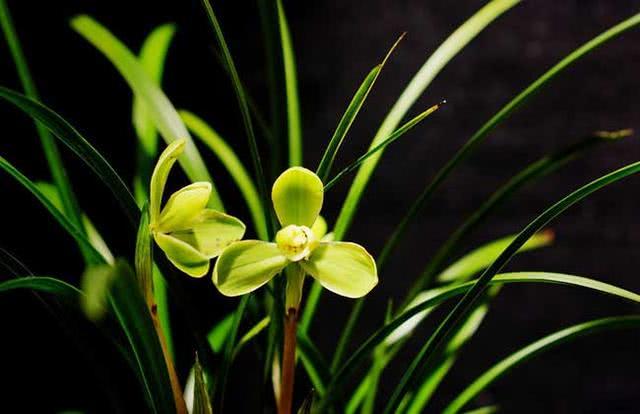
Orchids are one of the most common potted plants in our homes. Together with "plum, bamboo and chrysanthemum" they are known as the Four Gentlemen, and judging from China's more than 2,000 years of orchid history, orchids have always been a symbol of nobility and elegance. Grown at home, they are a plant that can really raise your class; when friends come over, one look and they know your taste in life is out of the ordinary. So for a plant like this, how should we care for it?
Let us first talk about the key points of orchid propagation. We can propagate orchids by division or by sowing; division is more common because it is also simpler to care for that way. Usually after dividing we need to choose suitable soil. Orchids like some leaf mold added to the soil, mixed with garden soil and sand. This kind of soil is not only loose and fertile, but also has good drainage and aeration. On the surface of the soil we can also put some plant ash, which can absorb water and block dust.
For orchids, fertilizing and watering can basically be done at the same time. When watering orchids, the first thing we need to do is not water as long as the potting soil is not dry; if the potting soil has dried out completely, then water it thoroughly in one go. Do not fall into a pattern of repeated watering, because then you cannot tell how much water is actually needed each time to water the orchid thoroughly. Of course, watering is also closely related to the season. If it is spring or autumn, watering once a week is fine.
If it is summer, watering once every three to five days is enough, and in winter you can appropriately stretch out the watering frequency. Orchids quite like fertilizer; we generally fertilize during the growing season, which gives the orchid enough nutrients to grow and produce rather beautiful flowers. As we said above, fertilizing and watering are done at the same time; this is to prevent the fertilizer from being too concentrated and injuring the roots, and proper watering can dilute the fertilizer.
At the same time, orchids are rather sensitive to temperature. In the south the temperature is basically quite suitable, but if you are in the north, we should keep them indoors for care as much as possible. The most suitable growing temperature for orchids is around 15 to 25 degrees, and we need to ensure this growing temperature for the orchid to produce beautiful flowers.
The last point is repotting. After one to two years of care, orchids need to be repotted once. This can reduce soil compaction, and at the same time keep the soil fertile so that our orchids grow more luxuriantly. It is a case of one move bringing many benefits, so do not let laziness cause poor plant growth.
The charm of orchids is widely known, and if we want to care well for a plant like this, we need to put our hearts into it.