Honeysuckle: Bonsai, Landscape, Medicinal - The All-Purpose Flower
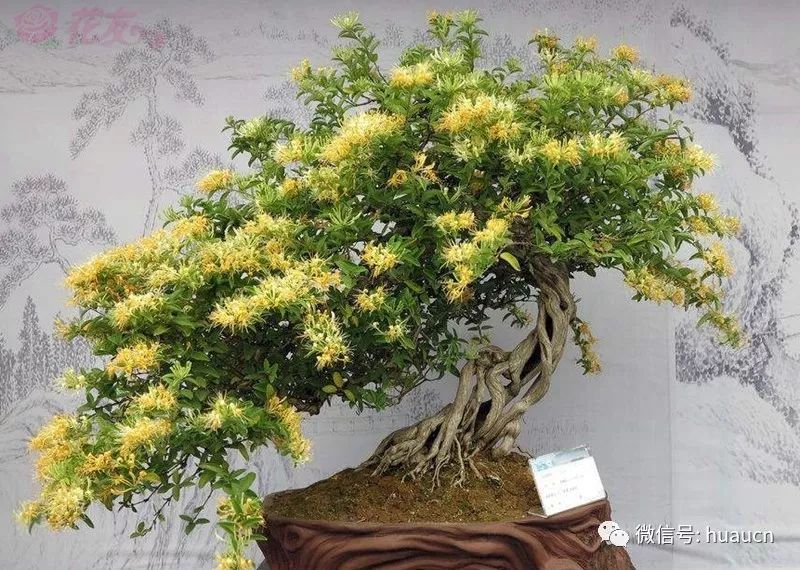
When people think of honeysuckle, their first impression is mostly of its medicinal properties. Recently, while inspecting landscape engineering projects, this reporter frequently saw its application in garden landscapes, and it was quite eye-catching.
The scientific name of honeysuckle is Lonicera japonica. It is a perennial semi-evergreen twining woody vine of the genus Lonicera in the family Caprifoliaceae, reaching up to 9 m in length. It is said that the name "honeysuckle" (jinyinhua) comes from the Compendium of Materia Medica, because its flowers first open white and later turn yellow, with white and yellow coexisting, hence the name jinyinhua, also known as rendong. China is the main producing country of honeysuckle, with a cultivation history of several hundred years to date. Apart from Heilongjiang, Inner Mongolia, Ningxia, Qinghai, Xinjiang, Henan and Tibet, where it does not grow naturally, it is distributed in all other provinces of China. It can be said that honeysuckle is truly a native tree species.
Honeysuckle: Why is honeysuckle called Mandarin Duck Vine?
The honeysuckle plant is light and graceful, with interlacing vines, vigorous growth and strong branching ability; its winter leaves are slightly red and it is rich in fragrance. It is a vine with both color and scent, and can be twined around fences, flower stands, flower corridors, rockeries, as well as high-voltage poles, floodlighting lamp posts, urban elevated bridge piers and other urban vertical structures for vertical greening.
In recent years, with economic development, cities have become full of high-rise buildings but have less green space. As a trellis greening plant, honeysuckle has the characteristics of extensive management, good economic benefits and small footprint, and is increasingly widely used in improving the urban space environment. It is not only highly ornamental and practical, but also, under natural conditions with severe exhaust gas and dust pollution, honeysuckle, as an adsorbent woody vine, also shows many excellent characteristics such as strong adaptability and strong pollution resistance.
In addition, honeysuckle has a long flowering period and fragrant flowers, and blooms during the heat of midsummer, making it an excellent material for arranging summer scenes in courtyards. In the Bazhou City Count Mountain courtyard landscape project, it can be seen in many courtyard landscapes, and it is in full bloom, very bright and beautiful. Its plant is light in weight, and it is also a good material for beautifying roof gardens.
Nowadays, as scenic area construction is in full swing, the garden gate has become the first image and calling card of a scenic area. Using the twining habit of honeysuckle to decorate and green the garden gate makes the architecture and plants complement each other. Especially during the full flowering period of honeysuckle, the porch is full of flowers, adding pastoral charm to the garden. In Beijing Gubei Water Town, not only is some honeysuckle climbing on the fences along the road, but quite a lot is also planted on both sides of the road, either as solitary plants or in mass plantings, with an obvious accent effect.
Besides serving as an independent garden feature, honeysuckle also has the functions of shading and dividing space. The trellis can be a bamboo or wood frame, flower stand or long corridor, and can also be combined with pavilions, corridors, waterside pavilions, gates and bridges. Its form can be determined according to terrain, space and function, "bending with the shape, curving with the terrain," and it is coordinated and unified with the surrounding environment in form, color and style.
Honeysuckle also has high ecological value. Bare rock and slopes have poor water retention performance and often produce natural disasters such as displacement and landslides. In order to increase the soil and water conservation and ecological restoration capacity of bare rock and slopes, people are paying more and more attention to the development and utilization of vines.
Honeysuckle has a particularly developed root system and extremely wide adaptability. In addition, its branches are dense and trailing, its leaves are dense, and its main root is robust and can go deep underground along stone crevices; its capillary roots are also well developed, giving it a unique function of fixing soil and conserving water. For example, a single 3-year-old honeysuckle plant generally has more than 300 branches and has a good greening effect.
In addition, honeysuckle has strong resistance to drought, barrenness, waterlogging and salinity-alkalinity, as well as a strong ability to conserve soil and water, thus playing a unique role in desertification control and in soil and water conservation and ecological restoration of quarries, mining areas and highway slopes.
Honeysuckle: Common pest and disease control for honeysuckle
Commonly used cultivated varieties of honeysuckle include yellow-veined honeysuckle, purple-veined honeysuckle, red honeysuckle, white honeysuckle, four-season honeysuckle and others. Among them, the leaf veins of purple-veined honeysuckle are purple, and the corolla is white with a purple halo; the surface of the red honeysuckle corolla is bright red, and it is purplish-red when first opened; the flowers of white honeysuckle are first white and later yellow; four-season honeysuckle blooms continuously from spring to late autumn.
Honeysuckle likes light but also tolerates shade, is cold-resistant, drought-resistant and resistant to waterlogging, and has no strict requirements for soil and climate. Sandy soil with a relatively thick soil layer is best; hillsides, terraced fields, field ridges, embankments and barren soil can all be used for cultivation. It can be propagated and cultivated by sowing, cutting, layering and division.
Cutting can be carried out in all three seasons of spring, summer and autumn, and is best in the rainy season. Roots form after 2 to 3 weeks, and after transplanting in the second year it can bloom. Layering is carried out from June to October. Division is carried out in spring and autumn.
Honeysuckle, coming out from the pharmacopoeia, has beautiful form and fragrant flowers, combining ornamental, medicinal, ecological and greening value in one, and has extremely broad development prospects. However, at present, most domestic research on honeysuckle is still concentrated on pharmacological analysis and component analysis, and development at the landscaping level is still insufficient. Therefore, everyone should be called on to reasonably carry out applied research on the comprehensive utilization of honeysuckle resources, especially against the broader background of emphasizing environmental improvement and ecological construction, to fully explore the garden application value of honeysuckle as an excellent greening material.
In the Bazhou City Count Mountain courtyard landscape project, honeysuckle can often be seen in the courtyards, forming an upper, middle and lower landscape with small trees and turf, and appearing even more gorgeous against the white walls.
Honeysuckle has two flowers and two petals on one stalk, in pairs, like flying birds soaring together, so it is also called Mandarin Duck Vine.
Honeysuckle: The legend, flower language and medicinal value of honeysuckle
In the bonsai garden of Shanghai Botanical Garden, above the entrance to the rockery by the lake, several plants of 'Jingjiuhong' honeysuckle are in full bloom. Unlike ordinary honeysuckle, the outer side of its petals is rose-red, while the inside is golden or silvery; the flowers open like scattered stars above and below, and against the verdant green leaves among the rocks they appear very gorgeous.
In the Gubei Water Town scenic area, quite a lot of honeysuckle has been planted, either as solitary plants or in mass plantings. When the flowers bloom, white and yellow alternate, adding much color to the scenic area.
Honeysuckle has the function of shading and dividing space. Beside a road in Yongqing County, honeysuckle climbs on a support, serving to divide space.
·END·
An interactive platform for flower growers, gardeners and green plant enthusiasts to exchange ideas, show off, and brag. An online home for sharing flower cultivation methods and household gardening tips. A fresh flower subscription platform.
Fresh flowers: Hyacinth|Stock|Plum blossom|Carnation|Camellia|Kalanchoe|Jasmine|Gardenia|Peach blossom|Balloon flower|Osmanthus|Calla lily|Lily|Forget-me-not|Clivia|Apricot blossom|Honeysuckle|Aglaia|Peony|Sunflower|Chrysanthemum|Serissa|Crown of thorns|Tulip|Narcissus
Green plants: Poinsettia|Money tree|Pothos|Spider plant|Alocasia|Lucky bamboo|Asparagus fern|Aloe|Ivy|Anthurium|Monstera|Bougainvillea|Silk tree|Peace lily|Schefflera|Boxwood|Sago palm|Rubber plant|Maidenhair fern|Snake plant|
huau.cn
……
Search the public account "Huayou" or "huaucn" for the latest information
Business cooperation, promotion. Please contact WeChat private account:ihuaucn