Bonsai pruning techniques that beginners can easily master
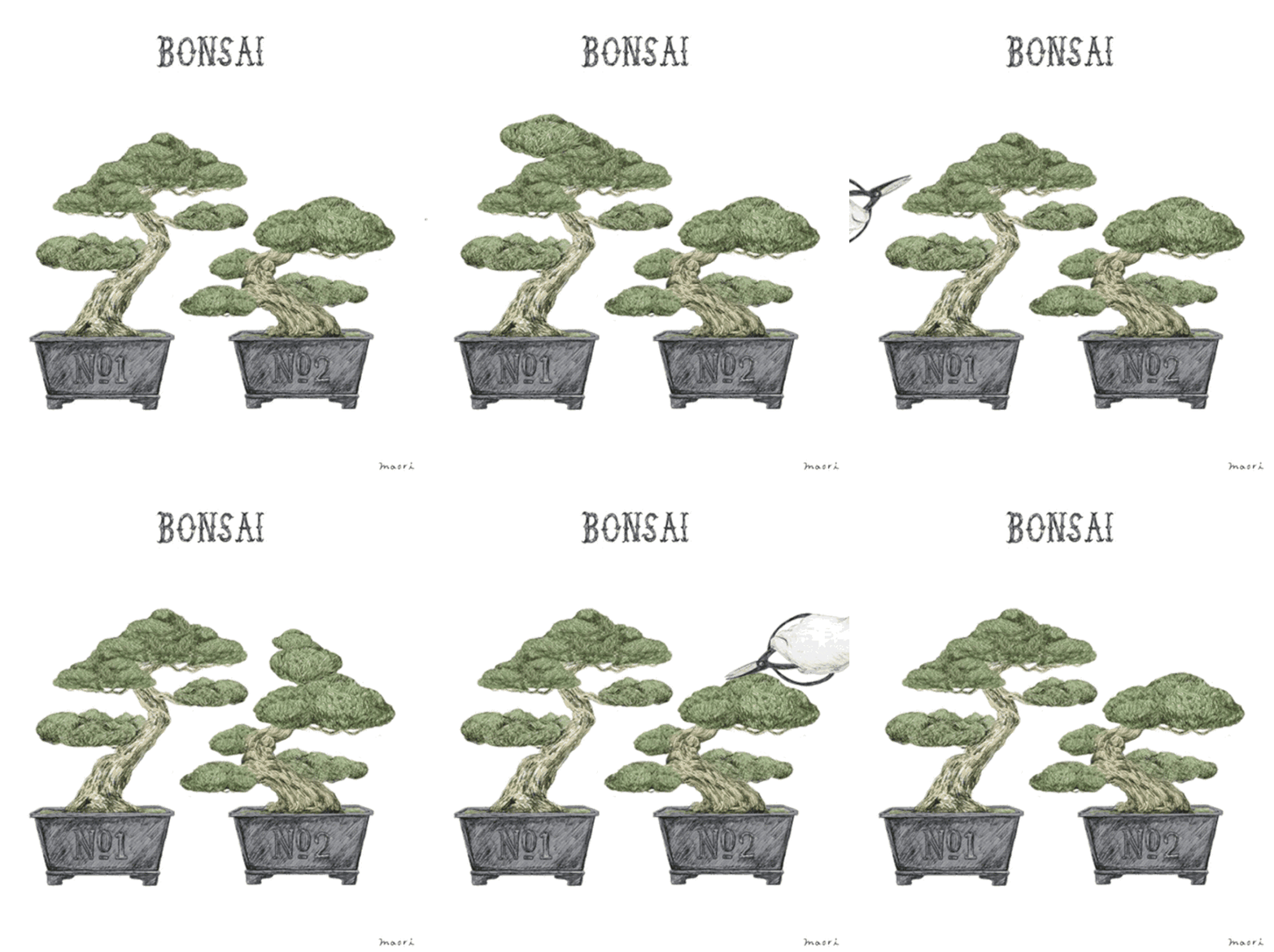
You may be wondering, why do bonsai need pruning?
In fact, regular bonsai pruning has three benefits
1. It lets the plant's trunk and main branches grow better, so the shape becomes more beautiful
2. It lets the leaves on the branches grow evenly, so some leaves will not grow too large and take nutrients from the other leaves, which would affect the appearance
3. It reduces apical dominance, which helps promote the growth of the lower leaves and branches
Below are illustrated explanations for pruning these four plants. Let's go~
1
Dawn redwood
This is the dawn redwood, as it looked before pruning
Because the dawn redwood grows vigorously and has a well-developed root system, the roots can easily grow too much. So when we prune later, for the sake of appearance, while pruning the leaves we will also clean up the roots at the bottom
This is a before-and-after comparison of the bottom. Because the dawn redwood's root system is well developed, there is no need to worry about damaging the roots
Alright, next we prune the leaves
Because the dawn redwood has a forest-style shape and its branches are straight trunks pointing upward, the leaves at the top grow a bit too vigorously
As shown in the picture, this part needs to be cleaned up to achieve the effect of removing apical dominance (you can search for the concept of "apical dominance" on Baidu)
On the branches near the soil at the bottom, there are many small leaves, and these also have a certain effect, so some of them should be removed too
Alright, let's start cutting!
The first cut will be made at the top, first bringing the height down.
We keep cutting at the top until the height is controlled at the position we want
After pruning, once the height is controlled, then we start cutting the small leaves at the bottom.
These small leaves generally affect the appearance, so these leaves should be cut as much as possible
After pruning, this lower position has become clean and refreshing. (PS: personal habit, I don't like the bottom to be not refreshing enough~~)
After pruning, the basic feel has emerged
However, it seems something is still missing
That's right...
This position is flat-topped, not good-looking..
Then let's make a triangular top
With a little more refinement, it is done
2
Ficus
The leaves of this ficus are already very lush, and there are many weeds on the soil
So when pruning, the weeds must be removed at the same time
Before starting to prune, we first need to judge (or estimate) the shape of this ficus
We can see that the trunk is an
S shape
After parting the leaves, there are several main branches
Key point: the trunk and main branches form the shape of the plant after pruning, everyone should pay attention to this
This time we will prune starting from the bottom
First, the weeds at the soil position
Why remove the weeds first?
Sometimes these weeds are too tall and will block the trunk
The main reason is,They are an eyesore! ! ! !
When pulling weeds, I suggest using your hands, as this makes it easy to pull them out by the roots
After cleaning, the soil surface is much cleaner
Next, we prune the following leaves along the trunk
I will first choose the leaves of this main branch
The principle for pruning the leaves of the main branches is to prune them into cloud-like shapes, in separate clumps, and the leaves and small branches of this main branch after pruning should cluster together, which is what makes it look good
How to make them cluster?
How to make them cluster?
Even after pruning, the junction where the trunk and main branches meet should not keep leaves, so that it looks clean and refreshing
After that, by the same principle, we deal with the other main branches
At this time, I see that on one main branch, some small branches are growing downward
Due to personal preference, I don't like branches growing downward. I want the branches to be "flourishing day by day", so I will cut off this branch
Alright, let's continue pruning the other branches
At the current position, I have finished pruning the main branches facing me
This is the position at the back
This side is also finished pruning
Up to this position, the parts below the head have been pruned, and at this point the shape has basically emerged
There are several things to pay attention to when pruning the head
1. When you encounter new buds, even if the bud is very tender and good-looking, if it affects the appearance, resolutely cut it off
2. The top head cannot be too large. If it is too large, it will create apical dominance and affect the growth of the leaves below the head
So when pruning, make the head as small as possible
And try to prune it into a ball
This way it will look better
Then make appropriate refinements
Done!
In addition, after pruning, the leaves and branches will release sap, so after pruning a ficus, it is best to water the whole plant
3
Elm
The pruning principles for elm are similar to those for ficus
However, the difference between ficus and elm is that elm has a particularly large number of small branches, so when pruning, pay attention to cleaning up more small branches
We also start by pulling weeds
From this picture, everyone will get a sense of the general shape of this elm
ok, let's tackle each main branch one by one
After simple pruning, it becomes like this
ok, next branch
This branch is also done
These are some small branches close to the trunk. Since they affect the overall appearance, I will cut off all these small branches
After pruning the two main branches at the bottom, the bottom begins to take shape
Next are the 3 main branches above
This is how it looks after pruning
Everyone will think, will cutting like this make it bald?
The answer is: don't worry, because elm has strong sprouting ability and can withstand pruning, so cutting makes it healthier
The head also needs to be cut into a roughly round shape, and it cannot be too large
After pruning the head, it is basically about right
Then make simple refinements
Simple refinement means that some small branches and leaves have not been pruned cleanly, so at the end they need to be cleaned up again
After pruning is done, finally take a selfie
4
Camellia
The pruning of this plant is a bit different from the previous two
At the beginning, first prune the overly long branches
Because these are really too! much of an eyesore!
Alright, the troublesome ones are removed
Looking at it this way, this Fujian tea also has too many leaves
ok, we start pruning from the leaves of the trunk and main branches
The leaf circled in red is too close to the trunk, so I will remove it
After pruning, it looks like this
The principle is to keep leaves far from the trunk, and remove leaves too close to the trunk
By the same principle, we remove the leaves close to the trunk on the other main branches
After processing, the trunk and main branches can be clearly distinguished
The head of this plant is not too large, so the head only needs simple pruning
This plant is done being pruned
Some friends may have questions
There was originally a relatively large branch at this position. Isn't it a pity to cut it off?
The answer is: it is not a pity, because it affects the appearance. So just cut it off directly
There is another pruning principle for bonsai:Prune ruthlessly!
The above are the pruning explanations and tutorials for these plants. I hope they help with everyone's daily care.
You can contact us directly with plant care questions