How do you treat and prevent anthracnose in Monstera deliciosa?
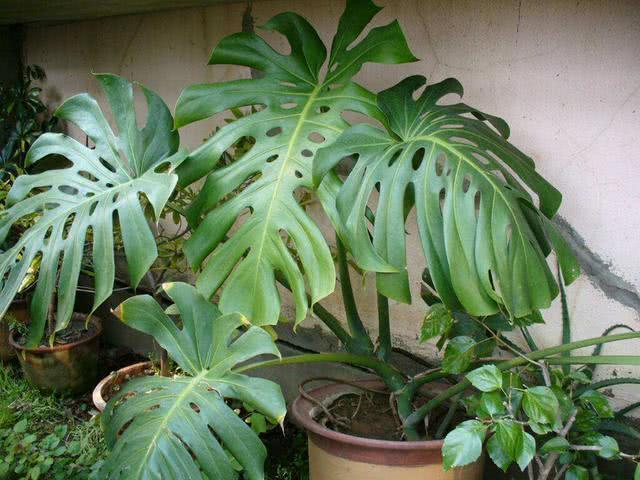
Anthracnose is caused by a bacterial infection. Whether it is humans, animals, or even green plants, they can all get this disease. Now that we know its cause, there is naturally a way to cure it too. Today let's see what Monstera deliciosa, a plant rich in tropical rainforest character, looks like when it gets anthracnose, and how it should be prevented and treated. If you have encountered this situation, how did you deal with it?
1. Symptoms of the disease
Once Monstera deliciosa is infected with anthracnose, the most important site of attack is the leaves, which is also the easiest place to spot. Right after it gets sick, you will notice some irregular small spots beginning to grow on its leaves. Most of these spots appear light brown. The longer the time passes, the more serious the disease becomes, and the spots on the leaves change along with it, turning from the initial brown to white. In addition, on the white lesions some small black dots will grow. Although these lesions do not have much effect on the growth of Monstera deliciosa and will not directly cause its death, for a foliage plant like Monstera deliciosa, they are a fatal problem in terms of appearance. This series of lesions seriously affects its ornamental value.
2. Onset period
In fact, the onset period of anthracnose follows a regular pattern, and this has to start with the pathogen. The reason the leaves of Monstera deliciosa get infected with anthracnose is that some pathogens remain on its leaves over the winter, causing the pathogens to become active the following spring and then grow some spores on its leaves. In addition, because foliage plants need their leaf surfaces sprayed with water to keep them moist, the humidity on the leaf surface and in the environment creates a good growing environment for the pathogens, thus gradually inducing anthracnose.
Monstera deliciosa also likes to grow in places with higher ambient temperatures. In this kind of high-temperature, high-humidity environment, the anthracnose pathogen can grow even more, so in hotter climates the onset of anthracnose is more severe, and may even cause the leaves of Monstera deliciosa to become scorched overall or drop off. The early stage of anthracnose generally occurs in early spring, and the severe stage occurs in the hot summer.
3. Treatment methods
From the above two points, we have learned the onset period of anthracnose and its characteristics at onset, so in daily care you should observe the growth of Monstera deliciosa leaves more often. Once any abnormal situation appears, measures must be taken to treat it.
The first step is to strengthen the management of Monstera deliciosa's growth, starting with nutrients. Under conditions of sufficient nutrients, Monstera deliciosa will grow stronger, the plant's constitution will also improve, and its resistance to various pathogens will be enhanced.
The second step is to reduce the amount of water sprayed on the leaf surface as much as possible during the rainy season, lower the humidity in the environment as much as possible, and control the growth of the pathogens.
The third step is that once you observe signs of anthracnose growing on the leaves of Monstera deliciosa, promptly prune off those leaves and spray some chemicals to prevent the pathogens from continuing to harm the leaves. In this way, anthracnose can be effectively prevented.
Today, from the growth environment of Monstera deliciosa, we analyzed the onset pattern, growth changes, and onset characteristics of anthracnose, and summarized methods for treating anthracnose. Did you learn anything? How do you usually deal with anthracnose when you encounter it?