How do you care for the succulent Haworthia cooperi? Its delicate, beautiful leaves make it perfect for growing at home
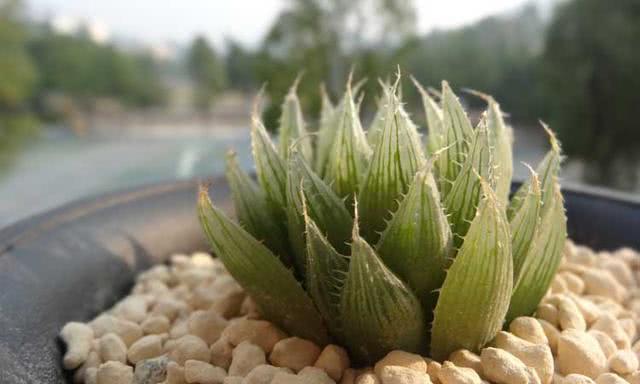
Speaking of the succulent Haworthia cooperi, it is really quite interesting. I remember the first time I saw this variety, I laughed and said it looked just like jelly. This succulent is also called Mingbao grass; it is rather small, usually only growing to about five or six cm in height, and its leaves are fairly thick and fleshy, mostly translucent. Because its leaves grow alternately, it sometimes looks very much like a lotus. So how should we care for such a lovely succulent at home?
First, we need to prepare soil that suits the growth of Haworthia cooperi. We usually mix peat soil with sandy soil; this soil combination has good aeration and drainage, and provides better respiration for the succulent's root system later on. If we use leaf cuttings, we can start with a smaller pot. Many plant care enthusiasts like to get everything done in one step and choose a relatively large pot, which makes it hard for us to control the amount of water, and even the amount of fertilizer later on, which is not good for the plant's growth. So for choosing a flower pot, moderate size is best, and we can move to a larger pot for care later through repotting.
We usually start planting Haworthia cooperi in spring, because spring is the season when everything grows, which helps Haworthia cooperi take root. Spring and autumn are both peak growing seasons for Haworthia cooperi. We need to keep the potting soil moist, and at the same time we can apply some fertilizer, so that there are enough nutrients during the growing period, along with sufficient light, and then the leaves we care for will be even more translucent and emerald green.
We also need to pay attention to watering Haworthia cooperi, because as everyone knows with succulents, too much water can easily cause root rot and yellowing leaves. So we should water according to how dry or wet the potting soil is. If we are not sure whether the inside of the potting soil is also dry, we can insert a toothpick into the pot and pull it out to see whether there is soil on the toothpick. If there is, we can skip watering for now; if not, then we need to water.
When watering, be sure to water thoroughly, and just water directly onto the soil, not onto the leaves. This is because water droplets under sunlight will absorb a lot of energy and can easily scorch our beautiful leaves, which would make them look bad.
For care in summer and winter, we all need to be more careful, because both the hot summer and the cold winter can cause dormancy problems. At noon in summer, we need to place Haworthia cooperi in a shady spot, which can effectively lower the temperature and make dormancy less likely. In winter, we should place Haworthia cooperi indoors for care, raise the temperature of its growing environment, and let it get plenty of sunlight.
Haworthia cooperi really looks very beautiful in appearance. Many friends grow it at home. In fact, besides at home, you can also place a pot in a study or an office.