What are the cultivation characteristics of Amaryllis? A comprehensive guide in one article
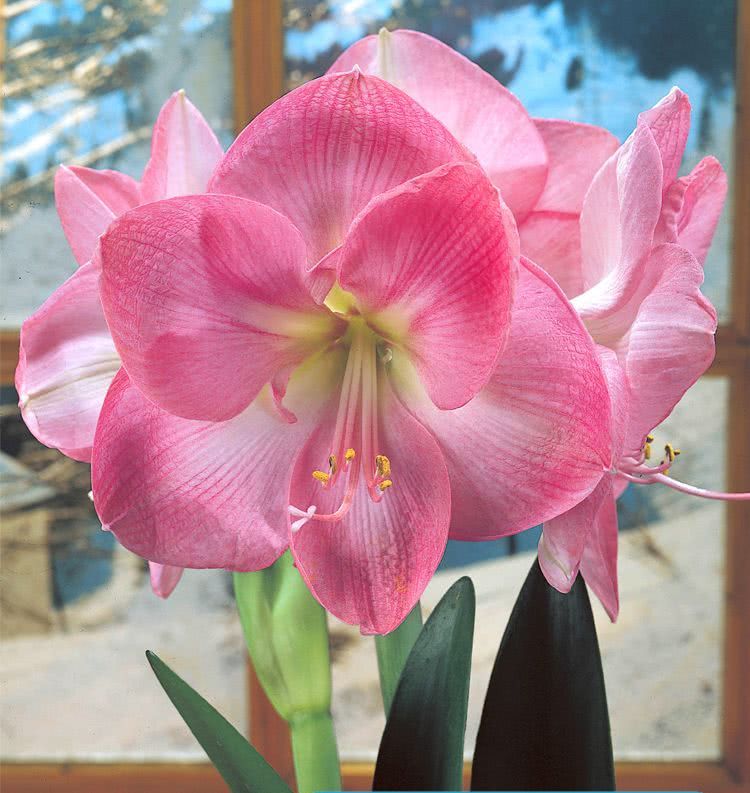
The appearance of Amaryllis (Hippeastrum) closely resembles that of Clivia, and it also enjoys the elegant nickname "Gentleman's Red." In Tianjin it is called "Rouge Den," a rather clever name. It is now widely cultivated around the world; besides being grown in pots for ornament, it is also planted in open garden beds to form mass plantings, adding beauty to forests and gardens.
For young seedlings started from seed, it usually takes 2 to 3 years of growth before they flower for the first time; once they do bloom, they will continue to rebloom in the future; if well cared for, the number of flowers will increase year after year, and they may even bloom multiple times within a single year.
Amaryllis ends dormancy in late February each year and begins to grow new leaves. It can produce new leaves multiple times a year, and the period right after dormancy ends is one of them. From the moment the flower scape first pokes out to the point of full bloom takes at least a month and a half (this depends on temperature: when it is warm, the scape grows quickly; conversely, when it is cold, it grows more slowly).
Amaryllis has fairly simple requirements for blooming: as long as the bulb grows to a sufficient size, it will flower. Generally, a diameter over 4 cm is enough; the larger the bulb, the greater the chance of blooming. Because individual bulbs differ, some produce only one scape when they bloom, while others send up two scapes at once; there are also cases where two or three scapes grow out of sync.
In late autumn, as temperatures drop, it enters dormancy; if the temperature is quite low, all the leaves will fall during dormancy, leaving only the bulb to overwinter; if the temperature is higher, the leaves will not drop in large numbers, and it overwinters with its leaves, at which point growth has completely stopped. This way of overwintering with leaves is called evergreen dormancy. Whether it undergoes deciduous dormancy or evergreen dormancy, it usually does not affect flowering the following year. After Amaryllis blooms heavily, the bulb will more or less shrink and become smaller, but this is nothing to worry about.
Available for purchase here
Taobao shop: Fangcao Qingqing Gardening Store
5 colors available