Underground fruit that differs from sweet potato by just one character, its seeds are highly toxic, yet farmers grow it in large quantities
Our country has a vast territory and abundant land resources, so the variety of foods is also diverse. Thousands of years of culinary culture have made Chinese people very particular about "eating," and it can be said that anything edible can make it onto people's dining tables. Even some highly toxic foods, as long as the toxins can be removed, people will flock to them. A good example is the pufferfish. Although it contains potent toxins, its flesh is incredibly delicious, and through long-term practice people have worked out an effective method to completely remove its toxins, leaving only the enjoyment of the food. However, not all highly toxic foods can be eaten; some toxic substances may look edible, but their toxins cannot be removed.
In the rural areas of southern China, there is a delicious underground fruit that differs from sweet potato by just one character, but its seeds are highly toxic. This fruit is called "liangshu" (jicama), and I believe many people have eaten it! In Sichuan, Guizhou, Hunan, Guangxi and other places in China, there are large-scale cultivation bases. Its texture is crispier than sweet potato, and its flesh is white and juicy, containing high levels of starch, protein, vitamins and various minerals. It can be eaten as a fruit and also used in dishes. In Hunan, where the author is located, farmers here are more accustomed to eating it as a fruit; you can peel off the skin and eat it directly.
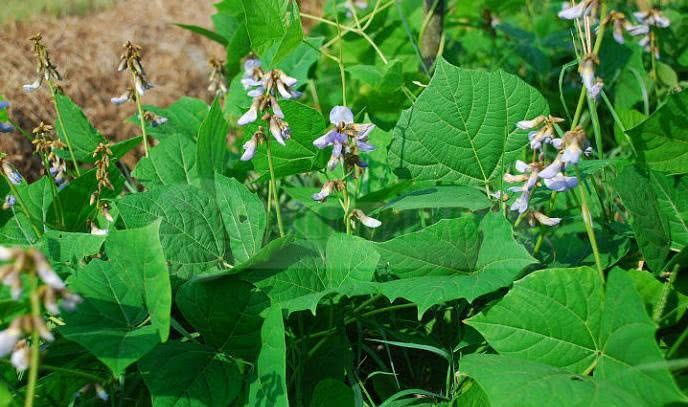
Although jicama is delicious, its above-ground parts are all highly toxic. This includes its stems, leaves and seeds, especially the seeds, which contain a highly toxic substance called "rotenone." This substance was once one of the raw materials for making agricultural pesticides. Its toxicological effect is to prevent cells from utilizing oxygen, causing organs to suffer oxygen deprivation and damage, leading to poisoning. Moreover, its toxicity is very high; eating about 5 seeds could lead to irreversible consequences. Since it looks very similar to ordinary beans, you must be careful to identify it correctly when eating, and never consume it by mistake.
Of course, farmers who have grown jicama year-round are quite familiar with its toxicity, and they are careful to avoid it when feeding cattle and sheep, so that livestock do not eat it by mistake. Jicama seeds are not entirely useless either; in traditional Chinese medicine they are called "digua seed" and can be used externally to treat ringworm of the scalp and scabies. In the "Guizhou Folk Prescription Collection," it is recorded how to use it to treat scabies: "Take appropriate amounts of digua seed and Huanghu leaves, decoct in water and wash externally." However, note that digua seed is highly toxic, so if you need to use it, please consult a doctor first.
Jicama has a very high yield, especially when planted in sandy soil, where the yield is even higher, reaching over 7,000 jin per mu, and many farmers make a living growing it. Friends, have you ever eaten jicama?