Kalanchoe keeps getting black rot every summer, so why do other people's plants bloom nonstop?
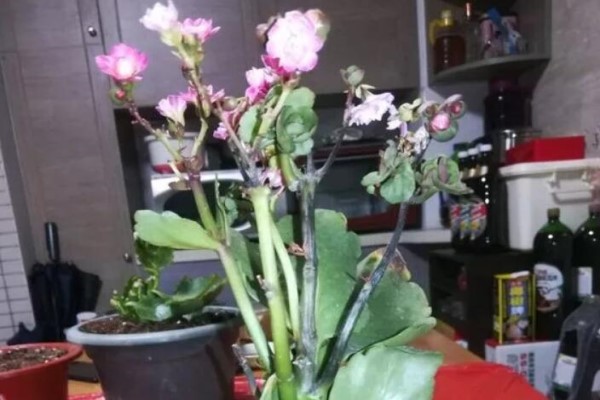
What should you do if a kalanchoe gets black rot?
In summer, the temperature is high, and with continuous rain, a kalanchoe at home can get black rot if you're not careful!
Solutions:
1. Partial black rot
As soon as you find black rot on your kalanchoe, quickly find a sterilized pair of scissors and cut off the part that has already turned black and rotten.
Sprinkle carbendazim or chlorothalonil powder directly on the cut surface of the kalanchoe. Do not let the kalanchoe touch water or the soil surface. After a while, it should recover.
2. Severe black rot
1. If the black rot on your kalanchoe is quite severe, then you can only perform major surgery on it! First, observe whether the stems of the kalanchoe have all rotted.
2. If you confirm the kalanchoe's black rot is severe, dig it out of the soil entirely and check whether the root system has completely rotted black.
3. If the root system has black-rotted beyond saving, use a sterilized knife to cut off the healthy part of the kalanchoe 2cm above the black-rotted section, and leave it in a cool, ventilated place to dry for a little while.
4. Reinsert the healthy part of the kalanchoe into soil to root. If you use the soil that previously held the kalanchoe, remember to first put it in the sun to dry, trying to kill the bacteria in the soil; otherwise, after cuttings are inserted, they are still prone to reinfection.
How do you prevent kalanchoe black rot?
Summer is the high-incidence season for kalanchoe black rot. With high temperatures plus frequent watering, black rot is almost impossible to avoid!
1. Keep branches for cuttings
If you gardening friends are worried about black rot in your kalanchoes in summer, then before summer arrives, cut half the branches from different varieties of kalanchoe and place them in a cool, ventilated spot, then reinsert them as cuttings in autumn. Kalanchoe branches have a very high water content, so basically air-drying them for 1-2 months is completely fine.
2. Switch from soil culture to water culture
If your kalanchoe is still a small seedling and there is no way to cut half its branches to keep, then you might as well directly switch it from soil culture to water culture. This can also greatly reduce the chance of black rot, allowing your kalanchoe to get through summer safely.
3. Pay attention to water control
Generally, black rot in kalanchoes at home is largely caused by too much watering. Gardening friends can water along the base of the kalanchoe's flower stalk, just enough for the water to reach the roots, while keeping the surrounding potting soil dry. Because moisture will gradually spread outward, just keep the soil in a moist state.
4. Beheading
To avoid black rot in kalanchoe, you can behead the kalanchoe, keeping only about 5-7cm of stem on the main trunk and cutting off all the remaining branches and leaves. This not only improves ventilation, but also reduces water evaporation, absolutely preventing kalanchoe black rot!
5. Sprinkle some plant ash on the pot surface
To prevent kalanchoe black rot caused by water accumulation, you can get some plant ash and sprinkle a ring of it along the edge of the kalanchoe pot. Because plant ash has strong water absorption, this way you don't have to fear black rot from watering the kalanchoe too much. But plant ash is alkaline, so everyone still has to be careful not to put it too close to the root system.
How do you care for kalanchoe in summer?
If you want to prevent kalanchoe black rot, summer care must be done properly.
1. Ventilate frequently
Summer weather is hot, so you must ensure good ventilation for the kalanchoe. It can be placed in an indoor hallway or corridor with smooth airflow. If conditions allow, you can give it a small fan or air conditioning, but after using the air conditioning, remember to open the windows for ventilation.
2. Water less, don't let it get rained on
Once you can't control your hands and water too much, the kalanchoe will definitely get black rot in no time. Besides watering a little less, also note that it is best not to let it get rained on, especially when a rainy day is followed by a big sunny day, as kalanchoe is even more prone to black rot. Watering can be done after 6 p.m.
3. Pay attention to shading
Although only giving kalanchoe enough sun can make it grow vigorously, the summer sun is harsh, so you still need to pay attention to shading. For kalanchoe kept on a windowsill, it is best to pull a layer of shade netting. Of course, moving it indoors to a place with good scattered light is the best care.
That's all for today from Huahua!
Have all you gardening friends learned it?
If you still have any good methods,
Why not leave a comment and share them with Huahua!