How to grow jasmine so it blooms 3 times a year? Do these things well and the flowers will burst out of the pot
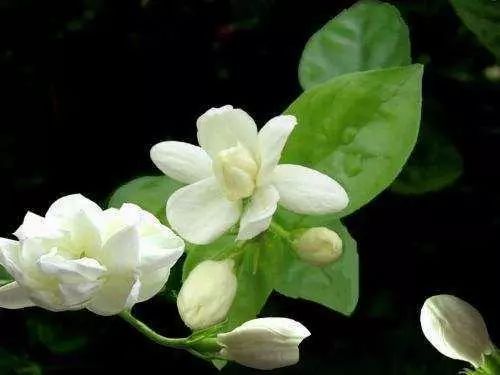
I liked potted jasmine at first because of its faint delicate fragrance. After actually growing it, as time went by, I developed even more feelings for it. Keep one pot by the window, and several flushes of flowers bloom quietly through the year, filling the whole room with fragrance. Although a home with jasmine fragrance is lovely, not everyone can grow potted jasmine so that it blooms flush after flush.
To make potted jasmine bloom more, you first need to understand its flowering periods. Generally, the jasmine flowering period is divided into three stages. The first stage is in June (moldy flowers); the second stage is in July-August (prime flowers); the third stage is in September-October (autumn flowers). Among the three flowering stages, the quality of blooms in the prime flowering stage is the best. This is because during bud formation and flowering, the longer the sunshine duration and the higher the intensity, the better the flowering: the flowers are large, numerous, and strongly fragrant.
To make potted jasmine bloom more, you need to do the following:
1. Plenty of light: Potted jasmine is a typical sun-loving flower, hence the saying "jasmine that cannot be killed by sun." In summer, potted jasmine grows vigorously and needs plenty of sun. If light is insufficient, the leaves will become larger and thinner, the leaf color will turn pale green, and there will be fewer flowers with poorer fragrance. On the premise of ensuring water supply, full sun is best. With ample sunlight, the branches and leaves are lush and there are many flowers; with low temperatures and shade, the leaves are thin, the flowers sparse, and the branches slender.
2. Plenty of water: Potted jasmine has shallow roots and well-developed fibrous roots, with lush branches and leaves. In summer, temperatures are high and evaporation is great, and since it itself is not drought-tolerant, the soil must not be too dry, but it should not be muddy either. For pots, try to choose earthenware or porcelain pots with good air permeability. The premise of plenty of water is good soil aggregate structure, loose and breathable. The principle of watering generously is to water when dry and water thoroughly when dry.
3. Plenty of fertilizer: Potted jasmine has a long growth cycle, a large annual growth volume, and repeatedly sends out new branches and blooms, so nutrients are consumed quickly and demand is high. If nutrients cannot keep up, growth will be weak, with thin branches, thin leaves, and few flowers. The premise of plenty of fertilizer is to mainly use decomposed organic fertilizer, such as rapeseed cake water (top dressing) and poultry and fish offal water (top dressing), supplemented by chemical fertilizers such as monopotassium phosphate. The fertilizing method is to apply in the evening on sunny days during the growing season, then water the next morning, about once a week during the growing season.
4. Pruning: Potted jasmine grows quickly in summer, so prune it in time to encourage more sturdy new shoots; if new branches are growing very vigorously, pinch the tips when they reach 10 cm, to keep the plant compact. Once a flower fades, promptly cut off the flowering branch to reduce nutrient consumption, encourage new shoots, and make the branches dense, the buds numerous, and the flowers abundant.
Note: After each potted flowering, promptly remove the spent flowers and properly trim away overly long branches. Also apply fertilizer once; if you are pursuing flower quality, the first flowering each year should be removed, which can ensure more and more fragrant flowers in the second flowering. Generally, pests and diseases are caused by weak potted plants and poor ventilation, and strong plants rarely have problems, so always pay attention to strengthening ventilation. By early September, fertilizing should stop, to help the branches lignify and aid overwintering.
For more clever tips, please follow Clever Tips Sister!
??????????END??????????
Thank you all for reading, and thank you fans for your attention
If you think the article is good, share it with your friends too
Don't forget to give mea likeoh
Reply: plant name (such asmoney tree): to view the cultivation method