This wild grass is also called Xianhecao (crane grass), and its seeds stick to people at the slightest touch
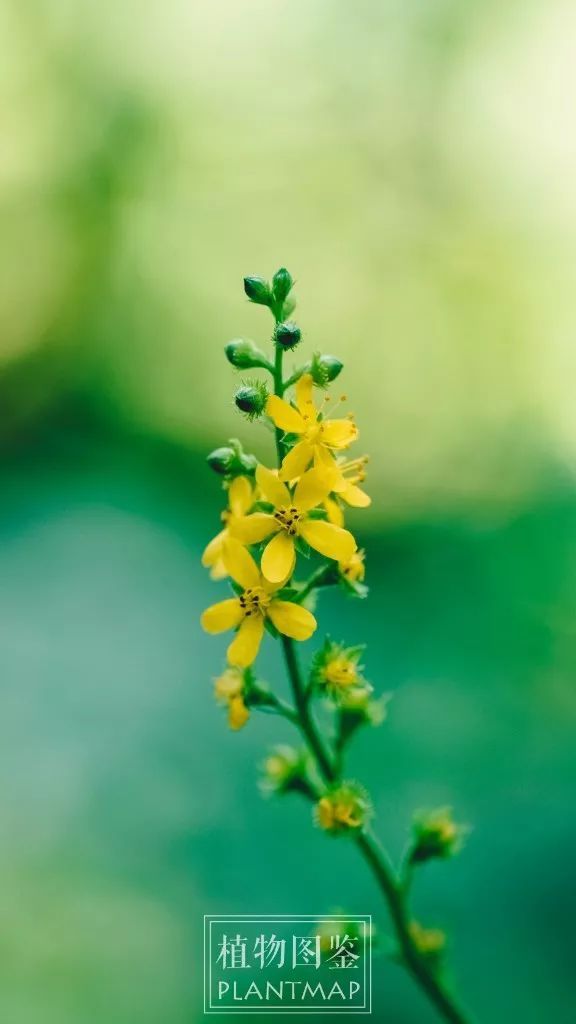
Agrimonia pilosa is a wild grass found across both north and south, and it is also a medicinal plant.
[ Agrimonia pilosa ] Rosaceae >> Agrimonia
Agrimonia pilosa is widely distributed; I have seen it in the wild in Hangzhou, Beijing, and Yunnan. It therefore has quite a few aliases, the best known of which is "Xianhecao" (crane grass), which comes from the Great Dictionary of Chinese Pharmacy. Modern traditional Chinese medicine research shows it has functions such as expelling parasites, antibacterial and anti-inflammatory effects, and anti-cancer properties. That is why Xianhecao, that is, Agrimonia pilosa, is often seen planted in herb gardens in various places.
Agrimonia pilosa in a medicinal herb garden, with particularly dense leaves
But in the eyes of more people, Agrimonia pilosa may be an annoying little weed - its seeds, like those of cocklebur and beggarticks, like to stick to people. In addition, in some places Agrimonia pilosa is eaten as a wild vegetable.
In the Hangzhou area, Agrimonia pilosa blooms in June and July, and they can be found in places such as Hangzhou Botanical Garden and Xixi Wetland. Agrimonia pilosa belongs to Rosaceae, Rosoideae; when it blooms, many small five-petaled yellow flowers are arranged into long raceme inflorescences.
Wild Agrimonia pilosa
Although the inflorescence is very long and the flowers look quite big in my photos, in reality the flowers of Agrimonia pilosa are very inconspicuous. When I was in Beijing, I passed by a rain garden where the landscape designer had added Agrimonia pilosa to the garden's wildflower mix. But the flowers of Agrimonia pilosa are really too small; even when they bloom in patches, you still cannot see them...
Can you find Agrimonia pilosa...
At the end of the flowering period, Agrimonia pilosa begins to set fruit. The fruit type of Agrimonia pilosa is an achene, hidden inside a cup-shaped structure with spines around the rim. This cup-shaped structure looks a bit like a sea anemone; it is made up of the receptacle and the calyx, and the ring of soft barbed spines grows at the base of the calyx.
Agrimonia pilosa fruit and the cup-shaped structure around it
You can see that from flower bud to fruit, this ring of "curly hairs" on Agrimonia pilosa grows longer and longer, and harder and harder. By the time the fruit is ripe, it can firmly grab onto the clothes and trousers of passersby.
This method is wonderfully similar to that of burdock, the inspiration for Velcro.
[1] Leaves of Agrimonia pilosa
The leaves of Agrimonia pilosa are also quite distinctive. The odd-pinnate compound leaves have three to four pairs of leaflets, and between each pair of leaflets there are also several smaller leaves interspersed, arranged in an alternating large-and-small pattern, which is very unusual. This is also one of the key identification points of Agrimonia pilosa.
Note: This article does not constitute medical advice; please follow your doctor's instructions.
[1]By Salicyna [CC BY-SA 4.0], from Wikimedia Commons
Author: Jiang Mouren
Images: Jiang Mouren
This work is licensed under the (CC BY-NC-ND 4.0) license agreement
Please retain the above statement when reposting