Want jasmine to grow lush branches and leaves in summer and bloom continuously? Learn this trick and be a bit tough on it
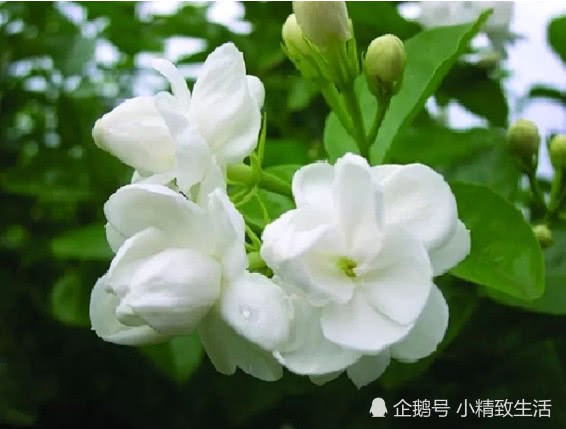
From April and May, when the temperature starts to rise, the jasmine buds begin to slowly mature and bloom here and there, signaling that the jasmine flowering season is about to begin. So how should jasmine be cared for during its flowering season so they can continue blooming afterward? Below, Xiaojingzhi Life will learn together with you.
The first batch of flowers in April and May, because of the previously fluctuating hot and cold temperatures, have buds of uneven size and varying degrees of maturity, and the fragrance is also very faint. So the first batch of flowers is not recommended to be kept; they should be promptly cut off from the second bud eye of the flowering branch, together with the flower and leaves, to avoid consuming too many nutrients and affecting the flowering season, quality and quantity of later blooms. Removing the first batch of flowers can promote more luxuriant branches and stems, and is also beneficial for nutrient accumulation. In addition, light fertilizer should be applied frequently twice a week, and the potting soil should be kept moist.
By June, jasmine begins to enter its peak flowering period, lasting until August. A single jasmine flower only blooms for one day. At this time, pruning jasmine mainly consists of promptly cutting off spent flowers and remaining calyxes. Once all the flowers on a flowering branch have finished blooming, prune and shape the entire flowering branch immediately, and at any time cut off some weak, leggy, and inward-growing branches. Branches pruned after flowering will sprout new buds again until they bloom, and what we need to do is repeat the cycle of blooming and pruning. At this time, jasmine must be guaranteed a ventilated environment with a temperature above 25°C and more than 8 hours of light. Do not fertilize immediately after pruning. When jasmine buds are the size of a pea, that is the best time to fertilize. When fertilizing, apply water-soluble fertilizer from the afternoon to before evening on a sunny day. In addition, on the morning of the day you plan to fertilize, water as little as possible, so that by the afternoon the potting soil is slightly dry, which is just right for topdressing. The next day, spray an appropriate amount of clear water, called "watering back," to help the roots absorb it. At this time, because the weather is hot and water transpires, and jasmine is in its peak growing season and also has a large water demand, as soon as the potting soil looks dry, water should be replenished immediately to avoid damaging the branches and leaves from dryness.
From September to October, the last batch of flowers forms. Because the weather turns cooler, the number of these flowers will become very few. At this time, the amount of watering should be gradually reduced, training the branches to promote hardening of new branches so as to help them survive the winter, and fertilizing should also be gradually stopped. At this point, it is only necessary to keep the potting soil slightly moist.
Summary: Learning to prune is the most basic practice for growing jasmine well. Carrying out necessary pruning on jasmine is the best care. Only by renewing branches through pruning and through reasonable care can jasmine achieve the effect of abundant flowers and lush leaves. Pruning and light are the first essentials for caring for jasmine.
The above was compiled and published by Xiaojingzhi Life, and we hope it is helpful to you.