Go to the river in summer, pick up some sand and bring it home for growing flowers - saves money and works great
Once summer arrives, everyone loves heading to the riverbank, and we flower growers must know about the riverbank treasure - river sand! Whether coarse or fine gravel, it is all great material for growing flowers, from the bottom of the pot to the surface, from cuttings to care, it can all be used. Come and learn exactly how to use it!
Can sand be used
The Complete Guide to Flower Growing
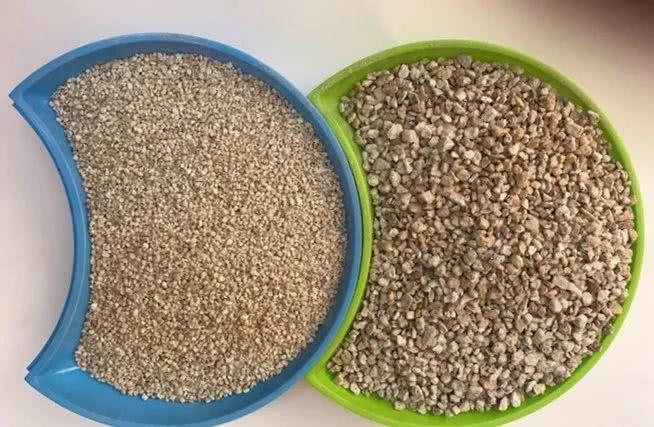
Huahua recently went to the beach too, and saw some coarse-grained sand - isn't it just like the maifan stone we commonly use? So I scooped up a handful and took it home. After getting home, Huahua carefully looked up the differences between sand and maifan stone. Let's take a look together~
Sand: broken quartz stone, relatively high density, good air permeability when used in flower soil, but if it is fine sand, it becomes more sealed after watering.
Maifan stone: a kind of volcanic stone, containing certain trace nutrient elements, relatively low density, which means poor moisture retention and heat insulation.
In summary, we have learned that although sand cannot match maifan stone in air permeability and nutrients, coarse sand can also replace maifan stone. Nowadays maifan stone on the market costs a few yuan per jin, and stone is heavy on the scale, so for flower-growing enthusiasts it is already a big expense!
How to choose sand
The Complete Guide to Flower Growing
Sand also comes in different grades. After Huahua's experiments, it is best to sort it by size, so that each type serves its purpose and growing flowers gets twice the result with half the effort!
Extra-fine sand should be mixed into soil
Very delicate fine sand feels comfortable underfoot. You do not need much of this sand, just bring a little home to mix into soil, and it can also be used for cuttings. If it is too fine, air permeability drops as soon as you water.
After bringing it home and disinfecting it, mix it with garden soil at 1:1. It makes a very good cutting medium, especially for flowers that need leaf cuttings like succulents. Sprinkle some nutrient granules on the pot surface and the nutrients are sufficient.
If you are worried that the sand will harden after watering, you can poke holes in the sand soil with chopsticks. Be careful not to hurt the roots. This can increase air permeability.
Sand around 3 mm is most suitable for growing flowers
In the picture below is sand shown next to a 5 mao coin, with a diameter of about 3 mm. It counts as relatively small coarse sand. After sterilization and disinfection, this kind of sand can be used directly for cuttings and planting flowers.
Mix the disinfected sand directly with garden soil and nutrient soil. Generally, sand should make up 1/4 of the total.
Sand around 4 to 5 mm for top dressing stone
This sand is slightly larger. After bringing it home and sterilizing and disinfecting it, it can be used as top dressing stone, with an effect similar to maifan stone.
Actually, top dressing stone does not need to be too large, especially for small flowers like succulents; 4-5 mm top dressing stone is enough. Everyone look - after disinfection, spread the sand in the succulent pot. Doesn't it look great? Why buy top dressing stone at all!
1-2 cm sand for water culture
This can be called small pebbles. After sterilization and disinfection, it can be used for water culture, or as top dressing stone for medium and large flowers.
This size is suitable for small water-cultured flowers, such as pennywort, pothos, spider plant and so on. It also benefits root growth.
3-5 cm pebbles to line the bottom of the pot
This kind of pebble is very common, and the colors are also quite varied. Pick up some of uniform size and bring them home. After sterilization and disinfection, they are suitable for lining pot bottoms, water culture, and raising fish and turtles.
Because the flower pots we usually buy have holes at the bottom that are 1-2 cm wide, pebbles of this size are suitable for lining the pot bottom - clean, permeable and airy.
5-10 cm stones for landscaping
Medium stones have many shapes. Observant people often find some interesting stones. Every time Huahua goes to the river, this is my pleasure - pick a few and bring them home~
Take the stones home, clean them and soak them in carbendazim, then let them dry and put them in a bowl. Pair them with a few stems of pennywort and it becomes a bonsai, instantly classy!
Stones over 10 cm have many uses
Large stones over 10 cm, although they cannot be used as a medium for growing flowers, are great partners for growing flowers. They can not only be used as decoration, but can also be placed in flower pots as weighting stones to prevent flowers from growing crooked or roots from lifting.
Together with even larger stones, a little cement can make a flower bed. This shape cannot be bought anywhere!
After seeing these sands and stones
Do you have any inspiration for growing flowers
If you have any other clever uses
You can also chat about them~
?