How to grow snake plants? They thrive just fine with minimal care through spring, summer, autumn and winter
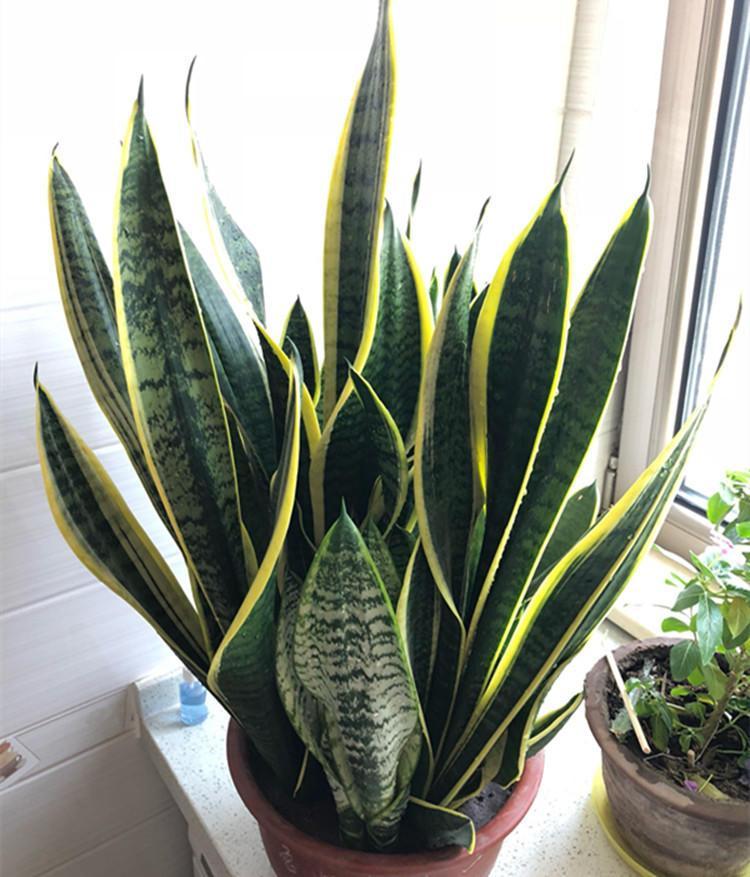
Snake plant (Sansevieria), with upright, thick, strap-shaped leaves in deep green marked with horizontal white bands resembling a tiger's tail, hence the name "tiger skin plant." This green plant is actually very easy to grow; no matter the season, spring, summer, autumn or winter, as long as you keep it on an east-, south- or west-facing balcony and just "let it be," it grows beautifully.
Snake plant leaves are upright, highly adaptable and fairly shade-tolerant, making it well suited to home display. Gardeners can place it in a spot with light, or in a brightly lit spot. But if light is seriously insufficient, the leaf color and the markings on the leaves will fade and lose their gloss. So if you want your snake plant to look great, grow it on an east-, south- or west-facing balcony.
1. In spring, place it on an east-, south- or west-facing balcony
When spring temperatures stabilize above 15°C, repotting can be done. Snake plants are generally repotted once every 2-3 years. The potting soil is best a loose, moderately fertile, well-draining sandy soil. But it is not strict about soil, as long as drainage is good.
Snake plants are robust by nature and highly adaptable, tolerating both sun and partial shade, and are fairly simple to cultivate and manage. Spring is the season for new leaf growth, so potted plants should be placed in a spot with light to grow, keeping the potting soil moist, and fertilized. For fertilizer, a general organic liquid fertilizer for green plants can be used, diluted 500 times and watered onto the roots, once a week, which will promote vigorous growth of the snake plant.
Sufficient light provides enough photosynthetic nutrients for its growth, and also makes new leaves thick and sturdy, with the patterns on the leaves pronounced and vivid. Once the snake plant's new leaves have matured, it can be moved to a spot on the balcony without direct light.
2. In summer, place it on an east-, south- or west-facing balcony
Snake plants like high temperatures and tolerate strong light. But summer light is intense, and the leaf color of snake plants easily ages, which is unfavorable for ornamental display. It should be placed in a semi-shaded spot on the balcony or a brightly lit spot, watered after the potting soil dries out, and fertilized appropriately. When the weather is hot, spray around it every day to increase air humidity.
3. In autumn, place it on an east-, south- or west-facing balcony
After autumn temperatures turn cool, gradually increase the snake plant's light exposure. If a snake plant that has long been kept in a spot without direct light is suddenly moved into strong light, its leaves can easily be scorched by the sun.
In autumn, it is advisable to move the snake plant outdoors to receive appropriate cold training; suitable cold-hardening can increase its cold resistance, and a snake plant that has been through this training can withstand low temperatures of around 5°C. Before frost, the snake plant should be moved back inside the balcony so it is not exposed to frost. If the balcony temperature can stay above 10°C in winter, there is no need to move it outdoors for cold training. But it should still gradually be moved to a windowsill with light to grow.
4. In winter, place it on an east-, south- or west-facing balcony.
Snake plants are not cold-tolerant; keeping the indoor temperature above 5°C in winter allows them to overwinter safely. The snake plant should be placed in a spot with light to grow, and the potting soil should be kept on the dry side; when temperatures are low, relatively wet potting soil easily causes root and rhizome rot. If the indoor temperature can stay above 10°C, the snake plant will still grow slowly, and should be watered alternately dry and wet, with no fertilizer.