Do this one thing right when growing orchids, and you can be confident they will bloom
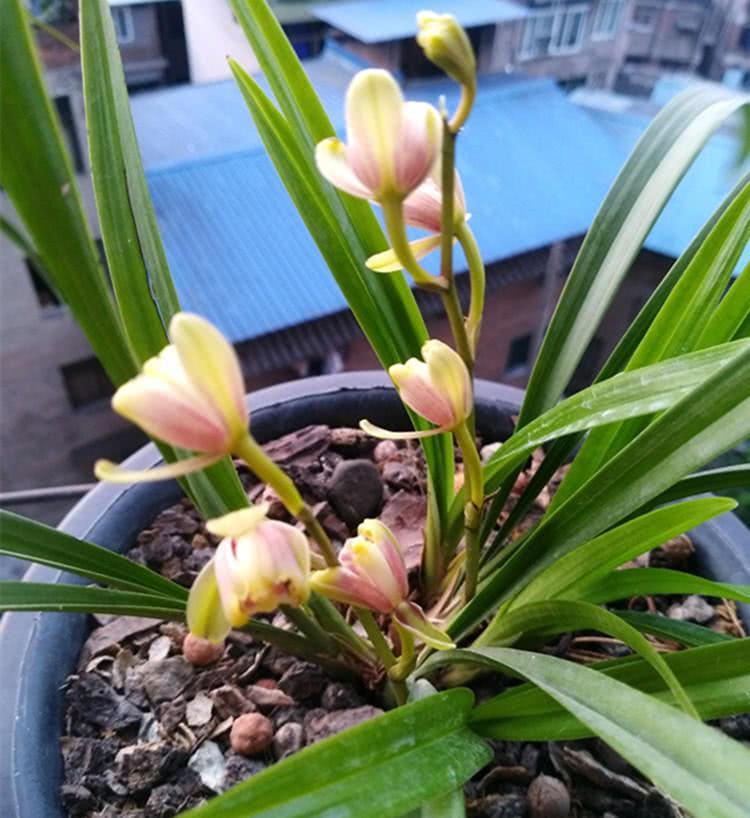
Many flower lovers grow orchids, and it's not that they don't know how to grow them - it's that they haven't quite mastered certain actions. For example, watering - either they water too much, or too little. And then there's fertilizing. If you get the fertilizing action "just right" for orchid growth, blooming will be just right too.
So how do you grow orchids so that the fertilizing action is done "just right"? Below, we break down the detailed techniques for flower lovers:
1. Different orchid species need different amounts of fertilizer. For example, Cymbidium faberi (Faber's cymbidium) needs a lot of fertilizer and can be fed more; while Cymbidium goeringii (Goering's cymbidium) needs little, just 1/3 of what Faber's cymbidium needs.
2. Different growing media require different fertilizers
If you use hard materials such as volcanic rock or Kanuma soil as the growing medium, since they themselves contain few nutrients, you need to fertilize more; if you use humus soil etc. as the medium, since it itself contains more nutrients, you don't need to fertilize much - the fertilizer requirement is smaller.
3. Different seedling conditions mean different fertilizer needs
Strong, large seedlings should be fertilized frequently and generously, while old, weak, diseased or small seedlings should be grown plainly with no fertilizer at all - absolutely no fertilizing, otherwise haste makes waste and it will only speed up death. Newly potted orchid plants must not be fertilized within half a month; imported orchids that haven't yet adapted to the pot must not be fertilized either.
4. Fertilize according to the weather
Do not fertilize on low-temperature days below 10°C or high-temperature days above 30°C. Also do not fertilize on overcast and rainy days when air humidity is saturated.
5. Fertilize according to the roots
Short, thick roots indicate too much fertilizer; blackened roots indicate fertilizer burn has already occurred; long roots indicate insufficient fertilizer; many fine roots indicate severely insufficient fertilizer.
6. Fertilize according to the leaves
If orchid leaves are thin in texture and pale in color, it indicates a fertilizer deficiency; if orchid leaves are thick in texture and green in color, it indicates no fertilizer deficiency. If leaf color turns deep green after fertilizing, it means the fertilizer has taken effect; if leaf color does not suffer fertilizer burn but the orchid roots turn black, it means the fertilizer is too weak and the concentration should be increased.
7. Do not fertilize during the flowering period
Flower buds have a strong ability to absorb nutrients but a very weak tolerance. Once the flower buds emerge above the pot surface, fertilizing again will stimulate vegetative growth and inhibit reproductive growth, causing poor flower bud development, substandard bloom quality, and early flower withering. Fertilizing during the flowering period results in poor flower quality.
8. Animal-based and plant-based fertilizers must be fully fermented; fresh fertilizer must not be applied. Applying fresh fertilizer will undoubtedly blacken orchid roots, and scorched leaf tips will not be spared either.
9. Nutrition must be balanced
The ratio of nitrogen, phosphorus and potassium should be appropriate; during the new seedling growth period, you can appropriately apply more nitrogen fertilizer. Fertilizers should be used alternately. Using a single fertilizer makes it difficult to ensure the diversity and completeness of nutrients. Generally speaking, use organic fertilizer general-purpose liquid orchid fertilizer as the main fertilizer, once a week, diluted 500 times to water the roots.
10. Fertilizer concentration must not be too high
Master the principle of "weak fertilizer, frequent application." For foliar feeding, if using liquid fertilizer you can use a syringe for precise measurement, and for solid fertilizer you can use a balance to weigh it. If leaf color turns yellow after fertilizing and leaf tips scorch, it means too much or too concentrated fertilizer was used; you should immediately use a spray bottle to water heavily or repot and change the soil for rescue, otherwise there is a possibility of death.