This flower that spits out little beads can bloom 100 flowers at once, and one pot can bloom for 300 days
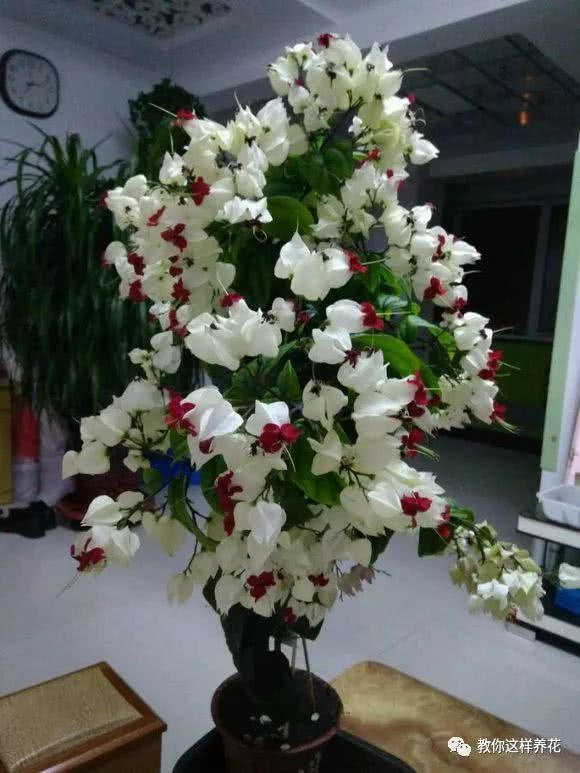
The flower shape of Bleeding Heart Vine (Clerodendrum thomsoniae) is very peculiar. When it blooms, the corolla extends out from the flower, just like a dragon spitting out a pearl, hence the name. Bleeding Heart Vine is a climbing shrub in the Verbenaceae family, and can grow to 5 m long. Its flowers are elegant and refined, and the flower quantity is very large. With good care and a suitable environment, it can bloom from May to December. Many flower lovers are attracted by Bleeding Heart Vine flowers.
“
Bleeding Heart Vine"
-Soil-
Bleeding Heart Vine likes loose, fertile, well-drained sandy soil. A commonly used soil mix is 4 parts leaf mold, 3 parts garden soil, 2 parts coarse sand, and 1 part organic fertilizer.
-Watering-
During the growing period, Bleeding Heart Vine needs to stay sufficiently hydrated. The potting soil can be kept moist, but not waterlogged. It should also not stay overly wet for a long time. You can wait until the surface of the potting soil turns white before watering. Too much water may cause the branches and leaves to grow leggy without blooming, or even root rot and leaf drop. In summer, when temperatures are high, pay attention to shading and cooling, and replenish water in time. In winter, it can be kept appropriately drier, which helps it survive the winter.
-Light-
Bleeding Heart Vine likes a sunny, well-lit environment. Lack of light will make the branches grow leggy, and flower bud differentiation will be affected. Above 21°C, if it is kept in a dark environment for more than 24 hours, it will drop its flowers. In summer, when sunlight is strong, pay attention to shading, otherwise the leaves are prone to turning yellow from sunburn. In winter, it can be placed in a sunny spot for care.
-Temperature-
Bleeding Heart Vine likes a warm environment. The suitable growing temperature is 18-30°C. It is not cold-tolerant, and the winter temperature must not be lower than 8°C. Below 5°C, cold damage is likely to occur, with the stems and leaves suffering frost injury, leaf drop, and withering.
-Fertilizing-
For Bleeding Heart Vine, apply light fertilizer frequently. You can fertilize once every half month. Before blooming, apply 1-2 additional doses of phosphorus and potassium fertilizer. Stop fertilizing in winter. If leaf yellowing occurs during cultivation, you can combine it with fertilizing and apply 0.2% ferrous sulfate water once a week until the leaves turn from yellow to green.
-Pruning-
After Bleeding Heart Vine grows to about 15 cm, you can cut off the terminal buds to encourage side branches. Usually, you can also appropriately shorten it to control plant height, achieving the goal of a shorter plant, lush leaves, and more flowers.
-Propagation-
Bleeding Heart Vine can be propagated by cuttings and sowing. The seeds of Bleeding Heart Vine have a short lifespan, so sow them immediately after collection. Keep the temperature at 24°C, and seedlings can emerge in 10 days. Because propagation by sowing is not easy to survive, cutting propagation is more commonly used.
Bleeding Heart Vine cuttings are generally taken from May to June. Choose robust branches and cut them into small sections about 10 cm long, then insert them into a loose substrate. Generally, around 20-25°C is more favorable for rooting, and they usually root in about 3 weeks after insertion.
Bleeding Heart Vine blooms beautifully and is also easy to care for
If you like it, grow a pot of it
Show it to flower lovers who need it!