Mosquito-repellent little yellow bike, have you used it today?
"Ouch, it itches so much, darn mosquito."
In the peak of summer when mosquitoes are rampant, are you still troubled by mosquito repellent?
Still worried about the toxic smell of various mosquito-killing products?
Come and take a look! Here the editor has specially prepared a few mosquito-repellent plants for you. They are truly worthy of the name mosquito-repellent "little yellow bikes" - not only as low-carbon and eco-friendly as shared bikes, but also beautiful and safe, truly a must-have for the home!
1
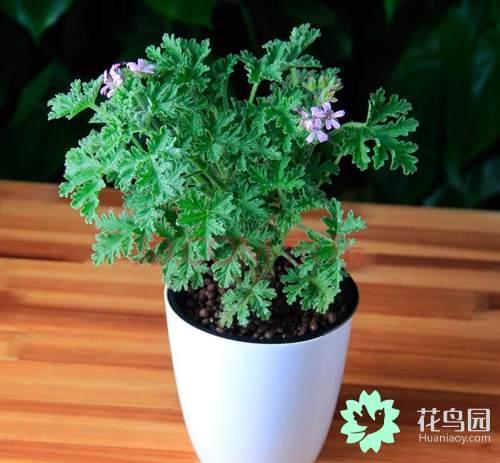
Mosquito-repellent geranium - born for "mosquito repellence"
Speaking of it, you are probably no stranger to it; it can be found in most flower and bird markets. It is a sibling of the common geranium of the same genus. Look at its lovely palmately lobed small leaves, plus its rich lemon fragrance and special mosquito-repellent effect - no wonder it is loved by most people. But did you know it was originally a genetically modified thing? Today, with the rapid development of biotechnology, botanists have used transgenic technology to introduce the citronellal gene from lemongrass into the rose-scented geranium from Africa, expressing and releasing large amounts of citronellal and alcohol substances, and these are the main mosquito-repellent substances. Isn't it amazing! If you have a mosquito-repellent geranium with a crown width of about one chi, it can drive away mosquitoes in a space of 10 sq m! That powerful! Moreover, it likes light and moisture and is drought-tolerant, and it is not fussy; it matures in half a year, and if a diligent owner takes careful care of it, it can live for several years. Here Wu Xiaozhi quietly tells you that as summer temperatures rise, its fragrance becomes more intense, and of course its mosquito-repellent effect becomes better too. So what are you waiting for? Get a pot!
2
Pyrethrum - nature's green pesticide
With white ligulate small flowers around it and a golden center, its one-chi form looks no different from common Asteraceae plants, but don't be fooled by its appearance. It is native to Europe and, true to its name, has a very strong insect-repellent effect. It can be said that its whole body is the nemesis of mosquitoes. The pyrethrin component contained in its flowers is a raw material for many insecticides, and its dried stems and leaves, after being ground into powder and burned, also have an extraordinary insect-repellent effect. A simple mosquito repellent can also be made with it: soak the dried flowers of pyrethrum in water, and the infusion has a certain mosquito-repellent effect. However, note that the insecticidal substances contained in its flowers easily decompose and lose effectiveness, so after picking they must be dried quickly! It is non-toxic and eco-friendly to humans. As nature's green pesticide, are you tempted too?
3
Mugwort - the mosquito-repellent master among Chinese medicines
During the Dragon Boat Festival, a bundle of mugwort at the door gives off a strong aroma, carrying the meaning of warding off evil and preventing disaster. Densely covered with soft hairs, thick leaves, and small oval flowers clustered on the stems - look, this mugwort, crowned as the "herb of medicine," is somewhat cute, isn't it! The use of mugwort was recorded as early as in the Shennong Bencao Jing. Because its nature and flavor are bitter, pungent, and warm, it is used to regulate qi and dispel damp-cold, and moxibustion with mugwort leaves can even eliminate all kinds of ailments. Of course, besides medicinal use, it is also good at repelling mosquitoes. Plant a few in summer, and the faint volatile aromatic oils can effectively drive away mosquitoes, while the essential oil components extracted from it can be sprinkled indoors or applied to exposed parts of the body; while repelling mosquitoes, it can also sterilize! If you have dried mugwort, you can also light a little to smoke the room, which is also a good way to repel mosquitoes!
4
Lavender - the calming, mosquito-repelling "purple sprite"
Native to the Mediterranean region, have you seen its charm? Its light purple inflorescences are soft, long, and beautiful like small spikes, and its gray-green leaves, when blooming in masses, are as beautiful as a purple blanket spread over the fields. Smell it lightly, and a pleasant fragrance gives a feeling of refreshment. You should know this fragrance also has a wonderful use, namely repelling mosquitoes; its special aromatic substances are disliked by mosquitoes. You can plant it indoors, or dry it and make it into sachets and place them on a table indoors, and both have mosquito-repellent effects. Even when bathing, pick some petals and put them in the water for a floral bath; the lingering fragrance on your body is not only fresh and fragrant, but can also keep mosquitoes away!
5
Mint - the mosquito-repelling expert among spices
When it comes to mint, many people may think more of mint flavor, a refreshing scent that wakes you up. As a general term for the genus Mentha in the Lamiaceae family, it is widely distributed across the north and south, growing low-key and modestly creeping in cool, damp places. As a representative aromatic plant, its cool fragrance has been widely used by people, often as a spice to garnish dishes and mix drinks, giving a distinctive taste. And its peppermint oil and many other volatile substances can achieve a certain mosquito-repellent effect and are harmless to the human body. Imagine in early summer, planting a pot of mint by the bedroom window, and at nightfall spraying some clear water on the leaves - it not only gives a cool feeling, but there will also be much fewer mosquitoes! When going out, pick a few tender leaves, crush them and rub them on the body, or bathe with them, and it can even compare to mosquito repellent! Of course, besides repelling mosquitoes, steeping it in water or using it in cooking will also give you a different refreshing feeling in the hot summer!
Most of the above plants have special volatile odors, and mosquitoes mostly dislike these substances and choose to stay away, thus achieving the purpose of driving away mosquitoes. In fact, the essential oil substances from these plants can also be made into efficient mosquito-repellent products, commonly including lavender essential oil and citronella oil. There are also many common aromatic mosquito-repellent plants, such as orange jasmine, whose pure white small flowers cluster among the small leaves, with an umbel-like appearance and a rich sweet fragrance; it is a rare small green plant for the home and also a little mosquito-repellent expert! There is also basil, known as the "king of spices," which is in the same family as mint but a different genus, also in the Lamiaceae family. Has its strong fragrance already begun to stimulate the taste buds of food lovers? It will likewise stimulate mosquitoes and keep them away!
Having said this, the editor also needs to explain that there is currently a lot of research on mosquito-repellent plants, and opinions on their effectiveness vary, with both positive and negative views. In fact, from the perspective of the mosquito-repellent plants themselves, they indeed have a relatively strong mosquito-repellent effect; at least for these mosquito-repellent plants, mosquitoes shrink back and do not dare approach. However, if used by humans in indoor rooms and in a ventilated environment, their mosquito-repellent effect certainly cannot compare with artificial products, and mosquito-repellent plants only repel mosquitoes and do not all have mosquito-killing effects; mosquitoes may still exist! If you want to completely say byebye to mosquitoes, it is best to use mosquito nets or non-toxic plant-based mosquito-repellent products!
Basil
Orange jasmine
Pitcher plant
In the plant world there are also plants that specifically eat mosquitoes and insects. The most common is the pitcher plant, with its peculiar long oval "insect-catching pitcher," which also comes with sticky liquid and a lid, giving off a sweet fragrance to attract mosquitoes; once inside, it is hard to escape! However, wanting it to eliminate all the mosquitoes in a whole house is probably not so realistic! The editor suggests cultivating it together with the above aromatic mosquito-repellent plants, which enhances the mosquito-killing effect while also adding greenery, eco-friendly and healthy!
Here the editor also needs to remind everyone that when these mosquito-repellent plants are placed indoors, be careful not to have too many, and be sure to ensure good ventilation, otherwise it may harm fragile respiratory tracts!