What are the key points for succulent plant care in July? Explained in one article
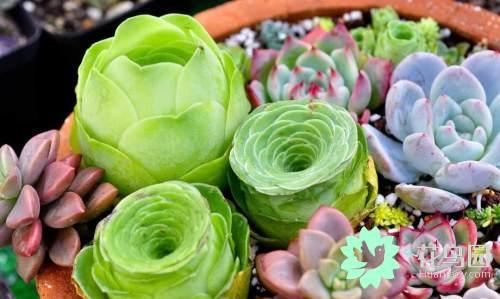
July, the hottest time of the year has arrived! Its climate is characterized by high temperatures, muggy heat and humidity. July is also a month prone to natural disasters such as floods, hail and strong winds, and for some parts of the south, typhoons may also arrive! This kind of environment is extremely unfavorable for the growth of most succulent plants, and the succulents have about reached their ugliest stage. Most of the succulents under the shade cloth have begun to change appearance, but in July, do not think about how to look beautiful first - staying alive is what matters!!! The key points for succulent plant management in July are: shade! ventilation! water control! rain protection!
Agave family plants such as Agave desmettiana 'Variegata' (Fukiami), Agave nickelsiae (Kai Crab), Agave striata (Tree Ice), and Agave 'Huishan'; most kinds of cactus balls such as golden barrel cactus (Echinocactus grusonii), Ferocactus peninsulae (Giant Vulture Jade), Mammillaria (Venus), and grass ball cactus, as well as cactus family plants such as cactus column (Lophocereus) and near-guard column (Stetsonia); Euphorbiaceae plants such as Euphorbia grandicornis (Kuiwei Jade), Euphorbia milii (Golden Qilin), Euphorbia caput-medusae (Wrinkled-leaf Qilin), Euphorbia 'Spring Peak Radiance', and Euphorbia neriifolia variegata (Euphorbia Pavilion Brocade); Apocynaceae plants such as desert rose (Adenium obesum) and Pachypodium (Huibixu Xiao), and Asclepiadaceae plants such as Huernia (Ningti Jade) and Frerea (Buddha Head Jade) - these "summer-type" succulents are still in their peak growing season this month.
Aloe family Gasteria genus plants such as Gasteria armstrongii (Woniu) and Gasteria (Dinosaur); Crassulaceae plants such as Sedum rubrotinctum (Rainbow Jade) and Crassula obliqua (Tube-leaf Flower Moon) - these "intermediate-type" succulents that grow in spring and autumn are growing slowly or have basically stagnated;
While most varieties of Aizoaceae succulents such as Lithops and Conophytum, as well as caudex-type plants such as South African Testudinaria elephantipes (Elephant's Foot), spring grass (Albuca), and broad-leaf spring grass (Albuca); Crassulaceae plants such as Saussurea involucrata (Snow Lotus), mountain rose (Greenovia), and little red coat (Echeveria); Aloe family plants such as Aloe (Ten Thousand Images) and Haworthia truncata (Jade Fan) - these "winter-type" succulents have completely stopped growing.
This month's management can be carried out according to the different types and differences in cultivation environments, but no matter which type of succulent, they must avoid heavy rain and prolonged rain, and require good ventilation, so as to prevent plant rot caused by water accumulation.
Watering for succulent plant cultivation and management in July
"Summer-type" succulents in their vigorous growth period can be watered fully this month. Especially on sunny days, because evaporation is high, water must be replenished in time to meet the plants' growth needs. The best watering time is early morning, and evening is also fine, but watering should not be done at noon when the temperature is highest, otherwise it will not only be unfavorable for root absorption, but will also damage the roots.
Watering should follow the principle of "do not water if not dry; when watering, water thoroughly." Water accumulation in the pot soil and long-term drought are both unfavorable for plant growth. "Intermediate-type" succulents grow slowly and need little water, so watering should be reduced, and keeping the pot soil slightly moist is enough. As for "winter-type" succulents, since they have completely stopped growing, watering should be strictly controlled. In particular, Aizoaceae succulents with extremely fleshy leaves such as Lithops and Conophytum can even be cut off from water entirely, otherwise the plants are very likely to rot and die.
In addition, "summer-type" succulents can be fertilized according to variety, while "winter-type" and "intermediate-type" succulents should stop being fertilized.
Shading and light for succulent plant cultivation and management in July
Most "winter-type" and "intermediate-type" succulents should be shaded. For home cultivation, they can be placed on the inner side of a balcony or in a bright indoor spot, or under the shade of trees in a courtyard, but rain protection must be noted.
For those cultivated in greenhouses, the sides of the greenhouse can be opened to facilitate ventilation and cooling, while plastic film should still be kept on top to prevent rain, and shade netting should be installed to avoid scorching sun exposure. If conditions permit, exhaust fans or electric fans can also be installed in the greenhouse to strengthen ventilation and avoid plant rot caused by muggy heat and humidity.
Crassulaceae succulents with relatively brilliant leaf colors, such as Sedum rubrotinctum (Rainbow Jade), fire ritual (Firecracker Plant), and sunset goose (Sunset's Swan), although growing slowly this month, should still be kept in a sunny place for care, so that the leaf color can be bright and vivid and highly ornamental. Most varieties of "summer-type" succulents can be kept outdoors in a place with ample light and good ventilation. For some more delicate varieties, avoid the strong direct sunlight at noon. Plants that have been kept indoors or in other places with insufficient light for a long time should also not suddenly be taken out into the scorching sun, so as to avoid sunburn on the epidermis and the formation of ugly scars. For Lithops or other kinds of seedlings, they may even be sun-cooked and lose their vitality.
Protection against natural hazards for succulent plant cultivation and management in July
This month is a month prone to natural disasters such as floods, storms and hail. Attention should be paid to flood prevention, storm prevention and hail prevention, and weather information should be checked frequently. If there is stormy rain, continuous overcast rain, hail or other weather, timely countermeasures should be taken to avoid losses. In addition, frequent inspections should be carried out. Once plants rotting due to fungal infection are found, they should be promptly removed or isolated, and drugs such as fungicide should be sprayed to prevent large-scale infection. In northern regions, when there is high temperature, dryness and poor ventilation, attention should be paid to the harm of red spider mites, which can be prevented by strengthening ventilation and appropriately increasing air humidity. Pecking by birds and gnawing by rodents can also damage succulents, and in severe cases even cause wounds to rot, eventually causing the entire plant to rot away.
Repotting and grafting for succulent plant cultivation and management in July
Generally, repotting and changing soil are not carried out in July. However, if the plant is found to have root rot or rot in other parts, it can be taken out of the pot, the soil removed, the rotten parts removed, and the wounds coated with carbendazim, sulfur powder, etc., and then left to dry for several days to prevent continued rotting. After the wounds are dry, replant into the pot to re-root.
For "summer-type" succulents such as those in the Agave family, Cactus family, Apocynaceae and Euphorbiaceae, division or cutting propagation can be carried out. Newly harvested seeds of cactus family plants such as Lophophora williamsii (Peyote), Astrophyitum (Star Cactus), and Frailea (Shitong) can be sown at any time. In northern regions, when the weather is clear, grafting propagation can also be carried out on succulents in the Cactus family and Euphorbiaceae.