Rice husk chopsticks contain 70% rice husk, heat-resistant and naturally antibacterial, one yuan per pair to replace disposable chopsticks
Taiwan, China has a high proportion of people eating out, and the number of disposable tableware consumed each year is astonishing. Disposable chopsticks are not only tied to the problem of deforestation, but the chemicals added to them are also easily ingested by people through mouth contact. In response, Hsieh Wen-tang developed "rice husk chopsticks" to replace disposable chopsticks. Chopsticks made from rice husk carry a faint rice aroma, have a smooth surface that does not prick the hands, and can be washed and used again.
Hsieh Wen-tang uses rice husk to turn waste into treasure, while also achieving multiple benefits at once, including reducing the burden on the Earth, giving previously useless rice husk a new look, transforming it from farmland waste into innovative tableware on the dining table.
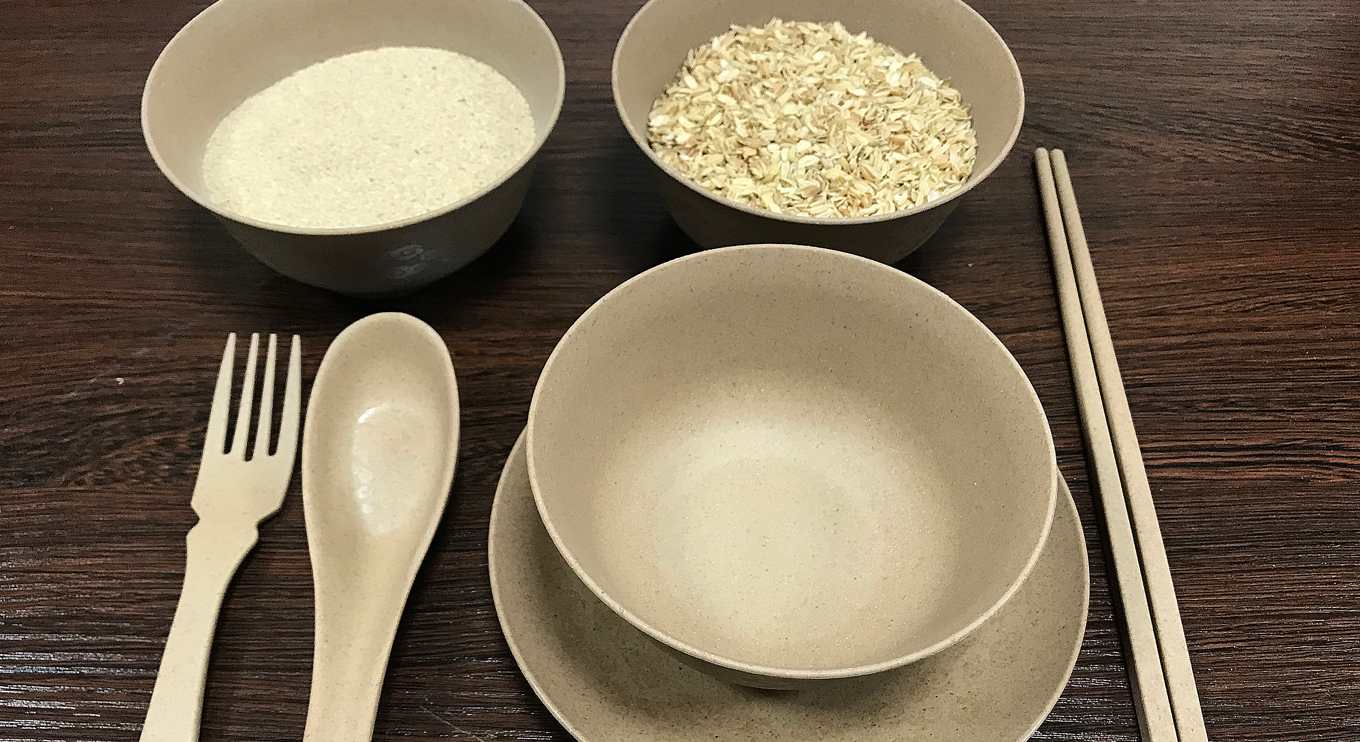
Chopsticks with a rice aroma: good heat resistance, naturally antibacterial ingredients
The "rice husk chopsticks" carry a faint rice aroma, have the coffee-like natural color of rice husk, and are no longer dyed. Their ingredient is rice husk powder, and when used they do not have the problem of fibers pricking the hands like ordinary disposable chopsticks. They also have good heat resistance, can withstand 115-120°C, and can be reused and washed repeatedly.
Hsieh Wen-tang said that most of the disposable chopsticks used by people in Taiwan, China come from China and Vietnam, because the cost of cutting down forests in Taiwan, China and then making them into disposable chopsticks is too high; however, imported disposable chopsticks, in order to prevent the chopsticks from turning yellow, black, or moldy, all have sulfur dioxide and sulfites added, and these chemicals are easily ingested through mouth contact. But rice husk itself contains ferulic acid, a natural antibacterial formula with antibacterial function, so "rice husk chopsticks" do not need added chemicals to prevent spoilage.
The "rice husk chopsticks" made of rice husk will absorb water and soften after long use, so they have a certain service life and need to be replaced after about 40 uses; however, "Kang Ci Bao" also offers a harder "rice husk chopstick" product that can meet household needs and withstand more washing and uses.
Hsieh Wen-tang said that bringing your own eco-friendly chopsticks is certainly important, but the launch of "rice husk chopsticks" is intended to replace the use of disposable chopsticks. "Many people who eat out forget to bring tableware, so what can they do? They have no choice but to use the disposable chopsticks on the table because there is no other choice." Therefore, he wanted to develop a more eco-friendly, harmless disposable tableware, except that "rice husk chopsticks" can still be reused. "Many consumers carry them around and use them as eco-friendly chopsticks!"
Promoting environmental awareness through affordability, only one yuan per pair
In setting the price, Hsieh Wen-tang also has a unique idea: not going for a high price and not targeting top-tier customers. "As long as the price is high, the quantity will be small, and then the waste that can be consumed will be less." Adhering to the goal of solving the problems caused by disposable chopsticks, he hopes that "rice husk chopsticks" can, at an approachable price, let more people practice environmental protection together. At wholesale prices, disposable wooden and bamboo chopsticks on the market cost about 0.3 yuan per pair, while the unit price of "rice husk chopsticks" is about one yuan, with additional discounts for bulk purchases. "I hope to make them affordable for shops, so they can truly replace disposable tableware."
Facing society's gradually rising environmental awareness, "rice husk chopsticks" have gradually gained recognition since their launch in the 103rd year of the Republic of China. Businesses such as Taichung Chin Yi shopping district, Taoyuan Xingren Night Market, China Airlines, Leofoo Village, as well as many bento shops, have purchased from him. "Rice husk chopsticks" are also exported to five overseas countries, and annual production is now nearly 10 million pairs.
However, Hsieh Wen-tang said that the rice husk currently consumed in making "rice husk chopsticks" accounts for only 1% of the total, and he admits there is still much room for effort. In the future, he will continue to launch more rice husk products. He smilingly proposed the idea of "rice husk straws," and said that if rice husk farm tools were developed, such as buckets and flower pots, it could help solve an even larger amount of agricultural waste.
Scholars suggest businesses use more natural materials, urge the government to establish a complete recycling mechanism
Huang Chen-wen, vice president of Chung Hsing University, said that in handling agricultural waste, what he values most is the source of raw materials, so he hopes that the rice husk made into tableware comes from organic rice fields. This would doubly ensure the safety of the tableware and also encourage organic rice field production. As for products advertised as biological materials, Huang Chen-wen suggests looking for other natural polymer materials to reduce the use of plastic as much as possible.
In addition, he also said that regulations often cannot keep up with the emergence of new products, and believes the government should promptly amend laws and establish a complete recycling mechanism for domestic biological material products, so that these biological materials can continue to be promoted and used.