Potted Clivia Care Tips: How to Grow It with Beautiful Flowers and Leaves
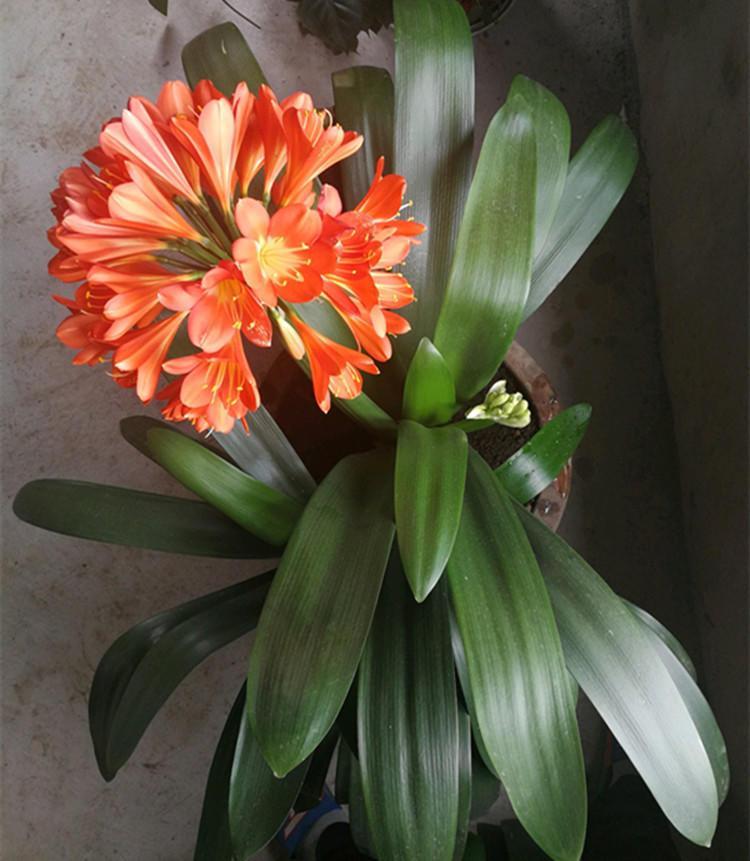
Clivia has large flowers, thick, broad and glossy leaves, elegant flower shapes, and leaves that stay green all year round, upright and gracefully spread. People admire its elegant posture and noble, graceful temperament. From leaves to flowers, Clivia has very high ornamental value. So how do we grow Clivia so that both its flowers and leaves are "beautiful at once"?
First, flower lovers need to understand Clivia's habits: Clivia likes a warm, cool environment. It has fairly strict temperature requirements; its suitable growing temperature is 10-25°C, and its suitable flowering temperature is 15-20°C. In spring, it can only be moved outdoors when the temperature stays above 10°C. In midsummer, when the temperature is above 38°C, it must be moved under a shade canopy for care. In autumn, when the temperature drops to 25°C, it can be given full light.
If the temperature is suitable, it can grow all year round. It is not strict about light and can bloom under both long and short daylight. It likes fertile, humus-rich, slightly acidic soil with a pH of 6.7-7.6. It grows poorly in clayey, barren soil with poor air permeability. It has a certain drought tolerance and dislikes excessive water.
In addition, Clivia has fleshy roots and poor tolerance to moisture, and it fears waterlogging. During the rainy season, watering should be controlled, and standing water in the pot must be strictly prevented. During the growing season, it needs more water, and the potting soil should be kept moist but not dry. After being brought indoors in winter, watering should be controlled, and it is best to keep the potting soil on the dry side.
Clivia likes fertilizer but cannot tolerate concentrated fertilizer. During the growing season, follow the principle of applying light fertilizer frequently. Apply a general organic liquid fertilizer for orchids once a month. The liquid fertilizer must not splash onto the leaves; after applying it, spray with clean water promptly. From the arrow-emergence stage to the flowering stage, add a spray of general orchid fertilizer diluted 800 times. In midsummer and winter, fertilizer is generally not applied.
The leaves are the main ornamental part of Clivia. The leaves should be neatly arranged, with a deep, verdant green color, and the leaf surface should be moist and glossy. Clivia has a strong phototropic tendency: whichever direction the light comes from, the leaves lean toward that direction. Therefore, the correct lighting angle is to place the "Y"-shaped leaves perpendicular to the light so that the extending direction of the leaves is in one line.
Flower lovers can turn the pot 180° about every 10 days, or for large plants, turn the direction once a month, and then they can grow Clivia with a beautiful plant shape and neatly arranged leaves. In addition, frequently wiping dust off the leaf surface with a damp cloth can keep the leaves clean and glossy and enhance their ornamental appeal.
Clivia is a neutral flowering plant and can grow well under scattered light conditions. In summer, it should not be exposed to harsh sunlight. In winter, when the temperature is lower, increasing light is an important condition for vigorous growth of Clivia, and increasing light before flowering is especially important. During the arrow-emergence stage, it is best to keep the daytime room temperature at 20°C and the nighttime temperature at about 12°C. After flower buds appear, apply liquid fertilizer once a week, and you can use potassium dihydrogen phosphate diluted 1000 times alternately with general flower fertilizer, which can help promote arrow growth.