Water your succulents this way and they will fill the pot even without buying fertilizer
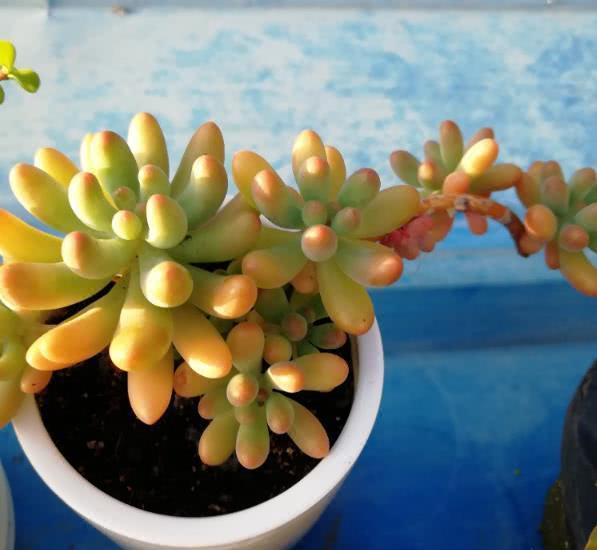
During the growing season for succulents, as long as you are within a reasonable watering cycle, you can confidently and generously water right over the top of the plant, until water runs in full and out full. Especially for those who have access to rootless water, one thorough soaking can make succulents feel as refreshed as a spring breeze; the waste excreted by the roots in the potting soil, the dust on the plant surface, and the water scale on the pot surface can all be rinsed completely clean in one thorough watering.
Treat them differently according to the season, the potting soil, and the differences between individual succulent plants. Outside the peak growing season, water along the edge of the pot, about once every 10 days. In the growing season, it may be once every 3 or 5 days, with heavy flooding irrigation; for very water-loving varieties such as the elk antler begonia, the frequency should be increased. The water used for watering succulents is always tap water that has been left standing for more than two days, because the local water is high in hardness; for spraying the leaf surface, purified water should be used to avoid leaving salt stains, as salt stains can clog the stomata on the plant surface, affect plant respiration, and also look unattractive.
How should you water succulents during their dormancy period? Again, it depends on your growing environment, that is, how fast the potting soil dries out. If winters where you are are relatively cold and there is heating indoors, the soil will dry out quickly, so watering once or twice a week is reasonable. If the climate where you live is mild, perhaps watering once every other week is more suitable. The key point is to water, wait until the moisture has completely disappeared, that is, when the pot becomes light but has not yet dried to the point of smoking, then water again.
Leggy growth is something hard to avoid in succulent care. The cause of succulents growing leggy is usually that the succulent has been in a low-light state for a long time, or that there is too much water. Do not think that only mature succulents grow leggy; after leaf-propagated succulents sprout, if light and water are not managed properly, they will also grow leggy and turn into bean sprouts. For small leaf-propagated succulent seedlings, try to keep the soil moist, because at this time the succulent needs to follow the mother leaf and receive timely water replenishment to promote growth; the roots are fragile and very shallow, so a small amount of water to keep the soil moist is better. You only gave those leaf-propagated babies that little bit of water, and the succulents grew that tall.
Succulent seedlings are relatively fragile, so the light duration and light intensity should be increased gradually. Therefore, you can first let the succulents get sunlight before 10 a.m. and after 4 p.m. But if the temperature is very high, succulents that are not kept outdoors year-round must be shaded at noon. So after leaf-propagated succulents have rooted and sprouted, gradually increasing light is very important; basking in the sun is good for succulent growth, so that after absorbing water, the succulents can carry out photosynthesis and grow, and the small succulent seedlings can grow very tough, and during the seedling stage the leaves of the succulents can already change color. The key is that light can inhibit leggy growth in succulents.
This is a gathering place for succulent lovers, sharing succulent care tips; welcome to follow and exchange ideas.