This succulent is being poached, and the shame has spread abroad
Embrace
Melody Melody
Jiang Meiqi
00:00/03:46
BGM: Jiang Meiqi - Embrace
In April of this year, there was a news story that caught people's attention - the California Department of Fish and Wildlife, in Humboldt and Mendocino counties in California, cracked a total of3 cases of succulent poaching, recovered nearly 5,000 poached succulents, and successfully exposed an illegal succulent supply chain spanning the Pacific Ocean.
Liu Fengxia, a 37-year-old Chinese citizen, and Taehun Kim and Taeyun Kim, South Korean citizens aged 52 and 46, were arrested in accordance with the law, and the three will be formally prosecuted on May 16.
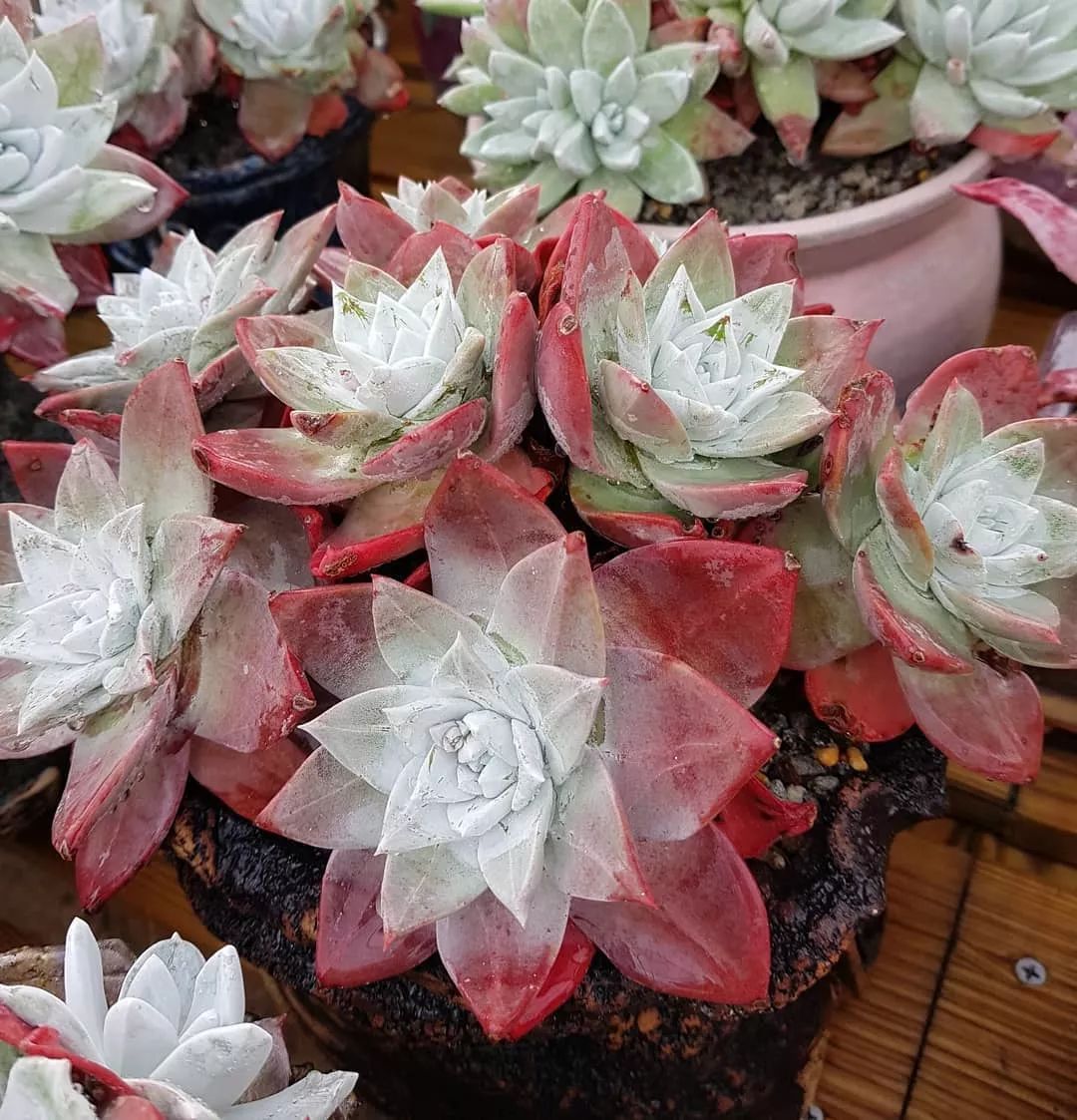
And the succulent being poached is the cream of the crop among prized varieties - Dudleya succulents such as Dudleya farinosa, which are very popular among petit-bourgeois households in Asia. Why is Dudleya poaching so rampant? We have to start with the plant itself.
Dudleya - Dudleya farinosa
- Too ethereal in appearance -
Dudleya, also known as the powdery-leaved grass genus, belongs to the Crassulaceae family and contains three subgenera, with about 100 species and subspecies in total. William Russell Dudley, a botanist in the Department of Botany at Stanford University, named this genus.
Compared with other succulents, Dudleya can be called a fairy descended to earth; in its prime state it looks delicate and charming, making people unable to resist admiring it.
Good looks can sometimes be an original sin.
- Easy to poach -
Its native range is concentrated in the coastal zone where Mexico borders the United States, near San Diego in California.
Because 90% of Dudleya varieties are distributed there, San Diego is called the "City of Dudleya." Many Dudleya also grow along the coast along the famous "Highway 1," which is also where poaching is most rampant. Beneath the blue sea and blue sky, some people just want to make dirty money.
Highway 1
Dudleya strongly favors the coastal belt. In terms of altitude, most of them grow at around sea level, and a few can even take root on the peaks and cliffs of peninsulas. For poachers, such locations are simply gold everywhere!
Dudleya growing on a cliff (source: sthblue)
Although Dudleya has a fairy-like face, it is not that delicate! No matter what, it insists on growing stubbornly, so it is also easy to transport after being poached. Even without roots, Dudleya can hold on for a long time.
- Difficult to propagate, rare -
Dudleya is extremely difficult to propagate because it can! not! be propagated by leaf cuttings! It can only be propagated by division, beheading, or seeds, and its growth rate is not very fast either. Things are precious when they are rare, and with just this bit of hype, naturally people flock to it - it gives face when you talk about it!
Moreover, most of the popular Dudleya are native species; once they are all dug up, they are gone. Let's take a look at these rare native species together.
- Dudleya farinosa -
Scientific name: Dudleya farinosa. The leaf centers have a thick white powder, and the leaf edges turn red in their prime state. It is also known as Liudan Baihao and Flame Dudleya.
Varieties that look somewhat similar to Dudleya farinosa include Apple Leaf and Yujian.
Apple Leaf, scientific name: Dudleya formosa. The leaves are wide and short, basically all green, and will not turn very red.
Yujian has narrower and longer leaves than Dudleya farinosa, and the color is darker.
Snow Mountain, scientific name: Dudleya pulverulenta. It is covered in white powder all over, an flawless ice beauty.
Dudleya brittonii is easily confused with Snow Mountain, but Dudleya brittonii has thicker powder, like white snow - practically a snow demon!
Dudleya edulis, scientific name: Dudleya edulis, the Latin meaning is "edible little dish." It is also called Stick-leaf Dudleya. It is the most pleasing to look at, with rich color changes.
Nubijina is shorter and cuter than Dudleya edulis.
Thumb Dudleya, scientific name: Dudleya pachyphytum. It is said to exist on only one small island, and poachers dug it all up.
Of course, there are also horticultural varieties worth buying.
- Dudleya greenei -
Scientific name Dudleya greenei. Its appearance is exquisite and moving.
Dudleya greenei also tends to produce many heads and grow in clusters. Compared with the glamorous Dudleya farinosa, its colors are more modest and fresh, and moreoverDudleya greenei is a horticultural variety, so you can buy it with peace of mind - it is not poached。
Some people will also say, so what if it is poached? It is so beautiful and worth collecting.
However, many botanists and environmentalists in Northern California worry that increasingly frequent poaching will not only damage the local ecological environment, but may also cause cliff soil to loosen, leading to landslides when the rainy season comes.
Once such an industry chain becomes larger and larger, it will only lead to one consequence - Dudleya in their native habitat will become more and more precious, and in the end we will never see the beautiful figures of native species again; they will only be seen in the gardens of the rich.
So how can we legally care for this kind of succulent?
Just buy seeds. In this way, we can also openly and honorably own this beautiful succulent and let her continue to bloom with her own radiance on our balconies and in the wild.
I wonder what everyone thinks about this kind of poaching behavior? Hurry and leave your comments.
- Review of the previous issue -
Note: Some images and text are from the internet. If there is any infringement, please contact us promptly to handle it.