Liao Junqin grew organic pears for 17 years and finally succeeded, achieving high yields and sweet fruit and winning first prize twice
A few hours before a typhoon warning was issued, at the "Risen Organic Shangjiang Pear Orchard" in Sanxing Township, Yilan, owner Liao Junqin was busy harvesting just-ripened pears while preparing for the typhoon, taking down the high-up sign cloth and inspecting the orchard's drainage equipment one by one, afraid that an afternoon shower might hit.
Liao Junqin cares for the pear orchard starting from the soil underfoot, stressing that good soil is what allows good fruit trees and fruit to grow. During cultivation he applies no pesticides, relying only on the natural ecological balance to maintain the orchard's vitality. His pears are not bigger than other people's, but they are crisp in texture, fine in flesh, juicy and sweet, and he has even won the top prize twice in the Sanxing Township Shangjiang Pear Evaluation. This year's harvest is also on par with conventional cultivation. Having devoted more than ten years to organic pear growing, Liao Junqin points out the key: "Just treat every pear as a treasure and you'll be fine!"
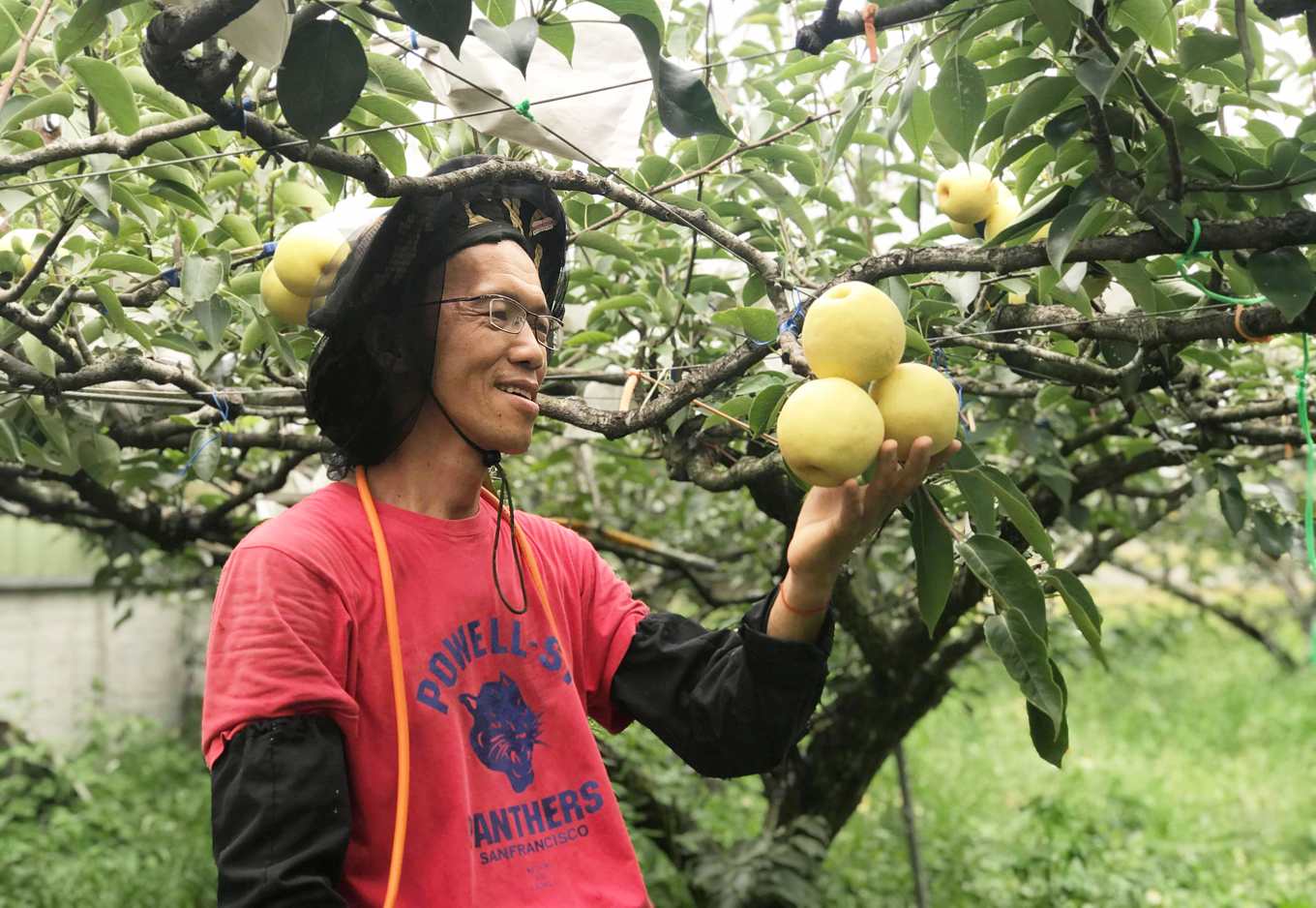
Going organic takes more effort: Liao Junqin changes the bags three times to protect his treasure pears
"There is only a fine line between organic and laziness." Liao Junqin believes organic does not mean leaving the orchard unattended, but investing even more effort in caring for it. The orchard, which begins harvesting at the end of June, is not afraid of typhoons, only of encountering a cold snap when grafting at the end of the previous year. The quality of pear scion grafting technique determines whether the pear trees will flower, and ordinary farmers achieve a grafting healing rate of at most 50 percent. Through years of effort and study of the technique, Liao Junqin has raised the grafting healing rate to more than 90 percent.
In addition, to guard against the peach fruit borer, which begins breaking out in late February, and subsequent pests, ordinary pear farmers usually bag the pears once with large bags in early April (Qingming Festival). But Liao Junqin chooses to finish bagging the Golden Pear and Hosui Pear earlier, before mid-February, and to make sure the bags truly protect the fruit, he deliberately uses smaller bags. The drawback is that after more than a month, around late March to early April, he has to switch to large bags to prevent the growing fruit from bursting the bags. Then in May, one final bag change is still needed. "In total I have to change the bags three times. I really am an odd one!" Liao Junqin jokes that no one else spends this much labor like he does, treating every pear as his own treasure and caring for each one with care.
Production "checks the box": a bumper harvest this year, about the same as conventional yields
After years of experimentation and improving his growing methods, Liao Junqin is now increasingly able to master how to care for an organic pear orchard. Coupled with fewer cold-weather injuries this year and no interference from plum rains, the yields of Hosui Pear and Golden Pear both hit record highs for past years, and this year's harvest is almost on par with conventional cultivation. Liao Junqin's face was full of smiles when interviewed.
He points out that when he first entered the orchard he knew nothing, and in the first few years after switching from conventional to organic, the harvest was simply too grim to look at, with yields falling straight down. It was only when he figured out his own set of cultivation techniques, and at the same time the pear trees in the orchard began to adapt to this natural farming method and gradually reached a balance with the surrounding organisms and soil, that yields began to recover. Liao Junqin stresses that the process cannot be rushed, and building a healthy orchard requires patience and even more time. "I learn from it, and the fruit trees are also adapting to me. Once the two of us reach an understanding, yields will naturally increase."
Having walked the organic path for a full 17 years, the changes in the orchard's yields resemble a "checkmark" curve, sinking at the start and then climbing straight up afterward. It also seems like a smile on the fruit farmer's face, symbolizing heaven's recognition of his years of effort.