When succulents encounter these situations, reducing watering actually helps them grow plumper
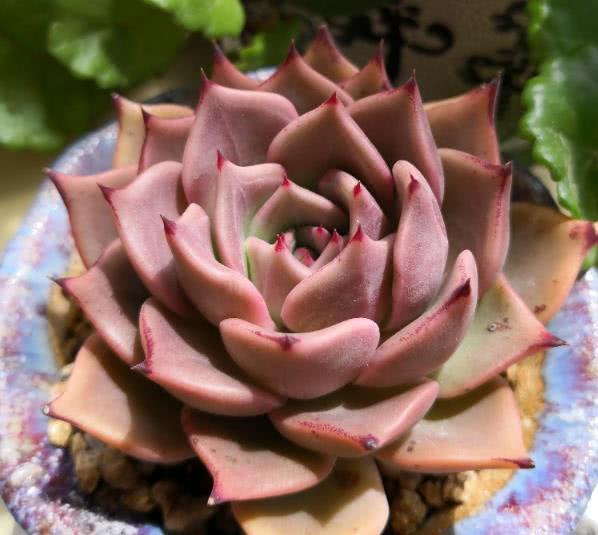
When growing succulents in summer, you must control watering, and absolutely do not water too much, because summer is both muggy and hot, and often after a thunderstorm comes blazing sun. Not only do the leaves get covered in water droplets and get scorched as soon as they are exposed to the sun, but the damp soil is also muggy and hot, and the roots definitely cannot take it. Black rot is extremely likely, so in summer you need to shade succulents and even more so cut off water, and be careful to prevent rain from accumulating. This summer I watered only twice in 3 months, and not a single one died. For watering time, choosing dusk or evening is the best choice. The temperature at that time will not be too high, and after a night of ventilation, not only can some water droplets accidentally left on the leaf surface be blown dry, but at the same time the moisture in the potting soil can spread more evenly and some of it will evaporate, making succulents relatively safer.
Although summer temperatures are very high, the relative humidity is also very high. For some soils with not very strong air permeability (such as garden soil, or soil with a large proportion of sand), the soil surface may appear to be already dry, but it may still be damp inside. Especially in the south, if the watering frequency is too high, it easily leads to the roots being damp for a long time, and in the end there is nothing you can do to save them. So the air permeability of the soil mix is crucial, which is also why a high proportion of gritty soil has increasingly become mainstream. If you are not sure when to water, waiting until the plant closes up and the leaves slightly wrinkle before watering is also a safe choice, but note that in this case, unless it is a particularly tough succulent, do not water thoroughly all at once. You can water a small amount along the edge of the pot every three or four days until the plant recovers.
How should succulents be watered to get through summer, and how much? You can give a small amount of water along the edge of the pot without watering thoroughly, letting the moisture spread through the medium on its own. If the summer temperature is around 30°C, the environment is well ventilated, the potting mix is airy, and the pot is breathable, then watering thoroughly directly is not a big problem. You can also choose the quick soaking method: fill a plastic basin or foam box with water, with the water height at about half the height of the pot, then put the pot into the basin for just a few seconds to a dozen or so seconds. This ensures the succulent gets the necessary moisture without worrying about watering too much. The downside is that it takes too much time, and if by any chance one pot of succulents has root mealybugs and pathogens, it is equivalent to manually helping them spread.
In winter you also need to reduce watering of succulents; basically watering once a month is enough. Winter is the same: water once a month, a small amount each time! Choose a sunny midday to water, and keep the water temperature close to room temperature. If it is too cold, the roots cannot take it! Do not water below 5°C, and keep the potting soil dry above -3°C. In the south, they can overwinter outdoors! The premise is that you must keep the potting soil dry, otherwise if the potting soil is moist, it will freeze and damage the plant at 0°C.
In winter, for succulents, as long as you find the leaves wrinkled or softened, it is undoubtedly a sign of lack of water, and you need to water immediately. Under normal circumstances, they can recover to plumpness in 3-5 days (the 12-volume Haworthia cooperi types are slower, probably taking more than 10 days). If after continuous watering the plant is still wrinkled and not plump, it means the roots must be poor, or the soil has compacted so that water cannot penetrate into the soil, and you need to dig it out, loosen the soil again, and check the root condition. When watering is too little and the light intensity is still very high, another situation can also appear, which is accelerated consumption of the leaves at the lower part of the plant.
Beginner enthusiasts can water based on the plant's condition and the dryness of the soil. It sounds simple, but the specific operation is still rather particular. For Sedum plants in normal growth, you can generally observe the leaves. If the soil surface is dry and the leaves are also slightly wrinkled under normal growth conditions, looking listless, then at this time you can basically water.
This is a gathering place for succulent enthusiasts, sharing succulent care tips. You are welcome to follow and exchange ideas.