How to Grow Pothos? Detailed Guide to Care Methods and Precautions
1. Temperature Requirements
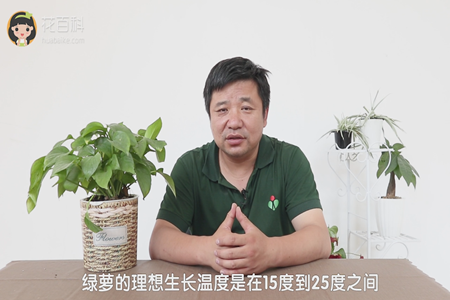
The ideal growing temperature for pothos is between 15-25°C. Below 5°C, the leaves will turn yellow, and around 0°C, cold damage may occur. In winter, care in northern regions should avoid low temperatures.
2. Light Requirements
Pothos growth requires bright, indirect light, and it is also fairly shade-tolerant. During care, it is not recommended to expose it to direct sunlight, otherwise sunburn damage will occur.
3. Water Requirements
During care, the potting soil must be kept moist; do not water too much or too little. Long-term dryness will cause the leaves to turn yellow and become smaller, and the internodes of the leaves tend to become too long. If the potting soil remains waterlogged for a long time, root rot will occur.
4. Fertilizer Requirements
Pothos grows relatively quickly and also has a relatively high fertilizer demand. During care, repot the soil once every 1-2 years, and a portion of base fertilizer can be mixed into the soil to meet its long-term needs. During the annual growing season, apply a dilute fertilizer once every half month.
5. Common Pests and Diseases
The common one is leaf spot disease, which causes some round yellow spots on the leaves that also turn black, and the leaf tissue inside the round spots will rot. If only a small amount occurs, pruning the leaves can be adopted by cutting off the diseased parts. If the occurrence is severe, pesticides such as thiophanate-methyl and carbendazim can be sprayed.
6. Precautions
Pothos requires relatively high air humidity. If the indoor air humidity is low, the leaf tips will dry out. This can be improved by increasing misting to raise the humidity of the surrounding environment. After being kept at home for a period of time, it will send out very long branches, which can be appropriately pruned as needed so that the branches can be controlled. At the same time, the cut branches can be re-cuttings to form new potted plants.