Can keeping these plants at home absorb formaldehyde? It would be a shame not to keep them
Original title: Can keeping these plants at home help us absorb formaldehyde? It would really be a loss not to keep them!
Summary: These five plants can absorb formaldehyde in our homes, and they absorb harmful substances and formaldehyde in our homes very quickly. It would really be a loss not to keep them. After we finish renovating a house, we always have to air it out for a period of time so that the toxic substances in our homes can all be gone, and only then can we move in. But we often just open the windows for ventilation. We can also put in a few pots of plants, so that the effect of removing formaldehyde and harmful substances is very fast.
Rubber plant (Ficus elastica). Perhaps the rubber plant's leaves are relatively broad, and it has a certain adsorption effect on dust in the air, and its purifying effect is relatively good. It is also quite suitable for keeping at home or in a classroom, and it absorbs chalk dust quite well. But it also has its own care requirements. The rubber plant is drought-tolerant and not water-tolerant; watering it four times a month is enough. This makes it very suitable for lazy people, and it can also help us purify the air indoors. We can also wait until its potting soil is completely dry before watering again, but if it is not dry, we must not water it.
Monstera (Monstera deliciosa). Many homeowners who have just finished renovating their houses have tried this. Monstera can also be kept at home, and it is the best green plant for absorbing formaldehyde. Having one pot of Monstera at home can purify the fresh air around us, and it can also absorb formaldehyde and other harmful substances. But Monstera also needs some care techniques. It originally grows in the tropics, and it has relatively high humidity requirements. If we are at home every day, and it is kept at home, we can spray water once in the morning and once in the evening. This is good for keeping it well and will not let it dry out.
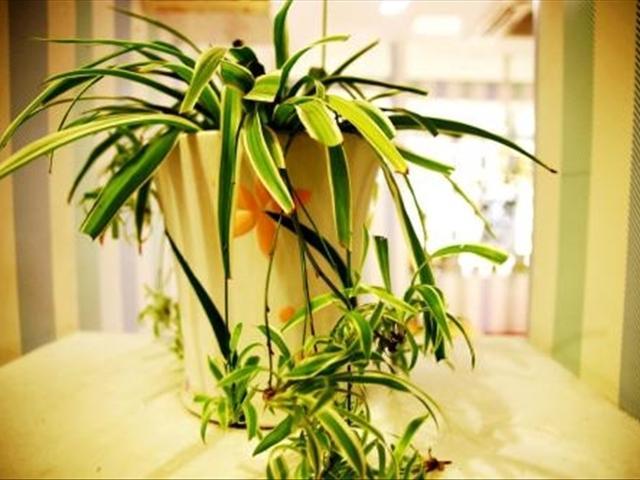
Spider plant (Chlorophytum comosum): Care techniques. It is fine to keep the spider plant a bit rough, but when its soil is completely dry, we must water it again. We should also let it get some sun in time, but it must not be exposed outside for a long time, otherwise its leaves will turn yellow, and at night it will become very dry, which can easily cause its death. When it grows new small spider plants, we can also put them into another pot and let them produce spider plants again.
Spider plant (Chlorophytum comosum): Still the spider plant. When we first start growing flowers, we all keep spider plants, because spider plants are easy to grow and easy to keep alive. In the editor's home, there was once a pot of spider plant, and it was also very easy to keep, and it did not need much watering. But because no one was home for a long time, it dried up and died, so it was thrown away. But the spider plant really is a little expert at purifying air. It can help us absorb formaldehyde, benzene, carbon dioxide and other harmful substances. But when we keep spider plants, we also need some... Can keeping these plants at home help us absorb formaldehyde? It would really be a loss not to keep them!
Snake plant (Sansevieria trifasciata) is a plant that should be common in every home, right? Snake plant can not only absorb harmful gases, but also release oxygen into our air. It can also be placed in a bedroom or on a balcony and other places. Snake plant needs sandy soil with relatively good drainage, and we usually need to water it less. We can place it in a bright and ventilated place to grow it. Can keeping these plants at home help us absorb formaldehyde? It would really be a loss not to keep them!
Schefflera (Schefflera arboricola). Perhaps many people already keep this plant at home. The leaf shape of Schefflera is somewhat similar to that of... but it can also absorb carbon dioxide and some harmful substances from our air, and it will also absorb secondhand smoke and smoke from our rooms. If there are people at home who love to smoke, they can keep some Schefflera, which can help us absorb secondhand smoke so that we no longer breathe in secondhand smoke. Can keeping these plants at home help us absorb formaldehyde? It would really be a loss not to keep them!
Conclusion: Keeping these plants can absorb harmful substances from our air, and can also help our bodies, and can purify the air, which is helpful for our body's absorption. Keeping these plants is really very good. In general, they are five plants: "spider plant, Monstera, Schefflera, rubber plant, snake plant." Did you know all of these?