Wild amaranth is a tasty green wild vegetable; the whole plant is used as medicine to clear heat, remove toxins and promote urination
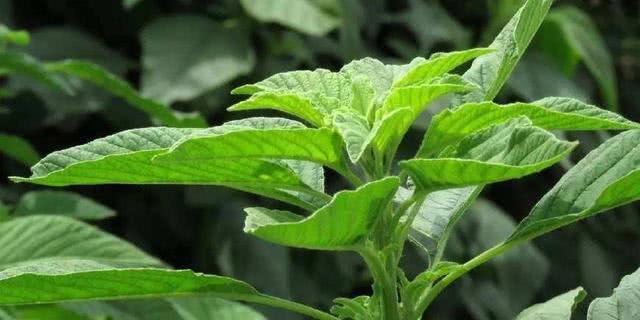
Wild amaranth
Wild amaranth, a traditional Chinese medicine name. It is the whole plant or root of the amaranth family plants livid amaranth Amaranthus lividus and redroot amaranth Amaranthus retroflexus. Livid amaranth is distributed throughout the country; redroot amaranth is distributed in the Northeast, North China, Northwest and Shandong, Taiwan, China, Henan and other places. It has the effects of clearing heat and removing toxins, and promoting urination. It is used for dysentery, diarrhea, boils and swellings, venomous snake bites, bee stings, difficult urination, and edema.
Medicinal part
The whole plant or root.
Nature and flavor
Sweet in flavor, slightly cold in nature.
Meridian entry
Enters the large intestine and small intestine meridians.
Effects
Clears heat and removes toxins, promotes urination.
Indications
Used for dysentery, diarrhea, boils and swellings, venomous snake bites, bee stings, difficult urination, and edema.
Related combinations
1. To treat dysentery: livid amaranth 30g, plantain seed 15g. Decoction in water. (Henan Chinese Herbal Medicine)
2. To treat hemorrhoids with swelling and pain: fresh wild amaranth root 30-60g, 1 section of pig large intestine. Decoction in water, take before meals.
3. To treat snake-head whitlow: fresh wild amaranth leaves and table salt, mash into a paste and apply to the affected area. (Formulas 2-3 are from Fujian Chinese Herbal Medicine)
Usage and dosage
Oral use: decocted in water, 9-30g; pounded to extract juice. External use: appropriate amount, pounded and applied.
Precautions
Contraindicated in cases of qi deficiency and chronic dysentery due to cold-dampness.
Collection and processing
Harvested in spring, summer and autumn, washed, used fresh.
Morphological characteristics
1. Livid amaranth, an annual herb, 10-30 cm tall, entirely hairless; stem prostrate then ascending, branched from the base, pale green or purplish red.
Leaf blades ovate or rhombic-ovate, 1.5-4.5 cm long, 1-3 cm wide, apex notched, with 1 awn-like tip, or minute and inconspicuous, base broadly cuneate, margin entire or slightly wavy; petiole 1-3.5 cm long.
Flowers in axillary clusters, extending down to the axils of the lower leaves, those borne at the stem tip and branch tips forming upright spike-like inflorescences or panicles; bracts and bracteoles oblong, less than 1 mm long; tepals oblong or lanceolate, 1.2-1.5 mm long, pale green, apex acute, margin incurved, with 1 raised midvein on the back; stamens slightly shorter than the tepals; stigmas 3 or 2, falling off when the fruit is ripe.
Utricle flattened ovoid, 3 mm long, indehiscent, slightly wrinkled and nearly smooth, exceeding the persistent tepals. Seeds ring-shaped, about 12 mm in diameter, black to blackish brown, with a ring-like rim at the margin. Flowering period July-August, fruiting period August-September.
2. Redroot amaranth, also known as: Xifenggu, red amaranth. An annual herb, 20-80 cm tall, sometimes over 1 m; stem upright, stout, single or branched, pale green, sometimes with purple stripes, slightly obtusely angled, densely covered with short soft hairs.
Leaf blades rhombic-ovate or elliptic-ovate, 5-12 cm long, 2-5 cm wide, apex acute or notched, with a small mucro, base cuneate, margin entire or wavy, both surfaces and margin covered with soft hairs, denser beneath; petiole 1.5-5.5 cm long, pale green, sometimes pale purple, with soft hairs.
Panicles terminal and axillary, upright, 2-4 cm in diameter, formed by numerous spike-like inflorescences, the terminal spikes longer than the lateral ones; bracts and bracteoles subulate, 4-6 mm long, white, with 1 keel-like projection on the back, extending beyond the apex into a white pointed awn; tepals oblong or oblong-obovate, 2-2.5 mm long, membranous, white, with 1 pale green fine midvein, apex acute or notched, with a mucro; stamens slightly longer than the tepals; stigmas 3, sometimes 2.
Utricle flattened ovoid, about 1.5 mm long, circumscissile, membranous, pale green, enclosed within the persistent tepals. Seeds nearly spherical, 1 mm in diameter, brown or black, with blunt margins. Flowering period July-August, fruiting period August-September.
Growing environment
1. Livid amaranth grows in gardens, roadsides and other places. Distributed throughout the country.
2. Grows in open fields, farmland or grassland near village houses. Distributed in the Northeast, North China, Northwest and Shandong, Taiwan, China, Henan and other places.
Medicinal material characteristics
1. Livid amaranth, main root relatively straight. Stem 10-30cm long, branched from the base, pale green to dark purple. Leaf blades wrinkled, after flattening ovate or rhombic-ovate, 1.5-4.5cm long, 1-3cm wide, apex notched, with 1 awn-like tip, or inconspicuous, base broadly cuneate; petiole nearly as long as the leaf blade. Spike-like inflorescence. Utricle flattened ovoid, indehiscent, nearly smooth. Slight odor, bland taste.
2. Redroot amaranth, main root relatively straight. Stem 20-80cm long, slightly obtusely angled, covered with short soft hairs. Leaf blades wrinkled, after flattening rhombic-ovate or elliptic, 5-12cm long, 2-5cm wide, apex slightly convex, with a small mucro, both surfaces and margin covered with soft hairs; petiole 1.5-5.5cm long. Panicle. Utricle flattened ovoid, circumscissile. Slight odor, bland taste.