The purple monkshood flower is beautiful but poisonous, and can be used as medicine after processing.
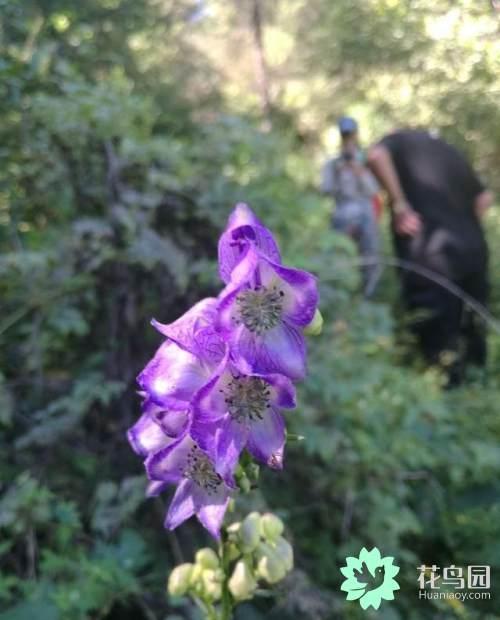
The monkshood flower is very beautiful. Wu Qijun of the Qing dynasty wrote in his "Illustrated Study of Plant Names and Reality": "Its flowers are blue-green in color, exceedingly delicate and slender, and it is called the mandarin duck chrysanthemum; the Flower Mirror calls it the double luan chrysanthemum. The flower head is like a bhiksu's hat; when the hat splits open, it reveals two luan heads side by side, identical in form, with two wings and one tail spreading outward."
Look, don't they look like strings of little purple purses? But this flower is for admiring from afar, not for playing with - it's poisonous!
Monkshood is divided into Sichuan monkshood and Kusnezoff monkshood. Kusnezoff monkshood is more toxic. Poisoning by Sichuan monkshood can cause numbness of the mouth, tongue and the whole body, nausea and vomiting, chest tightness, spasms, difficulty breathing, drop in blood pressure, failure of body temperature to rise, arrhythmia, unclear consciousness, coma, and even death from circulatory and respiratory failure. The symptoms of Kusnezoff monkshood poisoning are basically the same as those of Sichuan monkshood.
Monkshood is a plant of the Ranunculaceae family, and it is also a medicinal herb. The mother root is called monkshood and is an anticonvulsant, used to treat wind-dampness and rheumatic neuralgia. The lateral root (daughter root) is used as medicine and is called fuzi. It has the effects of restoring yang, expelling cold, and dispelling wind-dampness. It treats profuse sweating with collapse of yang, reversal of the limbs, cholera with muscle cramps, soreness and cold pain in the lower back and knees due to decline of kidney yang, aversion to cold with a cold body, lack of energy, as well as wind-cold-dampness pain, beriberi and other conditions.
Monkshood is highly toxic, so it must be processed before it can be taken internally. Prescriptions for internal use should also clearly state processed monkshood or processed Sichuan monkshood or processed Kusnezoff monkshood. Taking it without processing can cause poisoning in a very small amount. The toxic dose of monkshood species varies greatly between individuals; some people develop poisoning after decocting and taking only 6 grams of Sichuan monkshood, and some after taking only 1 gram of Kusnezoff monkshood.
Monkshood poisoning is mostly related to overdose, use in raw form, improper compatibility, or use together with alcohol. The symptoms include numbness of the mouth, tongue, limbs and whole body, dizziness, tinnitus, unclear speech, palpitations and shortness of breath, pale complexion, cold limbs, abdominal pain and diarrhea, and other symptoms. One can take Chinese herbal honey mixed with water to counteract the poison, or drink mung bean soup.
When taking monkshood, one should not eat foods such as fermented black beans, fermented black bean juice, or hydrochloric acid. This is because their medicinal properties are opposite; eating them together affects the therapeutic effect and is harmful to the body. Therefore, monkshood must never be taken casually, and even more so must not be used to make infused liquor. If it really must be used in a medicinal formula, be sure to use the processed type from a pharmacy, and the dosage must follow the doctor's advice!