Why does bamboo die after flowering? Unraveling the secrets of this mysterious plant
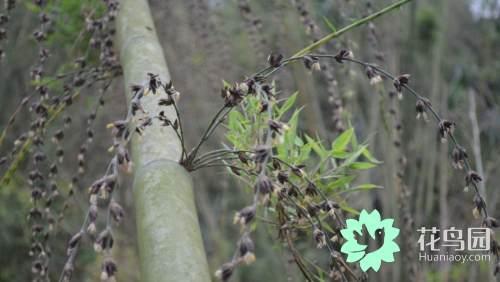
Although bamboo is a common plant, it is truly a remarkable one. Like its close relatives rice and wheat, it is a herbaceous plant, yet it can grow one meter in a single night, eventually reaching the height of a large tree, and can even form vast, pure bamboo seas. Its unique flowering habits are also an unsolved puzzle in plant research.
In fact, few people have ever seen bamboo flower, so much so that many believe bamboo does not flower at all. It was not until the 1980s, when large areas of arrow bamboo forest in Sichuan, Gansu and other places bloomed, and then bamboo across the mountains and plains died at the same time, causing a sensation and casting a veil of mystery over bamboo.
As an angiosperm, bamboo of course also flowers, sets seed and reproduces. It is just that it does not bloom every year like other plants. In academic circles there is the so-called 60-year rule, meaning it flowers once every 60 years, but this is only an approximate figure. When bamboo flowers is closely linked to environmental changes and its own age.
Bamboo flowering brings huge effects that other plants do not: overnight, bamboo dies off in patches, causing large-scale ecological events, affecting pandas and other creatures that depend on bamboo to survive, and also dealing a heavy blow to the human bamboo industry.
Why does bamboo die after flowering?
Flowering plants in nature can be roughly divided into two categories: one flowers only once in its lifetime; the other, which is more common, flowers year after year in a repeating cycle, such as apples, tree peonies, osmanthus and so on. The life of the former is divided into vegetative growth and reproductive growth. In the early vegetative stage it spreads branches and leaves and stores nutrients; after a period of time it begins to bloom and reproduce, and once its nutrients are exhausted it dies. The annual and biennial plants we usually see, such as radishes, cabbages and rapeseed, are all like this. Meanwhile plants such as the fishtail palm that produces sago, as well as agaves and bamboo, spend years or even decades storing nutrients, burst forth all at once, and then die. (Note: not all bamboo dies after flowering; bamboo species such as mottled bamboo, sweet bamboo, elegant bamboo, water bamboo and flower bamboo still survive.)
Since bamboo is not the only plant that dies after flowering, why is it only bamboo that dies off en masse and in patches, creating a sensational event?
The large stretch of bamboo forest we see is very likely the same bamboo plant, all connected through underground rhizomes. Bamboo shoots grow from the rhizomes and then grow into new bamboo, constantly expanding its range, which is remarkably similar to "one tree forming a forest"! Bamboo forest formed in this way is also called "same-age bamboo." Even if they are not the same bamboo plant, the same species of bamboo in one geographic area may all be the descendants left behind by the last mass flowering and death of bamboo. In short, they are the same age, forming a cycle in nature, just like periodical cicadas that emerge and shed their shells together every 17 years. A series of unique habits creates this wonder!
Compared with "same-age bamboo" in nature, artificially planted bamboo often varies in species, bamboo age and origin, forming "different-age bamboo," so the phenomenon of mass flowering and death does not occur.