Cultivation Methods and Key Planting Techniques for Monkshood
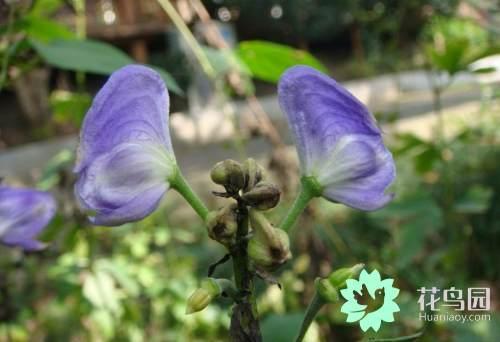
The roots and leaves of monkshood grow relatively simply, and it rarely suffers from diseases, so the yield of cultivated monkshood is relatively high every year, and it is also a crop that farmers relatively like to grow. Today, the editor will briefly talk with everyone about several key points of monkshood cultivation, hoping that after reading it, it will be helpful and inspiring to those who want to learn about monkshood cultivation, and can also bring help in the actual operation of monkshood cultivation.
Land selection and land preparation
After the previous crop of monkshood, which may be rice, corn, vegetables, wheat, or Coptis chinensis, is harvested, carry out plowing and sun-drying, allow full weathering, make the soil fine and crumbly, and build beds 100-130 cm wide, 16 cm high, with a ditch width of 26 cm. Apply decomposed barnyard manure or compost on the beds at more than 15,000 kg per hectare, turn it into the soil, mix thoroughly, and level the bed surface into an arched-back shape.
Sowing methods
Monkshood sowing is mostly propagated by root tubers, divided into direct planting and storage for seed preparation. To cultivate high-quality, high-yield varieties, materials for cultivation and propagation must be selected in mountainous areas at an altitude of about 1,000 m.
1. Direct planting
Planting at the right time is very important. Prepare the land from late July to early August. When harvesting Aconitum carmichaelii, the daughter roots suitable for use as planting stock should immediately be planted in holes opened at a row spacing of 50 cm, plant spacing of 26 cm, and depth of 10 cm, planting 1-2 planting stocks with the buds facing upward, covering with 3 cm of soil, and then interplanting vegetables, broad beans, peas, wheat, etc. In dry weather, water once every 7-8 days, allowing the daughter roots to lie dormant in the soil and emerge and grow the following year.
2. Storage for seed preparation
When harvesting daughter roots, the large ones are used for medicinal purposes, and the small ones are left on the stump and temporarily planted in sandy loam soil, then taken out as planting stock when planting. If the planting stock is removed from the old stump, dig a pit about 66 cm deep in sandy loam or sandy soil, lay a layer of planting stock at the bottom, cover with 16 cm of sandy soil, then lay another layer of planting stock, cover with sandy soil, and continue until ground level, shaping it like a tile back, and set up several bundles of corn stalks and the like around and in the middle to allow ventilation. In December, go to the prepared land and divide into three grades: large, medium, and small. For large plants, use a row spacing of 26 cm; for medium plants, 20-23 cm; for small plants, 16 cm. Apply sufficient base fertilizer, using barnyard manure and an appropriate amount of superphosphate (225 kg per hectare) applied into the holes, cover with 6-10 cm of soil, and use a sowing rate of 750 kg per hectare. When planting in winter, select robust, uniform, high-yielding, and good-quality seedlings. In places that are too cold, if winter planting is not possible, spring planting may also be used, with the same method as above, interplanted with corn, peanuts, sweet potatoes, etc. The yield of Aconitum carmichaelii is about 600,000 tubers per hectare, and generally it can only be propagated for two years. In mountainous areas, cultivate varieties to prevent degeneration. Among fine varieties, "Heshangtou" is the best, with large root tubers and high yield.
3. Intercropping and relay intercropping methods
After the daughter roots are planted, immediately interplant lettuce on one side of the bed, planting one clump every 16 cm. At the end of April or early May of the following year, after the lettuce is harvested, interplant corn, planting one clump every 50 cm, leaving two seedlings per hole. The interplanted corn is planted only on the sunny side of the bed, mainly to provide shade for the daughter roots. After the daughter roots are harvested, immediately sow Chinese cabbage on the bed without applying fertilizer, which can yield 52,500 kg of Chinese cabbage per hectare. It is also possible, after harvesting the daughter roots, to plant late rice seedlings. First temporarily plant the rice seedlings in another rice field at a spacing of 6 cm per plant. After harvesting the daughter roots at the end of July or early August, immediately irrigate, prepare the land, and transplant the seedlings. If the corn is not yet mature, it may be temporarily left unharvested. If the water is shallow, the seedlings can be planted in the beds where the daughter roots were dug, without affecting the final ripening of the corn. In this way, both grain and medicinal materials can be harvested. For example, in 1976, the Wugong Commune in Nanzheng County, Shaanxi, harvested 0.27 hectares of daughter roots, with a yield of 8,250 kg of daughter roots per hectare, 4,500 kg of corn, and 3,000 kg of late rice per hectare.
Field management
Strengthening management is the key to ensuring high quality and high yield of daughter roots.
1. Root pruning and tip removal
Root pruning is carried out twice. The first time is in early April when the seedlings have grown 4-5 leaves. Dig away the soil near the plant, expose the mother root and the large daughter roots, keep 2-3 relatively large daughter roots on the inner side of the mother root, keep one for small seedlings, and remove all the other daughter roots. The second time is in mid-May, digging 13-16 cm deep to expose the upper half of the daughter roots, cutting off the newly grown small daughter roots on the mother root and the fibrous roots on the retained large daughter roots, leaving only one single root below, so that the surface of the daughter roots is smooth. Be careful not to damage the mother root.
Tip removal: remove the tips before each fertilization. After 3-5 days, axillary buds grow in the leaf axils of the plant; remove them immediately so that nutrients are concentrated on the growth of the daughter roots.
2. Weeding and topdressing
Monkshood planting should be meticulous. In addition to keeping the soil moist and loose, remove weeds as soon as they appear. In summer, avoid waterlogging and apply topdressing at the right time. When the seedlings are 6 cm high, apply the first topdressing, 750 kg of decomposed cake fertilizer per hectare mixed with 37,500 kg of dilute manure liquid, applied between the rows. The second topdressing is after the first root pruning, applying 1,500 kg of decomposed cake fertilizer mixed with 37,500 kg of dilute manure water, applied between every two plants. The third topdressing is after the second root pruning, with an increased amount of manure, applied between the two plant spacings not treated last time. Pay attention to diseased plants; uproot and burn them immediately upon discovery, and fill in gaps where seedlings are missing.
3. Hilling
To prevent rainwater from intruding into the roots, reduce root rot, lower soil temperature, and promote root tuber expansion, when topdressing, rake the soil on both sides of the bed toward the base of the plants to form a fish-back shape.
4. Irrigation and drainage
If spring drought occurs or the soil is too dry, water promptly. After the temperature rises, water in the morning and evening. During the rainy season, pay attention to drainage to prevent root disorder.
5. Harvesting and processing
Daughter roots are harvested in July of the second year after planting. If there is continuous cloudy and rainy weather, the root tubers are prone to rot, so harvesting may be done early. At the latest, do not exceed the Beginning of Autumn. For seed plots, dig and plant in winter as you go. Use a hoe to dig out the root tubers, remove fibrous roots and soil, remove the aboveground stems and leaves, and separate the daughter roots from the mother roots. The yield is about 7,500 kg of daughter roots per hectare. The mother roots are sun-dried and called Chuanwu. Daughter roots contain aconitine components and are highly toxic drugs, so they must be processed before use.