How to grow fuchsia? Learn to grow a full, lush plant covered in blooms
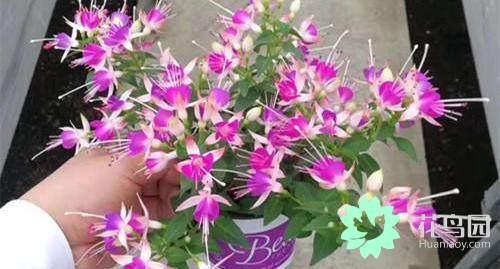
Fuchsia has a distinctive flower shape, delicate and lovely colors, is dainty and charming, easy to keep alive, and has a long blooming period, making it an ideal flowering plant for home containers, which is why it is so well loved.
To grow fuchsia well, you should master the following points:
1. Fuchsia likes cool conditions and fears heat. When summer temperatures are too high, its growth will weaken, and it may even stop growing and go dormant. For some less resilient cultivars, it may even struggle to survive the summer and die. So in summer, certain measures should be taken for fuchsia, such as shading, ventilation, misting, and cooling, to improve its growing environment and ensure healthy growth.
2. Fuchsia roots easily from cuttings, and the selection of cuttings and the timing of propagation are also factors that ensure robust growth of fuchsia. Spring and autumn are ideal times for cuttings. In spring, as temperatures rise, fuchsia shifts from vegetative growth to reproductive growth. Cuttings should be taken from young shoots of the mother plant during its vegetative growth period; at this time the shoots are tender yet sturdy, root easily, and grow strongly after rooting.
Select sturdy young shoots for cuttings
Young seedlings after rooting
3. Shaping is an important measure for improving the ornamental value of fuchsia, and pinching and pruning are the means of ensuring an attractive plant shape. For rooted seedlings from cuttings, repeated pinching encourages more branching, achieving a full plant shape and more flowers. For older plants, cut away overly long old branches and weak branches to encourage more new shoots; more shoots means more flowers.
Repot into a slightly larger pot for growing on, and pinch promptly after the plant recovers
To achieve a full plant shape and increase the number of flowers, pinch again
Pinched plants are shorter, fuller, with more branches and more flowers
4. There are many fuchsia cultivars, and different cultivars have different growth vigor and different stress tolerance. Generally, small-flowered cultivars have small but numerous, densely packed flowers, strong growth vigor, and strong stress tolerance. Large-flowered cultivars have large, beautiful flowers, but the flowers are fewer and sparser, with weaker growth vigor and weaker stress tolerance. Cultivars differ in flower shape, flower color, leaf size, leaf shape, leaf color, branch thickness, and degree of branching, so cultivation techniques and shaping methods also vary by cultivar, so as to bring out the best characteristics of each cultivar.
Photos of some fuchsia cultivars
[Tips] Fuchsia can be grown into a high-quality container plant with a full shape and abundant blooms, and can also be made into a finely shaped bonsai. For bonsai, choose cultivars with strong growth vigor, strong stress tolerance, a main trunk that thickens easily, small leaves, short internodes, and strong branching, to make shaping easier.