Don't throw away dead wood stumps - put them in a pot with a little water and grow a beautiful potted plant
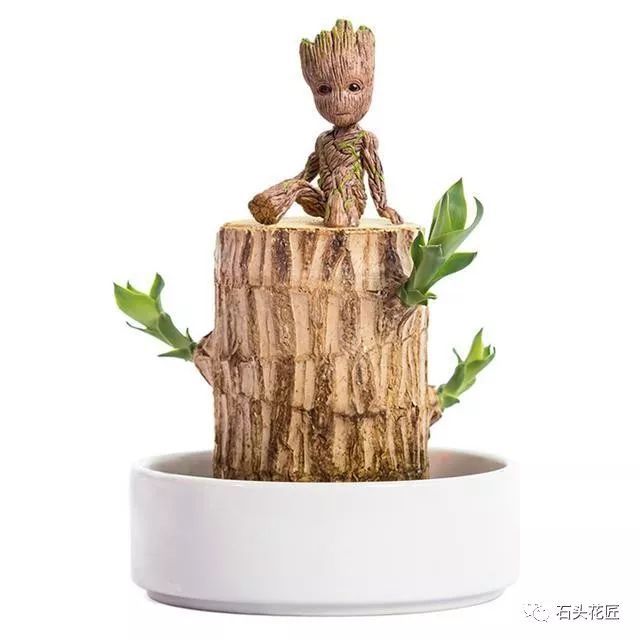
Last month I received a package from a friend. When I opened it, I was very disappointed. I had been expecting him to send me something nice, but it turned out to be a piece of rotten wood. I really wanted to throw it away, but then I rummaged through the box again and found instructions and nutrient solution, and only then did I realize he had sent me a lucky wood, probably to bring me more luck!
When it comes to lucky wood, many plant lovers may not know it, but when it comes to Dracaena fragrans (Brazilian wood), everyone surely knows it. In fact, lucky wood is just another name for Dracaena fragrans, except that now lucky wood refers to this kind of stump without roots. Now let's get to the main topic and see how I cared for it. It took one month for the scene of "dead wood coming back to life" to appear.
Potting:
Because the bottom of the lucky wood is a relatively large cut section and it has no roots, I prepared to grow it directly in water. I prepared a ceramic flower pot, added 1-2 cm of clean water, then added one drop of nutrient solution, and placed it in a cool place.
Acclimation:
During the stage of sprouting new buds, it is best to change the water once a week, adding one drop of nutrient solution each time. Be sure not to add too much, as too much will inhibit the sprouting of new buds. Keep it indoors, and you can mist around it every day to increase humidity. Try not to place it outdoors, because the outdoor air is dry, which will cause the lucky wood to evaporate and dehydrate, and in the end it really will become dead wood.
Care:
After about a month, you will notice that the lucky wood has grown small buds, and the leaves look very much like corn leaves. Continue caring for it indoors. At this point, you can place the potted plant in a spot with light, because this plant naturally likes light.
In fact, lucky wood is a relatively easy plant to grow. As long as you add water to the pot and keep it indoors, it basically will not develop yellow leaves or rot. In later care, there is one more thing to pay attention to, which is pruning, because it grows in water with nutrient solution, and its leaves grow relatively fast. Once the leaves have grown larger, you can appropriately prune the old leaves at the bottom to reduce consumption and also encourage new bud points to sprout.
Stone feels this is a very beautiful potted plant. It looks good and has a good meaning, with a minimalist style! Friends who like it can grow it on a desk, in an office, or in a living room. It is absolutely eye-catching.