Kalanchoe not blooming? Check your fertilizing method; using nitrogen fertilizer before the flowering period makes blooming difficult
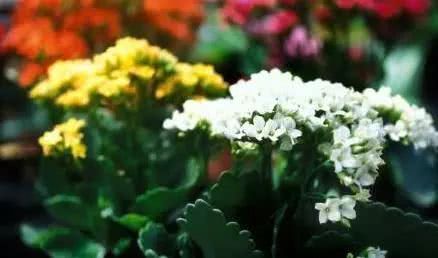
Modern people like to grow some flowers and green plants at home, which not only beautifies the indoor environment but also cultivates the owner's character. Kalanchoe is a very good choice. The flowering period of kalanchoe is very long. I also like kalanchoe very much, and I have two pots of kalanchoe at home. Here I will talk with you about the fertilizing issues of kalanchoe.
The habits of kalanchoe
To grow kalanchoe well, the first step is naturally to understand clearly the growth habits of kalanchoe. Kalanchoe is native to Africa and likes a warm and humid growing environment. Its cold tolerance is very poor. The growing environment should have sufficient light. It is drought-tolerant and does not like waterlogging. The flowering period generally lasts as long as four months. It is suitable for sandy, fertile soil.
Base fertilizer
The flowering period of kalanchoe is very long, so during the growth period the fertilizer must keep up, so that kalanchoe can bloom continuously. Kalanchoe does not need repotting too frequently; generally repotting once every two years is enough. When repotting, be careful to avoid damaging the roots of kalanchoe.
Because the fertility of the potting soil has already declined, it needs to be replaced with relatively fertile new potting soil. Generally, a mix of humus soil and fine river sand can be used. In addition, some crushed stones can be placed at the bottom of the flowerpot to increase air permeability. Some base fertilizer should be placed at the bottom of the soil to ensure sufficient fertility during the growth period of kalanchoe. For the base fertilizer, decomposed cake fertilizer and chicken manure are both acceptable.
Fertilizing at the seedling stage
After kalanchoe has been grown for a long time, flower lovers can consider cuttings, so that one pot of kalanchoe can become many pots. Kalanchoe has relatively strong vitality. Generally, at the seedling stage, kalanchoe can already be transplanted into a flowerpot. After two weeks, a light fertilizer can be applied. Some diluted decomposed cake fertilizer can be applied to promote seedling growth. If you transplanted kalanchoe in summer, do not fertilize when the temperature exceeds 35°C, as it easily causes root burn to the seedlings and instead is not conducive to seedling growth.
Fertilizing in spring
Spring is the growth period of kalanchoe, so fertilizer is naturally indispensable. In spring, kalanchoe has generally already finished blooming, and at this time nutrients need to be supplemented to promote the growth of branches and leaves. Flower lovers need to cut off the flowers that have already faded from kalanchoe to avoid nutrient loss, and then tidy up dead branches and the like. Some decomposed cake fertilizer can be applied to kalanchoe to promote leaf growth. If you do not have these, you can also buy some flower compound fertilizer and apply some to kalanchoe, once every two weeks.
Fertilizing in summer
Summer temperatures are relatively high, and at this time kalanchoe will enter a dormant period, so flower lovers should reduce fertilizing, or may not fertilize at all, to avoid fertilizer damage caused by high temperatures. Just place kalanchoe in a ventilated and breathable place. Pay attention to watering normally; water thoroughly after the soil dries out.
Fertilizing in autumn and winter
In autumn the weather turns cooler, and the dormancy of kalanchoe ends. In early autumn, a little nitrogen fertilizer can be applied to promote the growth of kalanchoe leaves. After October, the amount of nitrogen fertilizer used should be reduced, because kalanchoe is about to enter its flowering period. Applying too much nitrogen fertilizer will cause the leaves of kalanchoe to grow excessively, which is instead not conducive to flowering. At this time flower lovers should use more phosphorus and potassium fertilizer. The fertilizer can be applied directly into the flowerpot, or a foliar fertilizer can be chosen for spraying, generally at a frequency of once every two weeks.
Give kalanchoe an appropriate amount of sunlight, and generally in less than two months kalanchoe will grow flower buds. Then kalanchoe enters a long flowering period. During the flowering period, after each round of kalanchoe blooms and fades, promptly prune the flowers that have already faded to avoid nutrient loss and promote the formation of new flower buds. In between, pay attention to the use of phosphorus and potassium fertilizer, generally once every two weeks.