Facility Cultivation Techniques for Kiwano in Hainan Region
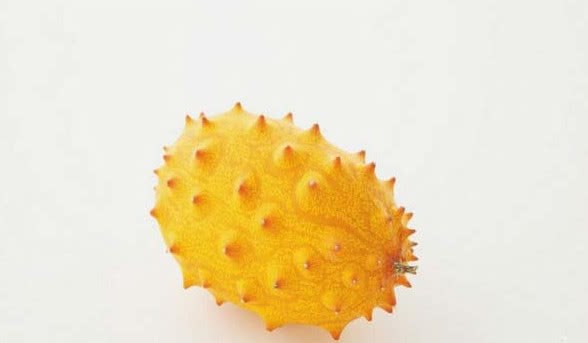
Kiwano has a unique flavor, leaving a faint herbal fragrance in the mouth after tasting. It is also nutritious and is a rare sugar-free fruit, making it quite suitable for the elderly and people with diabetes. In recent years, kiwano has been promoted and planted in southern China and is well liked by consumers. Let us take a look below at the facility cultivation methods for kiwano in the Hainan region.
I. Introduction Performance
1.1 Plant Trait Performance
The plant trait performance of kiwano cultivated in greenhouses is shown in Figure 1. Kiwano takes 3.0-3.5 months from sowing to harvest. The main vine is 4.57 mm thick, the plant height is 3.6 m, the stem has 5 ridges, and the branching ability is relatively strong. After pruning is stopped, the branches will continue to grow, crisscrossing and covering in sheets. The average leaf length is 10.38 cm, the average leaf width is 13.66 cm, and the leaf shape index is 0.76. The leaves are flat and round, with entire margins. The surfaces of the leaves and petioles are covered with relatively stiff bristles. The petiole is 6.92 cm long and 3.05 mm thick. The flowers are small and yellow, monoecious with unisexual flowers. The first female flower appears at the 10th-12th node, after which 1 female flower appears every 10-12 nodes. Sometimes female flowers also appear on 2 consecutive nodes at the same time, and sometimes multiple female flowers appear on 1 node at the same time, while male flowers are clustered. The ovary of the female flower is covered with hard spines. As the ovary grows, the hard spines become harder and harder and become integrated with the fruit skin.
1.2 Fruit Traits
The fruit development period of kiwano requires 50-60 d. The kiwano plant has strong growth vigor. With 5-6 vine pruning, a single plant can set about 15 fruits. The average single fruit weight is 0.265 kg, with a maximum of 0.415 kg; the average fruit longitudinal diameter is 10.81 cm, with a maximum of 12 cm; the average fruit transverse diameter is 6.38 cm, with a maximum of 7 cm; the fruit shape index is 1.69, and the fruit is oblong-elliptical. The seeds are milky white or light grayish-white, ovate, and the seed surface of some materials has soft epidermal hairs. A single fruit contains on average about 500 seeds, with a maximum of 812 seeds. The average soluble solids content of the fruit is 5.87%, with a maximum of 8.5%, showing an obvious sour taste. Fruits with higher sugar content have a relatively mild sweetness. Mature fruits have a glossy and relatively hard skin. The flesh is translucent green or yellow-green, fine and juicy in texture, with a refreshingly sweet taste. Varieties with lower sugar content have a stronger sour taste.
Figure 1 Plant Trait Performance of Kiwano
II. Growth Characteristics and Facility Cultivation Techniques
Kiwano can be cultivated in solar greenhouses in Sanya City, Hainan Province (from September to May of the following year). Kiwano is native to the tropics. During the seedling stage, growth is slower when encountering low temperatures, so low-temperature prevention is needed when raising seedlings from January to February. During cultivation, mild downy mildew and powdery mildew occur during the fruit-setting stage, and severe damage from Diaphania indica occurs during the fruit ripening stage, so timely chemical control measures are required.
2.1 Seedling Raising
Kiwano seeds have good vigor and can still germinate after being stored indoors for 1 year. After sowing, under suitable temperature (25-35°C), seedlings can emerge in 3-4 d. Use 7×10 plug trays, and mix decomposed coconut coir : fine sand at a ratio of 2-3:1 as the substrate for seedling raising. When mixing the substrate, an appropriate amount of water should be added. It is suitable if the substrate can be pinched into a ball by hand without dripping water and can scatter when dropped to the ground. Sow the seeds directly into the plug trays, cover with substrate, and control the sowing depth at 0.5 cm. In order to prevent the occurrence and spread of soil-borne diseases such as Fusarium wilt during the seedling stage, the seedling plug trays are placed neatly in the greenhouse, with thick bamboo poles placed underneath to isolate them from the soil. After emergence, water timely to prevent low-temperature chilling injury. When 2-3 true leaves have grown and the root system fully wraps the substrate, they can be transplanted.
2.2 Transplanting and Field Management
Kiwano is suitable for planting in sandy soil and sandy loam plots. The transplanting spacing is 0.4 m×0.8 m, with 30,000 plants·hm-2. Apply sufficient base fertilizer before transplanting, and water thoroughly after transplanting to promote seedling recovery. Growth is relatively slow in the early stage after transplanting, and kiwano begins to extend vines after about 15 d. Kiwano has strong branching ability, weak apical dominance, and relatively thin but vigorously growing branches. In the early stage, single-vine pruning is used, and the main vine is promptly hung up with plastic rope, winding the vine once every 2-3 d. In the early growth stage of kiwano, strictly prune and remove side shoots until the main vine differentiates female flowers and sets fruit; otherwise, excessive growth vigor will result in poor ventilation and light transmission in the greenhouse, which is not conducive to fruit enlargement. When the main vine grows to about 2.0 m, that is, the height of the iron wire used for hanging vines, the top is removed.
2.3 Fruit Setting
The first female flower of kiwano appears at around the 11th node. The first female flower does not set fruit. Select and retain the second and later female flowers for artificial pollination and fruit setting. After fruit setting, management can be appropriately extensive without pruning, allowing side vines to grow, and excessive density can be pruned appropriately. Pollinate 3-5 female flowers per plant, eliminate deformed fruits, and finally retain 3 set fruits as appropriate. Because the plant spacing for greenhouse vine-hanging cultivation is small, the number of cultivated plants can reach 30,000 plants·hm-2.
2.4 Pest and Disease Control and Other Precautions
Facility cultivation of kiwano in Sanya, Hainan can effectively reduce the occurrence of pests and diseases, and cultivation management is simple and labor-saving. During the seedling stage, pay attention to chilling injury below 15°C. Too low a temperature will inhibit the growth of kiwano, and in severe cases will cause leaf damage or even death. Kiwano is relatively resistant to powdery mildew and downy mildew, and lesions expand slowly at the affected sites, so the impact is relatively small. When the disease is mild, no control may be needed; when the disease is severe, chemical control can be adopted. For powdery mildew, kresoxim-methyl 1,000-1,500 times liquid can be sprayed on the leaves; for downy mildew, 70% mancozeb 400-500 times liquid can be sprayed for control. During the fruit ripening stage, damage from Diaphania indica is likely to occur, mainly with larvae biting and feeding on fruits and leaves. A mixture of 2.5% beta-cypermethrin emulsifiable concentrate 1,500-2,000 times liquid and 1% emamectin benzoate emulsifiable concentrate 2,000 times liquid has relatively good control efficacy, and 1-2 applications can control it.
During the fruit-setting stage, some individual plants are infected with viral disease, with leaf shrinkage and spotted yellowing, and young fruits appear abnormally green to dark green. Timely use of high-efficiency, low-toxicity, low-residue pollution-free pesticides can be adopted for control.
2.5 Harvest
Harvest when the fruit skin color changes from green to yellow, or harvest when the fruit has set its shape and shows a certain gloss. Placing it in a dry room at room temperature for 1 month will allow it to turn yellow without affecting the taste. Early harvest can reduce the greenhouse occupation period of kiwano and lower production costs. Virus-infected fruits and insect-spotted fruits are all eliminated.
III. Economic Benefits
According to relevant reports, the yield of kiwano is more than 90,000 fruits·hm-2. The market price per fruit is 5-10 yuan, and the highest single selling price can reach 45 yuan. The economic benefit of planting is extremely high. Calculated at a wholesale price of 2-5 yuan each, an income of 180,000-450,000 yuan can be obtained. This cultivation model adopts high-density vine-hanging cultivation and can achieve a one-time harvest of more than 90,000 fruits·hm-2, and subsequent harvest yields can be higher. In addition, it is concentrated on the market around the Spring Festival, so higher economic benefits can be obtained.