Yellowing jasmine leaves and a sub-healthy state: don't mess with it, protecting the heart soil is key
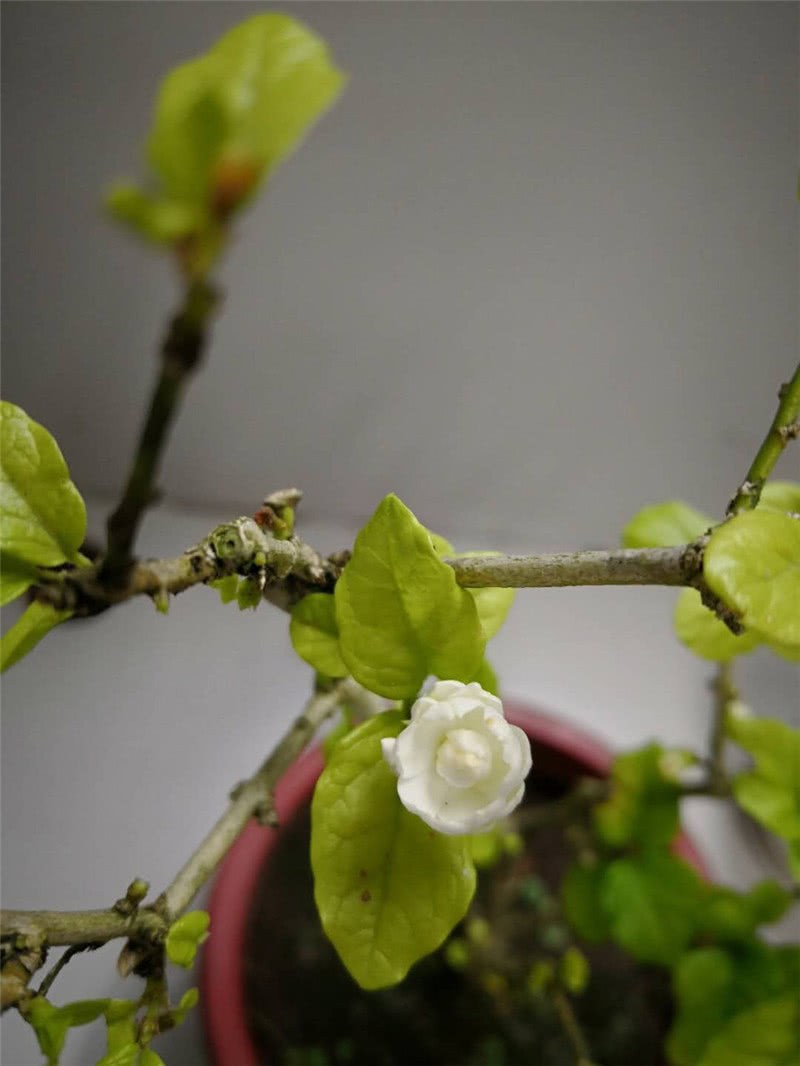
Mid-July, and the ones blooming fragrantly are all other people's jasmine. Is your potted jasmine at home doing alright? Recently, a flower friend said that the jasmine at home had yellow leaves and also red spider mites, and asked the little gardener for help. The little gardener took one look at his jasmine at home and found it wasn't easy to solve. Let's see how we dealt with it afterwards.
1. The "sub-healthy" state of jasmine
This is the jasmine at the flower friend's home. It had previously put out a few small flowers, and this one is the most beautiful. But you can tell just by looking at the leaves - the leaves covering the jasmine are not very green, and at a glance it is in a "sub-healthy" state.
The jasmine owner said that red spider mites were found on the potting soil. Although they were very small, they were still discovered. The appearance of red spider mites shows one problem even more clearly: the environment where this jasmine is cared for has poor ventilation. Red spider mites only appear under stuffy and humid conditions.
2. Test the "pH" of the potting soil
We first tested the pH of the soil, and the value was not very ideal either. Judging by the color, this soil is on the alkaline side. To grow jasmine, a slightly acidic soil environment is what allows it to grow well. In everyday care, it is best to water with an acidic organic nutrient solution to improve the soil and environment, prevent soil salinization, supplement nutrients, and promote flowering.
3. The "three-step" rescue for the rose
There was no other way, so it had to be repotted. When repotting, first do 1 pat: pat the wall of the flowerpot and take the jasmine out together with the soil. Then do 1 soak: soak it in water to soften the outer soil and let the roots be exposed by 3-5 cm. Note that the soil originally held in the middle part of the root ball must be kept. This is the "heart soil," and it is best not to remove it.
The flower friend was worried that it would not take root if potted directly, so he also soaked it in rooting powder. When repotting, everyone can learn this step. Some flower friends are even more "diligent and thrifty," and then use this rooting water from soaking the roots, and after repotting, pour it into the pot as settling water. This is also excellent. When caring for and repotting plants, you should learn this point too.
Of course, the branches above should also be trimmed, and then it should be repotted. This helps with recovery. Those long branches can be pruned. After repotting, by no means fertilize in the early stage. What should be done at this time is to control water and let the plant recover. In everyday jasmine care, we can use a plant monitor to help measure humidity and measure fertility, so that watering and fertilizing have a proper "measure."
If your jasmine also has problems, you can refer to the methods in this article and bring it back. For summer care, do a good job of controlling water and providing ventilation, so that jasmine can grow robustly and bloom even more fragrantly.