How to protect succulents during the plum rain season to reduce damage
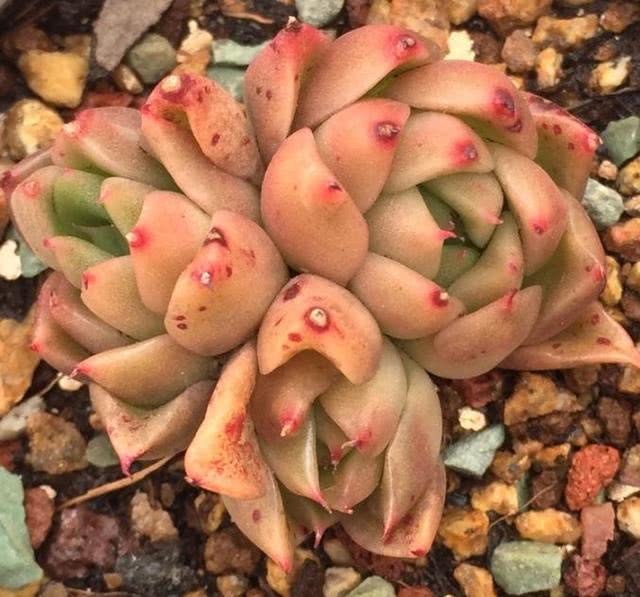
The plum rain season has arrived, and sunlight has become a rare thing. Succulents in the Crassulaceae family love sunlight and prefer a well-ventilated environment. A lack of light will make their form become thin and tall, and very ugly. Poor ventilation will also cause their roots to rot, and the succulents will wilt and even die. Sunlight is always an unchanging topic for succulents. Everyone knows that succulents love light, but although the plum rain season has a lot of rain, the sunlight is not gentle. Once the rain stops and the sun comes out, it is bound to be accompanied by blazing sun exposure, and the temperature will shoot straight up to above 35°C, especially during the period from 1 p.m. to 4 p.m.
How exactly should succulents be cared for during the plum rain season? All succulents in ceramic pots and resin pots should be placed indoors, supplemented with plant grow lights, and helped with ventilation using fans. All succulents planted in red clay pots should be kept outdoors, because red clay pots have the best breathability and water permeability, so even if they get rained on, they will dry out quickly. Although these two methods cannot make the succulents' colors turn red (for Crassulaceae succulents, sunlight is only one prerequisite for vivid colors; another point, temperature difference, is also quite important. In weather like now, when the temperature difference between morning and evening is very small, they generally tend toward an increasingly green state), at least they have very clearly controlled the trend of etiolation.
Once rain is forecast, still try as much as possible to move the succulents to a place sheltered from the rain. Rain during the plum rain season is generally short-term heavy rainfall, and it will definitely soak your succulents until the pots are full and everything is in a mess. During the plum rain season, there is rain and blazing sun. The most feared period is the one after the rain when the sun comes out. This period is often the easiest to overlook, and it is also the period with the highest humidity and a sharp rise in temperature. If the succulents happen to be placed in the sunlight, it can easily lead to sunburn and the spread of some diseases. If there is no natural ventilation, you can use a small fan to keep blowing on them. Heat is not a problem; stuffiness is what is fatal.
You can let the succulents grow as vigorously as possible, because vigorously growing succulents have the strongest self-repair ability, and this is also the most powerful weapon against diseases. Try not to create "wounds" on the succulents. Generally speaking, black rot starts from the roots of succulents. If the soil is not breathable and causes root rot, the wound on the rotten root area may become the entry point for fungi such as Fusarium. Any wound can trigger black rot. So, in this season, if we can avoid pulling off leaves, then don't pull them off; if we can avoid beheading the succulents, then don't behead them. This can reduce the probability of black rot to the minimum.
So can succulents be rained on during normal rainy days? Yes, it can replenish water for the plants, and rainwater is soft water, making it the best water for cultivation. The reason thunderstorm rain is emphasized is that when it thunders, the sky has high-voltage discharge of tens of thousands of volts, which is nature's best way of nitrogen fixation. Nitrogen in the air will be turned into nitric acid by the high-voltage discharge, and as the rain falls into the soil, if organic fertilizer is used or plant ash is used, if leaf mold or humus soil is used, the rainwater carrying nitric acid will combine with substances in the soil to form nitrates necessary for plant growth, such as phosphorus nitrate and potassium nitrate. These are the easiest for plants to absorb.
For the plum rain season, it depends on the Crassulaceae species and growth characteristics: some like water, some like dryness. Whatever varieties you have, look them up online. For example, Lithops should have watering cut off throughout the entire summer. Finally, note that fertilization should be stopped during high-temperature seasons. Rain protection work should be done well; after heavy rain, then exposure to the sun can easily cause black rot. Fellow flower growers should find suitable methods according to the climate conditions of the city they are in and the characteristics of their own cultivation environment. I hope some of my immature practices can serve to offer a modest spur to induce others to come forward with valuable contributions.
This is a gathering place for succulent lovers, sharing succulent care tips. Welcome to follow and exchange ideas.