The Art of Fertilizing Orchids Through the Four Seasons: Key Rules for Planting and Care
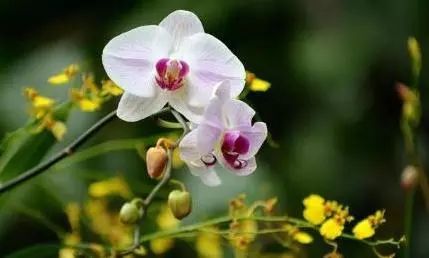
Orchids have long enjoyed the reputation of being the gentleman among flowers. Many flower lovers enjoy growing orchids; orchids give people a very serene feeling, especially when a pot of orchids is placed in a study, making the whole study feel more tranquil. However, orchids are also famously difficult to grow. Here we will talk about the issue of fertilizing orchids.
Spring Fertilization
Friends who grow orchids all know that orchids are relatively difficult to care for in spring. In spring, temperatures gradually rise, all things come back to life, and orchids are gradually reviving as well. At this time, flower lovers should not rush to fertilize orchids; wait until the temperature rises back to around 18 degrees before starting to fertilize. Fertilizing also requires considering factors such as weather and potting medium.
When the weather and temperature are relatively low, fertilizer must be applied diluted, never too concentrated. Generally, fertilize together with watering, with the fertilizer concentration at about one-eighth of the usual concentration. Foliar fertilizer should also be weak, generally at one-fifth of the usual concentration, which is sufficient. This helps orchids sprout new shoots.
In addition, the issues of temperature and weather also need to be considered. Because spring temperatures fluctuate greatly, if it is rainy and overcast for days on end, fertilization can be done in the morning or evening. If the temperature is relatively low, it is best to do it in the afternoon when the temperature is higher. The fertilizer is generally a balanced nitrogen-phosphorus-potassium fertilizer, applied at a frequency of about once every ten days.
Summer Fertilization
Growing orchids is truly not an easy task. Summer temperatures are relatively high, and it is hot and humid, making orchids very prone to disease, but it is also the best season for orchid growth. Therefore, fertilizing orchids in summer is also a matter of great particularity. Summer temperatures are relatively high, and evaporation is relatively vigorous, so fertilization should still be diluted, not too concentrated, otherwise it can easily cause fertilizer burn and root damage to orchids.
In summer, foliar fertilizer for orchids is the main approach. You can mix one-thousandth potassium dihydrogen phosphate with urea at the same concentration, spray it on orchid leaves, spray in the evening, and then spray the leaves with clean water the next morning. Root topdressing is mainly nitrogen-phosphorus-potassium fertilizer, while also adding some other trace elements. The fertilizer must be diluted, generally at about one-twentieth of the usual concentration.
If plum rain weather occurs, it is best to wait until a clear evening to fertilize, and then water the orchids with clean water the next morning to avoid fertilizer damage. Apply once every two weeks to twenty days. When the temperature is too high, generally above 35 degrees, fertilization should be stopped to avoid fertilizer damage to orchids.
Autumn Fertilization
In autumn, temperatures drop, and orchid growth enters a slow period. At this time, the most important thing for orchids is root care. Some orchids enter their flowering period in autumn, so in addition to paying attention to applying thin fertilizer frequently in autumn, you also need to apply more phosphorus and potassium fertilizer, and less or no nitrogen fertilizer, to avoid excessive vegetative growth of orchid leaves, promote flower and leaf differentiation, nurture flower buds, and produce more blooms.
Winter Fertilization
In winter, most orchids have already entered dormancy and stopped growing. Only some orchids continue to grow, such as winter orchids and cold orchids (Cymbidium kanran), but these are only special cases. After most orchids enter dormancy in winter, fertilization should be stopped, otherwise it can easily cause damage to orchid roots, resulting in blackening and rotting.
The above comes from Science Xingnong.