Kalanchoe with only flowers and no leaves? Turns out these few little tricks were used
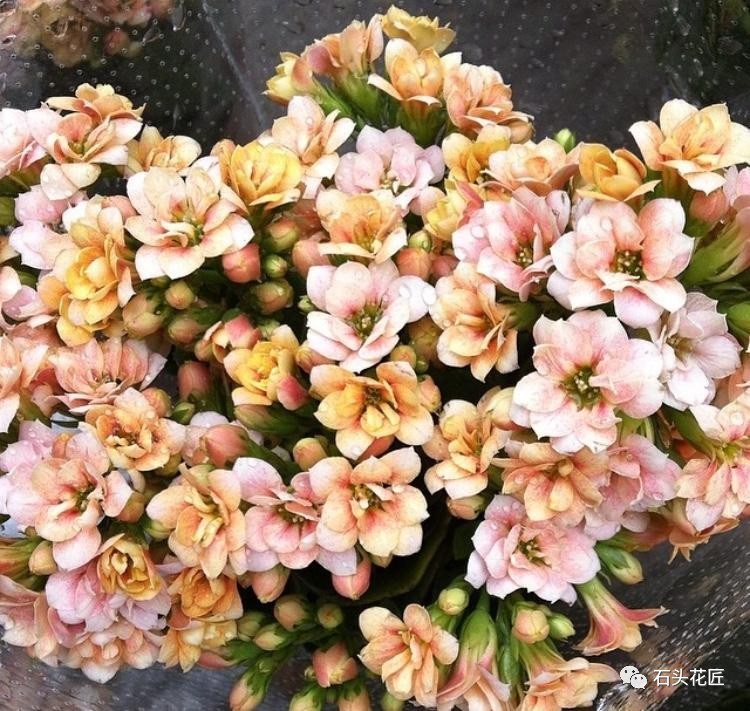
Today I received a photo shared by a flower friend of the kalanchoe they grow. I was simply stunned when I saw the photo. Shitou is seeing such a beautiful kalanchoe for the first time, spectacularly beautiful, almost no leaves, all flowers. Of course, it may also be that the flower friend trimmed off some leaves themselves, but just talking about this blooming, the amount can be called spectacular.
Of course, Shitou also asked him about the care methods. To be honest, a good work really has its reasons for being good. Below, Shitou shares this flower friend's cultivation methods and experience with everyone.
Dense planting
If you want the flowers to bloom abundantly, planting them sparsely in the pot definitely will not produce so many flowers. Therefore, when cultivating kalanchoe, it is best to choose a suitable flower pot, and then plant densely. This is the first step to achieving a pot bursting with flowers.
Timely fertilizing
In rural areas people often say: a good crop needs a handful of fertilizer. Growing flowers is the same. Applying suitable fertilizer at the right time is very crucial. For a plant like kalanchoe that blooms several times a year, fertilizing is of course also indispensable. Kalanchoe does not bloom in autumn and early winter each year. This time is the key period for comprehensively supplementing fertilizer. It is recommended to apply compound fertilizer once every two weeks. Remember to apply thin fertilizer frequently. The next very key time for fertilizing is after each bloom finishes and the flower buds are pruned, apply potassium dihydrogen phosphate. The effect of promoting flower bud development is absolutely good.
Proper pruning
To grow flowers well, pruning is indispensable. Pruning can both reduce the plant's consumption of nutrients and promote the plant's growth; for kalanchoe, pruning is very crucial. After each bloom finishes, cut off the spent flowers; pinch the tops of the branches to promote flower bud development; prune the old leaves at the bottom; reduce nutrient demand. Prune like this every time after the flowers finish blooming.
Reasonable lighting
Kalanchoe likes light, but strong direct light should be avoided. Generally, placing it on a balcony with scattered light is enough. Sunlight exposure is a key factor in flower bud development, so it is best to always keep kalanchoe in a place with good lighting.
Actually the experience and techniques are all very simple, and all are commonplace talk, but doing every step reasonably and at the right time requires everyone to pay attention in actual operation. Hurry and go take care of your potted plants. For more flower-growing topics, please leave a comment below to discuss!