What to do if hydrangeas won't bloom? Getting these points right is key
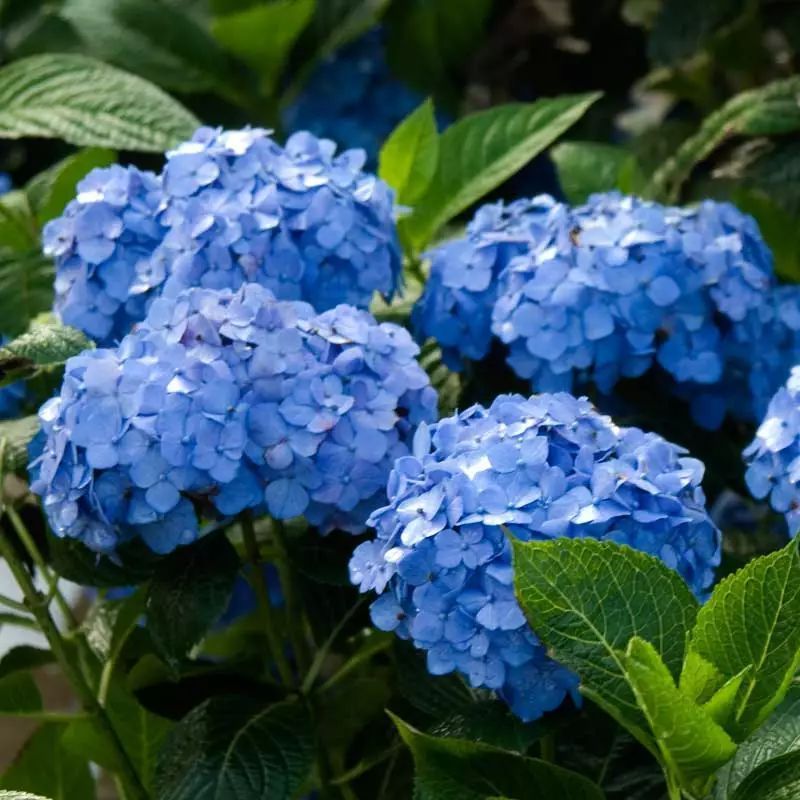
Hydrangeas are an ornamental flower with outstanding visual appeal; they have huge spherical blooms that look like a big pom-pom, with rich colors including the common blue, pink, white and green, and throughout the spring and summer season you can see brilliant flowers.
When caring for hydrangeas, do not grow them in a spot with excessive direct sun; they can be grown under the shade of trees, and with appropriate scattered light each day they will grow well.
Some flower lovers find that a hydrangea they bought grows very well the first year, but after the second year it never blooms again. Below, we explain the reasons for not blooming and the solutions.
1. Soil selection
The soil used for cultivation has a very big effect on hydrangeas, and we can also change the acidity or alkalinity of the soil to make hydrangeas produce different flower colors.
If your soil is not the reason the plant won't bloom, it is not because the soil is alkaline; it is very likely because the soil lacks fertility, and some soils have too much nitrogen fertilizer, which causes the hydrangea to grow only leaves and not bloom. You need to appropriately supplement phosphorus and potassium fertilizer to get brilliant flowers.
You can directly add some decomposed wood shavings or compost soil to the soil, and you can also add peat soil, which does a good job of improving soil fertility. If you think that is too troublesome, you can directly water with some potassium dihydrogen phosphate solution.
2. Appropriately supplement fertilizer
Hydrangeas consume a very large amount of energy to promote leaf growth. If you want hydrangeas to bloom every year, you need to supplement fertilizer in time so as to promote blooming. During care, you can appropriately supplement fertilizer after the flowers fade, and during the hydrangea's growing season you can regularly supplement potassium dihydrogen phosphate, once every 1~2 months, or other fertilizers with a relatively high content of phosphorus and potassium.
3. Newly planted hydrangeas
Some friends find that newly planted hydrangeas usually cannot sprout normally in the first and second years. Hydrangeas need a very large amount of energy to promote root growth, which ensures the hydrangea plant grows robustly. So when caring for hydrangeas, besides regularly supplementing fertilizer, you also need to maintain enough patience, which helps it continue blooming the second year.
4. Incorrect pruning
Whether hydrangeas are grown in pots or in the ground, they do not need pruning. Some friends do not understand how to care for hydrangeas and prune randomly, which easily causes fungal infection. If there are diseased branches and leaves, cut them off as soon as possible, but be careful to keep the other branches and leaves.
Generally, hydrangeas only need to have the spent flowers cut off in time after blooming. Removing the spent flowers after they fade helps retain more nutrients and promotes continuous blooming.
Hydrangeas also come in different types, which helps maintain a good growth state. Some varieties grow strongly and are tall plants, and some varieties grow and bloom on new branches and leaves, while others are classified in the Endless Summer series of hydrangeas.
Hydrangeas are generally pruned appropriately in late winter or early spring. It is best not to prune after the weather warms in spring, otherwise it is very easy to cut off the new branches that are bearing flower buds.
5. Notes on winter care
Hydrangeas are easily infected by cold wind when the weather is cold. In winter they need to be kept appropriately warm, but of course do not put them in a heated room, otherwise the temperature will be too high, which will affect the hydrangea's dormancy and ultimately affect blooming.
When the winter temperature is too low, you can cover the base of the stems and roots with some felt, and you can also cover with some peat soil or decomposed wood shavings.
6. Unsuitable care environment
When caring for hydrangeas, do not grow them in a completely shaded place; excessive shade will cause hydrangeas to be unable to bloom. The spot where you care for hydrangeas can have appropriate scattered light each day; maintaining about 4~8 hours of scattered light is enough. Also avoid growing them in a spot with excessively abundant light, otherwise it easily causes leaf sunburn, and in severe cases it can easily cause the plant to wither.
Caring for hydrangeas also requires regular watering. During the growing season they need a large amount of water, especially in the first one or two years after planting. Do not let the soil for growing hydrangeas dry out completely. After summer temperatures rise, increase the watering frequency and keep the soil slightly moist, but avoid waterlogging in the soil.
In addition, you also need to choose a hydrangea variety suited to growing in your local area. If you grow a certain variety of hydrangea and the care methods are all very correct, but it still grows poorly or cannot bloom, it is very likely because the variety is not suited to growing in your local area.