Can't keep succulents alive? It might be the soil; fix it and there's still a chance
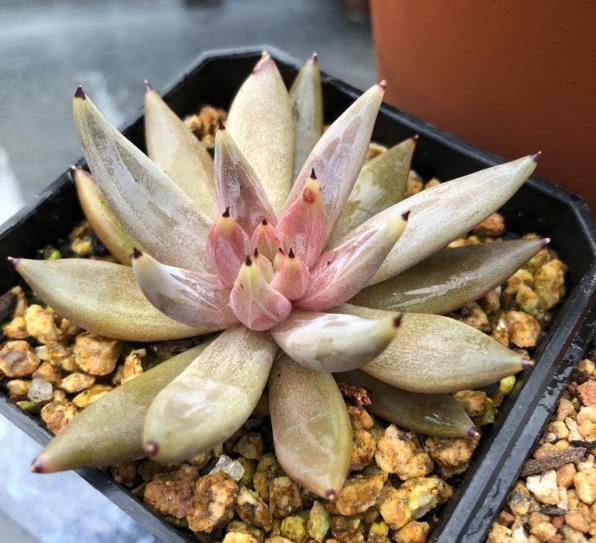
Many people who are just starting to grow succulents first find succulent potting soil especially mysterious. If it's all soil, why can't ordinary dirt grow succulents well, and why must you use special succulent soil? And with so many types that dazzle the eyes, friends with choice paralysis are truly miserable. In fact, the potting soil succulents need is not as complicated as everyone thinks. As long as you don't mind the trouble, anyone can mix a suitable potting soil for succulents.
Can ordinary soil be used to grow succulents? The conclusion is: yes, it can, but it's not very recommended. The reason it's not recommended is that, generally speaking, ordinary soil, common soil, is what you can dig up around you - in green spaces, residential compounds, vegetable gardens, under trees, and so on. Not only is it time-consuming and laborious, but the soil you dig up isn't necessarily airy, and it most likely contains various harmful factors such as bacteria and insects, so it's not recommended.
Generally speaking, the soil most people can find around them at a moment's notice is either mud soil or garden soil. What you casually dig up by the roadside is usually mud soil, characterized by clumping together like mud after watering and then easily compacting once dry, with no air permeability, making it unsuitable for succulent growth. Garden soil can be understood as the soil used for growing vegetables, or soil that has already been used to grow other plants for quite a long time (such as soil in a forest). Its advantage is that it's rich in nutrients and can even be considered loose and airy, but its drawback is that it may contain some pathogens and insect eggs.
For succulent soil, let's first talk about permeability, which actually means air and water permeability. Sandy soil: the sandy soil I'm referring to here is actually soil with a sand content greater than 80% or pure sand (which can also be understood as pure granular soil). Special succulent soil: sold everywhere and in all kinds of formulas, its purpose is to increase the soil's fertility while ensuring air and water permeability. Garden soil: the soil used for growing vegetables; different locations and different geology mean different soil, so here we can only give a general summary, but its state of use is basically similar. Garden soil has two characteristics: it retains water and it compacts, so in terms of permeability, sandy soil is the best.
Coconut coir bricks need to be soaked in water after purchase. One brick can be soaked into a big bucket of crumbled coir. When I don't have enough peat, I use coconut coir as a substitute. The advantage is naturally that it's clean and cheap, and the disadvantage is that it has no fertility at all. Below are several succulent soil mix formulas, which can be adjusted according to the materials you have on hand. Generally, the seedling stage has a higher demand for moisture, so the proportion of peat in the mix should be on the higher side. As the seedlings grow into mature plants, you can reduce the amount of peat used, making it easier to control water and stress the plants into color. The unit expressed in the formulas is "part," which means the amount of material one and the same container can hold at one time.
Peat soil (coconut coir) 2 parts, river sand 1 part, vermiculite 1 part, akadama 1 part, rice husk ash 1 part, other granules 1 part, fermented chicken manure fertilizer or worm castings fertilizer 1 part. Next is the second one: peat soil (coconut coir) 2 parts, river sand 1 part, vermiculite 1 part, rice husk ash 1 part.
This is a gathering place for succulent lovers, sharing succulent care tips. Welcome to follow and exchange ideas.